A triple-major in Arabic Studies, history, and biology resulted in a unique Binghamton experience
Nadia Mirza-Romero ’19 learned how to be a scientist — and connect with their heritage
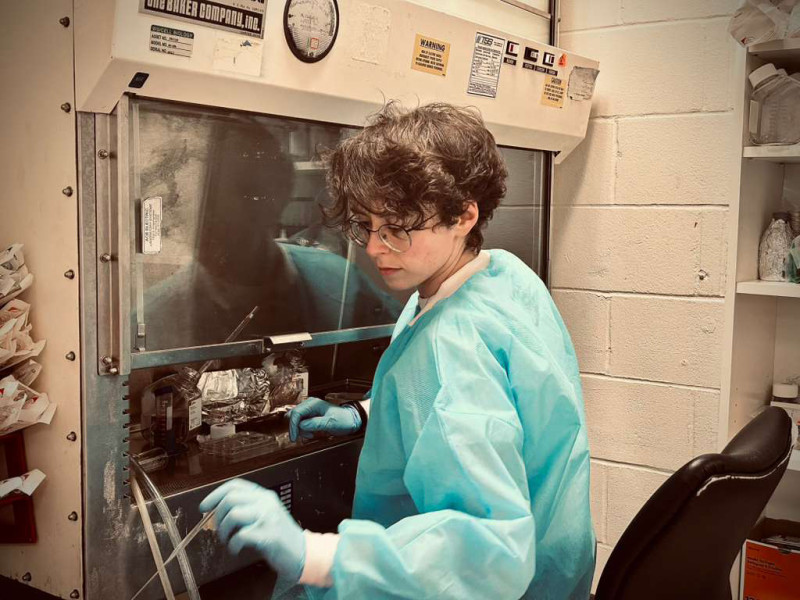
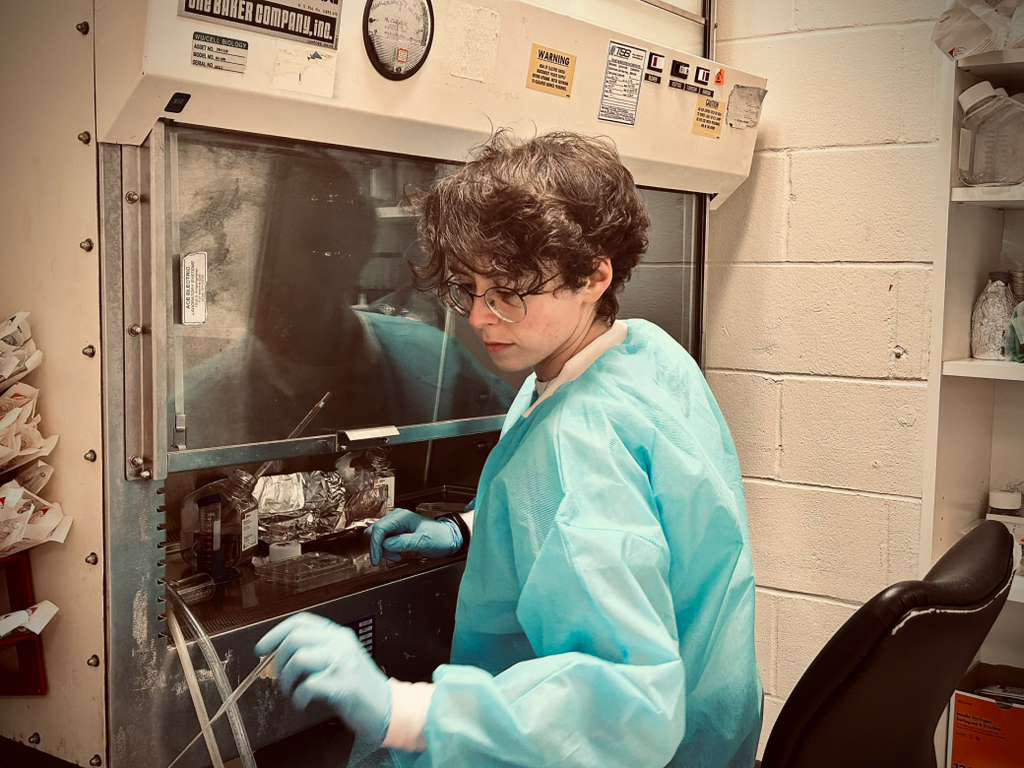
Nadia Mirza-Romero ’19 loves to learn.
Once at Binghamton University, they maximized every opportunity: summer courses, winter courses, working as a teaching assistant, and pursuing research experiences in a lab. All told, they ended up with three majors: cell and molecular biology, Arabic Studies, and history, along with a minor in Middle East and North African Studies.
Originally from Niskayuna, N.Y., Mirza-Romero is now completing their doctorate in biochemistry and cell biology at Boston University’s School of Medicine, where they research cell biology of non-neuronal cells in prion disease, examples of which include mad cow and chronic wasting disease. They expect to complete their doctorate next year and are weighing paths in postdoctoral or industry research.
Fun fact: when it came to their undergrad years, Mirza-Romero considered both Boston and Binghamton. Ultimately, Binghamton won out for two reasons: the First-year Research Immersion (FRI) program and the opportunity to master Arabic.
Mirza-Romero’s parents are both immigrants, their mother from Ireland and their father from Iraq. With the help of tutors, they began learning Arabic in childhood, although their family didn’t speak it at home.
Arabic dialects, it turns out, differ significantly from country to country and aren’t always mutually intelligible.
“I had this mishmash of dialects, so I wanted the opportunity to get the base down. And then, if I wanted to, I could add the colloquial elements,” they explained.
At Harpur College of Arts and Sciences, they began their language study from the ground up, with elementary Arabic. Arabic can be a tough but rewarding language to learn, particularly for native English speakers. The language is written right-to-left in a completely different writing system and includes sounds that English doesn’t have.
As a major, Arabic Studies requires elementary, intermediate, and at least one semester of advanced standard Arabic. Some of Mirza-Romero’s history courses on Islam, Iran, Istanbul, and the Middle Eastern refugee crisis also counted for both degrees.
Mirza-Romero still remembers engaging lectures from Professor Omid Ghaemmaghami and Associate Professor Mary Youssef, both in Middle East Studies. Associate Professor of History Kent Schull’s course on the history of Islam also stood out.
“The professors were phenomenal,” Mirza-Romero said. “Overall, it was a really nice experience. The elective I took in Egyptian colloquial Arabic was fun; once you know the rules, you’re able to break them, which is what people do in everyday life.”
Arabic and history courses also provided a balance to Mirza-Romero’s science degree. Biology is a large program, and introductory courses typically take place in lecture halls. History and Arabic Studies seminars, however, can be small, with fewer than a dozen students.
“I was getting the best of both worlds,” they said.
Mirza-Romero’s experience in the biological sciences also gave them a head start on their future research career. In addition to FRI, they pursued additional research opportunities in biofilms and evolutionary biology, which aided their later shift toward biomedical research. After graduation, they were hired as a technician at the University of Massachusetts’ Chan Medical School, where they focused on pancreatic cancer cell biology.
“I’ve been doing wet lab research in some capacity for 10 years,” they reflected. “The fact that I’ve had that amount of experience, and have been thinking about larger research questions and how to attack them, springboarded me after FRI.”