SUNY Brain Institute awards $500k grant to Binghamton for advanced dementia research
‘Brain-on-a-chip’ project gets boost from state initiative
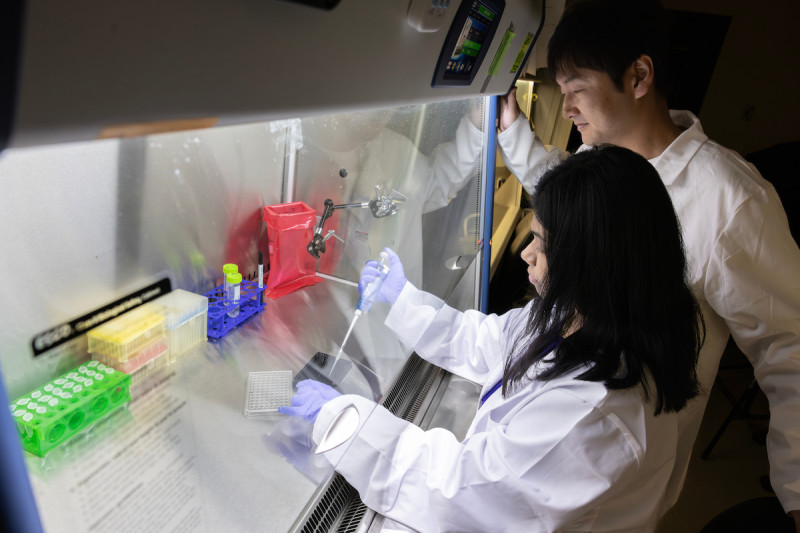
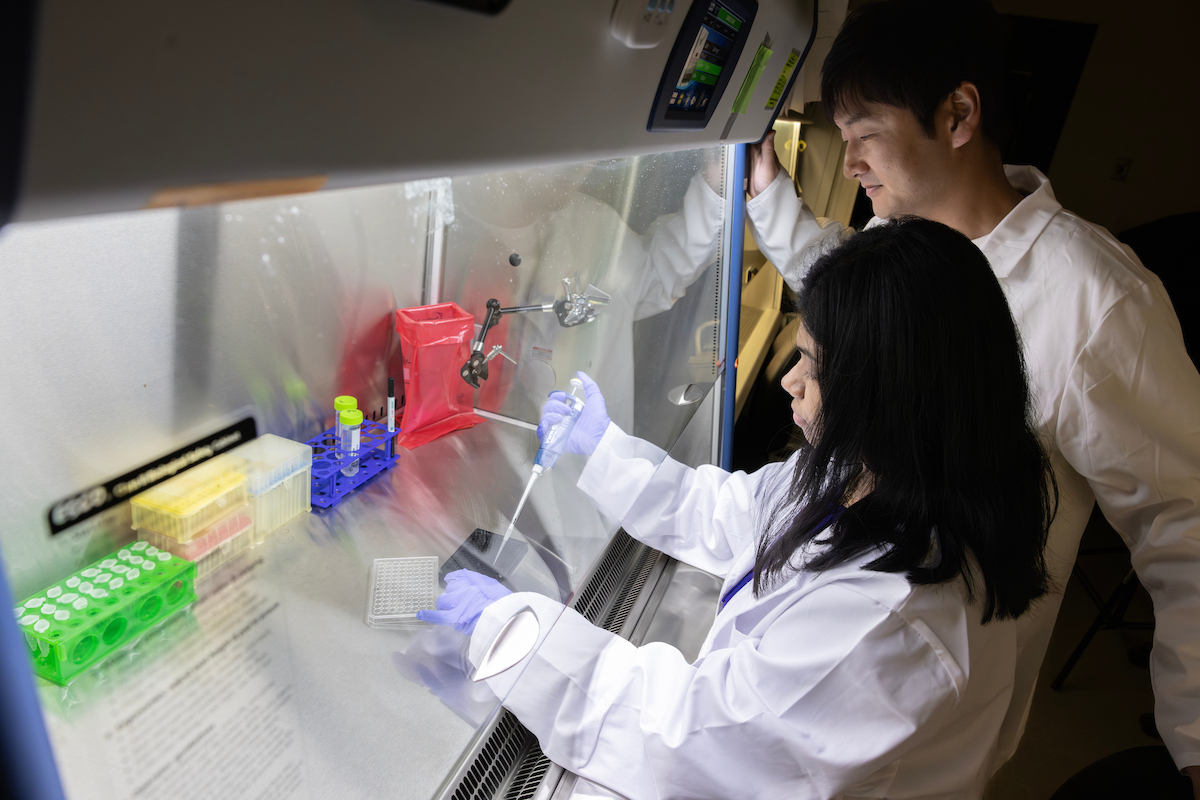
Binghamton University will receive half a million dollars from New York state for new instrumentation that will advance our understanding of dementia and neurodegenerative diseases more generally.
The funding was announced this week by Gov. Kathy Hochul as part of the first phase of the SUNY Brain Institute, a statewide neuroscience research network focused on combatting age-related brain disorders. The $10 million, multi-campus initiative will expand the State University of New York’s neuroscience research capabilities.
"New York state is investing in transformative research that dives into issues affecting communities throughout the state," Hochul said. "By connecting leading researchers and advanced infrastructures across New York, the SUNY Brain Institute will accelerate work on Alzheimer’s disease, Parkinson’s disease, stroke, and other age-related brain disorders to find cures so families in every community have the quality time together that they deserve.”
Jungwook “Jay” Paek, assistant professor of electrical and computer engineering at Binghamton, will work with colleagues to establish advanced imaging and electrophysiological analysis infrastructure for studying living brain tissue models in small microfabricated devices, known as human brain-on-a-chip platforms.
The team will acquire a 3D imaging setup for visualizing and validating 3D living neurovascular tissue models, as well as electrode-based measurement systems for monitoring the electrical activity of neurons within these models. These capabilities, Paek said, will enable researchers to characterize the structural and functional properties of engineered human brain tissues. The team will also evaluate how well the models mimic the development and progression of neurodegenerative diseases.
“One of the most exciting aspects of this initiative is that the Brain Institute provides capital funding to establish research instrumentation infrastructure, which is often difficult to secure through general research funding,” Paek said.
Paek, who joined the faculty of the Thomas J. Watson College of Engineering and Applied Science in 2023, has been intrigued by neurons since his days as an undergraduate. These cells in the brain generate and transmit electrical signals through their networks, forming the biological basis of cognitive functions.
“That early fascination pulled me out of conventional circuits and into a much longer journey through bioengineering and into neuroscience, chasing the idea of building biological electric circuits that work like the brain itself,” he said.
He sees his interest in dementia as a natural extension of that concept. “If the brain is fundamentally an electrical network, then its failure in dementia is not just a biochemical event,” Paek said. “It may come with electrical dysfunction at a single neuron level and at a network level, developing dynamically over time. That shift in perspective is what drew me to this disease and shapes how I approach it.”
Rather than relying solely on biochemical assays that capture a snapshot of pathology, his work aims to watch progressive neurodegeneration as it happens, in real time, focusing on the electrical activity of living neurovascular tissues.
“That is what biological electric circuits are designed to do in my research, and that possibility is what keeps me in this work,” Paek said.
The SUNY Brain Institute, led by the University at Buffalo, includes researchers from SUNY Downstate Health Sciences University, SUNY College of Optometry, and SUNY Upstate Medical University, in addition to Binghamton.
The $10 million investment in the institute was made possible by capital support SUNY received in the 2025-26 state budget. By creating shared access to advanced equipment and research capabilities, the institute will enable collaboration among SUNY’s more than 600 faculty researchers working in neuroscience.
“SUNY is leading innovative research to support and advance the public good for all New Yorkers,” SUNY Chancellor John B. King Jr. said. “The SUNY Brain Institute’s work embodies SUNY's commitment to using higher education and research to dive into critical issues affecting communities across the state.”