NSF-funded projects to introduce high school students to geoarchaeology
Students and educators from rural communities will use remote sensing to investigate local archaeological sites
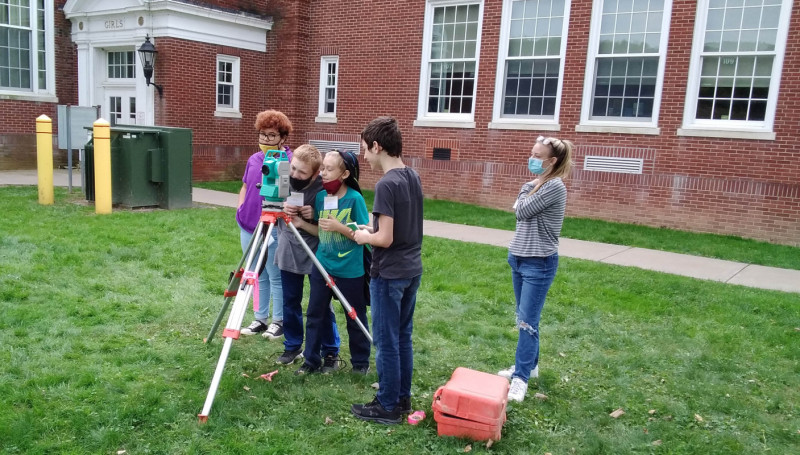
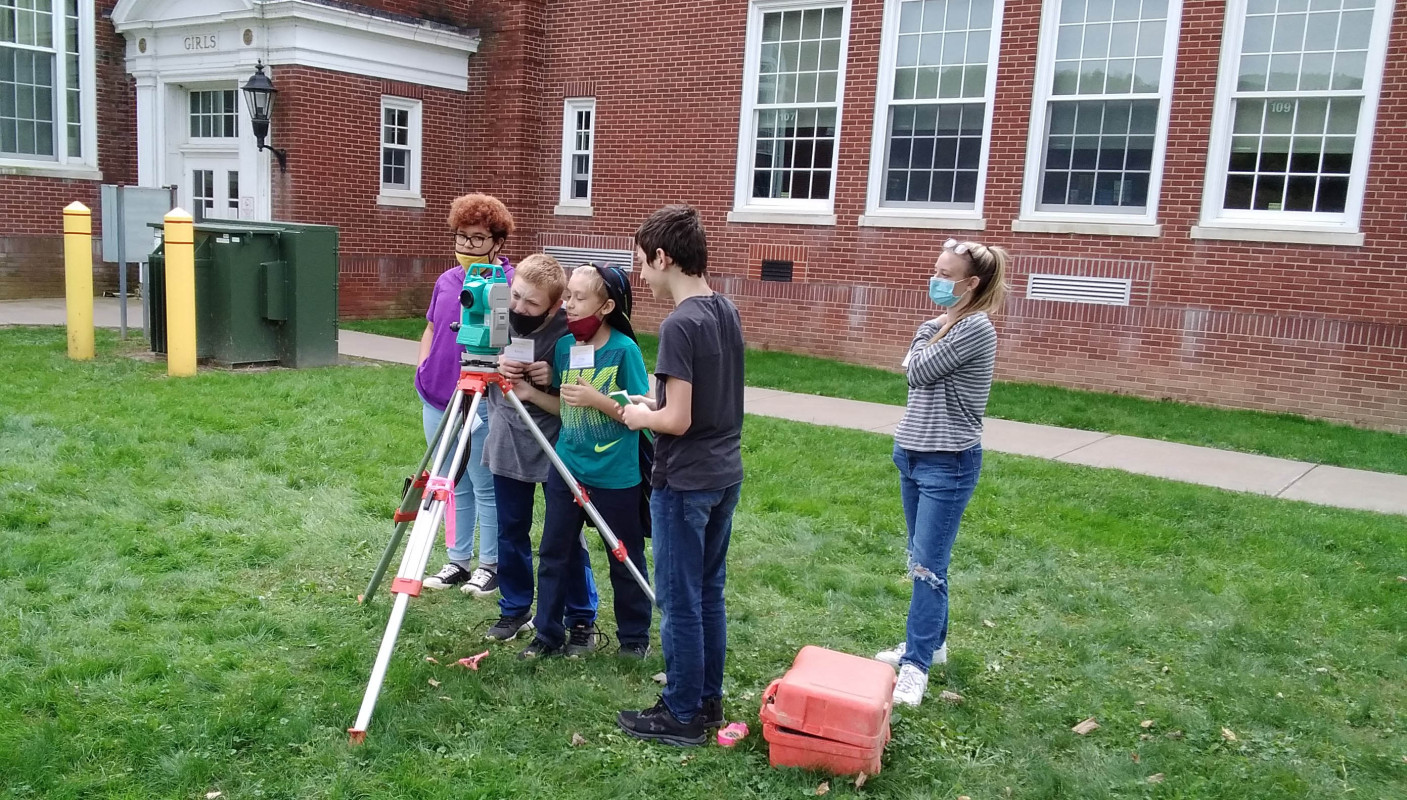
You never know what you might find in your backyard: remnants of old towns and bygone eras, covered by dirt and years.
Binghamton University faculty have received a three-year, $730,000 grant from the National Science Foundation that will help rural high school students and educators explore archaeological sites in their own communities using remote-sensing techniques. The goal is to address the growing need for a skilled science, technology, engineering, and math (STEM) workforce by introducing young people to career pathways.
Leading the project are Laurie Miroff, director of Binghamton University’s Public Archaeology Facility, and Associate Professor of Teaching, Learning and Educational Leadership Amber Simpson, director of the Re-Imaging Schools Research Lab. Former Associate Professor of Earth Sciences Alex Nikulin is also a partner; while he left for a position at Texas Christian University, he plans to remain involved in the program.
In a previous NSF-funded project, Miroff and Simpson worked with middle school students, teaching them STEM through the lens of archaeology.
“We started thinking about how we could expand from there,” Miroff said.
Working with rural schools and community organizations, the project will introduce learners to the scientific study of past human activity using non-invasive geophysical and remote sensing technologies, such as drone-mounted magnetometry and ground-penetrating radar. The archaeological sites and landscapes they investigate will be in their own communities and date back to the 19th century.
Every summer during the grant period, Miroff, Nikulin, and Simpson will spend two weeks with 20 high school students and six educators; the latter will include both school teachers and non-formal educators from local museums, libraries, and community groups.
“We’ll start with a basic introduction to the fields of archaeology and geology, and introduce the various technologies, doing hands-on work,” Miroff explained.
The students and educators will then have a chance to use magnetometry and ground-penetrating radar on a local archaeological site, learning how to operate the equipment and read the instruments; potential locations include sites in downtown Binghamton and Chenango Valley State Park. Back on campus, they will then process the data.
Students will also have the opportunity to meet people already working in STEM-related industries beyond archaeological and geological research, including cultural resource management and environmental consulting.
“We want them to understand how these skills can be translated into other fields,” Miroff said.
Ultimately, the project seeks to foster transdisciplinary adaptive competencies, meaning it focuses on developing skills that can be applied across various aspects of the workforce, Simpson explained.
“We’re also looking at how kids are shaping their identity as STEM professionals and learners,” she said. “Part of this grant also supports educators in translating this work to their classroom or after-school programs.”