New research project to explore the impact of short-term drought on lawns
Assistant Professor of Ecosystem Science Amy Churchill receives USDA grant to fund project at Nuthatch Hollow
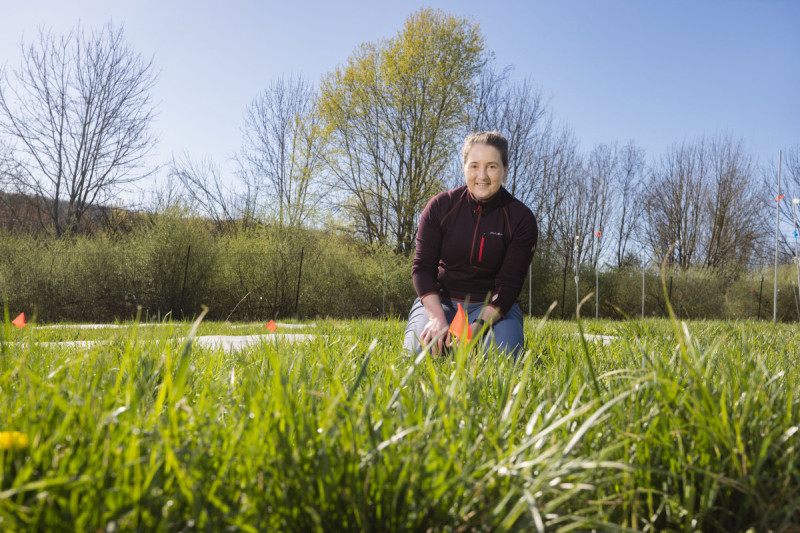
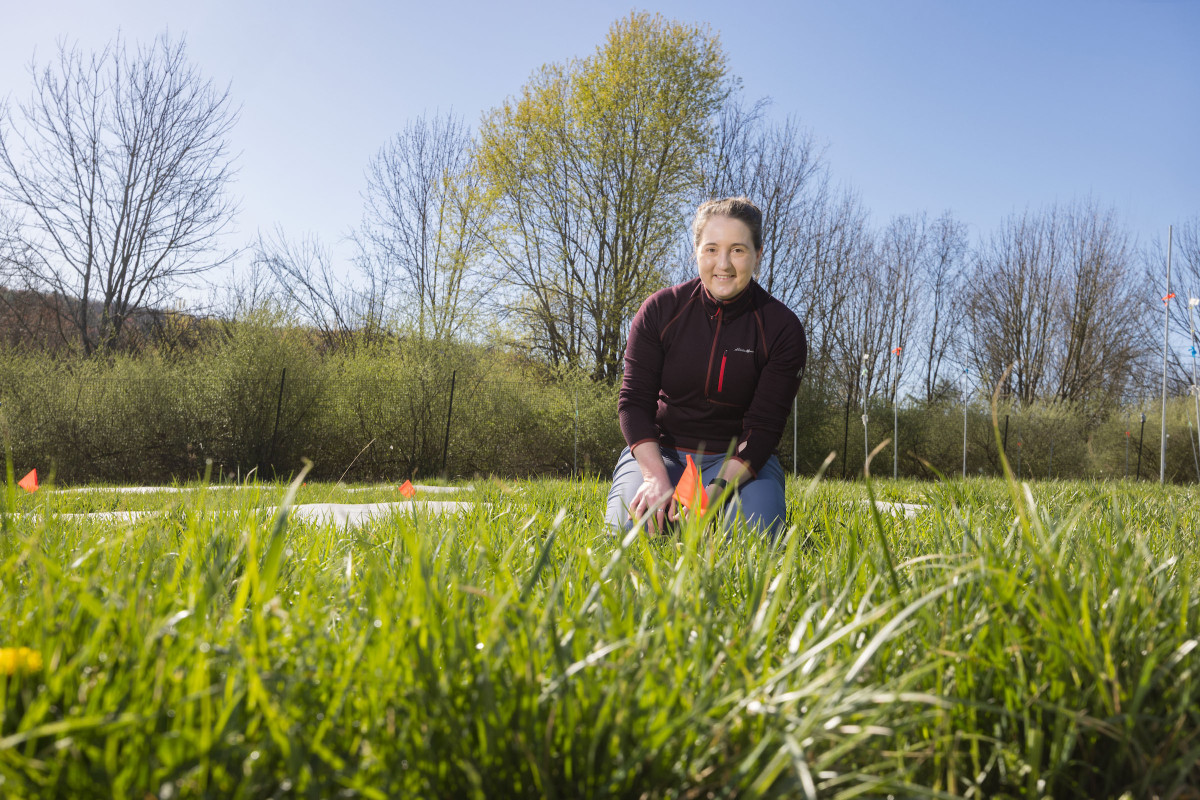
Climate change has caused sudden and unexpected shifts in weather, including dry spells. What does that mean for your lawn, and are there ways to keep it green without overusing water and fertilizer?
Enter the Pasture and Lawn Enhanced Diversity Global-change Experiment (PLEDGE) at Nuthatch Hollow, the outdoor laboratory and wildlife sanctuary gifted to Binghamton University by Robert F. Schumann and the Schumann family. Assistant Professor of Ecosystem Science Amber (Amy) Churchill recently received a $298,476 grant from the U.S. Department of Agriculture (USDA) to expand ongoing research at the PLEDGE site by exploring how drought affects lawn performance from year to year.
“This grant will allow us to maintain our existing field site as a long-term project and examine new directions in focus, including experimental manipulation of water availability for our lawns,” Churchill explained. “Considering that lawns are a persisting ecosystem, how well things are going years after establishment is as ecologically important as during the initial construction phase.”
Established in the spring of 2024, PLEDGE’s overarching goal is to study the functional effects of plant diversity on lawns and how lawns respond to external factors such as fertilization.
The site’s 30 enhanced functional diversity lawns contain one to three species: tall fescue, a common grass that most area homeowners have in their yards; white clover, a legume; and creeping thyme, a short evergreen that grows year-round and flowers almost continuously during the summer months. Researchers are also working with additional native species in the greenhouse, which could lead to future recommendations on what to plant in your lawn.
The 30 plots are divided into three groups of 10, based on the species they contain. In the new research, each lawn will be divided into three sections, with specific groups receiving different amounts of water. The first year will focus on quantifying the variation within each lawn; research into the effects of drought will take place during the second year.
“Here in New York, short-term drought, especially high intensity ‘pulse’ droughts with very low water over short intervals that are often combined with high temperatures, are generally predicted to become more common, especially during summer months,” Churchill said. “We are especially looking to understand how these changes in water availability will impact some of the ways that we use and rely on lawns, including things like lawn greenness and plant density, which can affect aesthetic value and recreational use.”
Almost 2% of the continental U.S. is cultivated with turf species, including lawns, public parks and golf courses. These human-created ecosystems account for 30 to 60% of potable water use for irrigation and often require management with fertilizers, herbicides and pesticides to maintain their lush green appearance.
As part of the project, researchers will host discussions on managing biodiversity in urban spaces and how this management can support ecosystem stability under changing environmental conditions. These discussions aren’t only for fellow researchers interested in the topic, but also members of the surrounding community, who are invited to learn new ways to manage their own backyards.
“Receiving support for this work through the USDA highlights the commitment that Binghamton University places on community-engaged research,” Churchill said.