The language of resistance: Binghamton University hosts conference on translation and intercultural studies
First North American conference for IATIS focused on literary activism
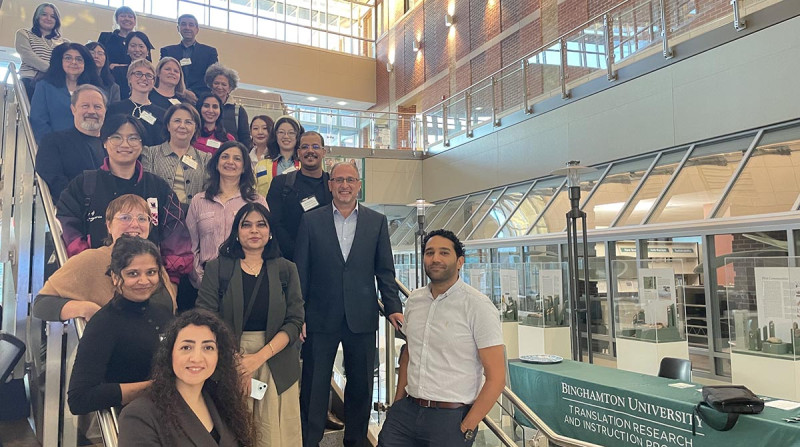
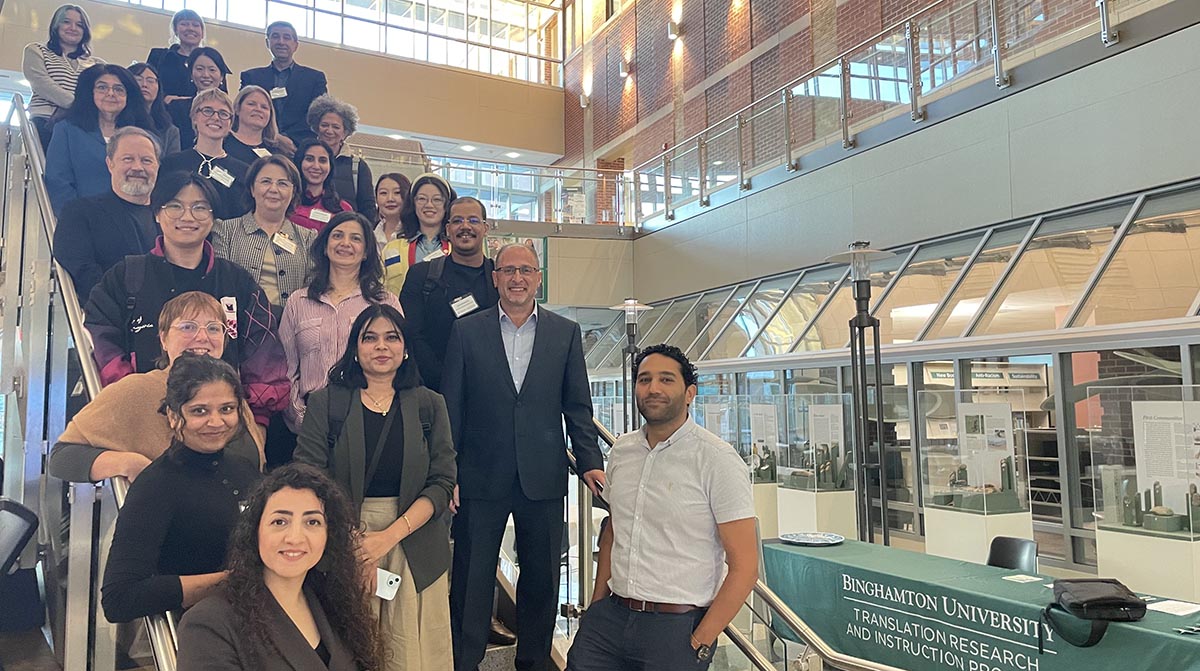
Binghamton University's Translation Research and Instruction Program (TRIP) hosted the 15th International Association for Translation and Intercultural Studies (IATIS) Regional Workshop on Oct. 3-4 at the University Downtown Center.
The first IATIS conference to be held in North America featured 21 speakers from eight different countries and 10 different educational or publication institutions, including five TRIP faculty members and PhD candidates.
As an international conference, it presented the opportunity to showcase Binghamton's local charm and history to academics from around the world.
On Saturday, the group took a tour that started with the new Harriet Tubman statue and continued through several stops along the Downtown Binghamton Freedom Trail, a project begun by Binghamton University in 2021. Associate Professor Sharon Bryant, associate dean for diversity, equity, and inclusion for the Decker College of Nursing and Health Sciences, led the tour. Bryant showcased the history of the City of Binghamton and its role in the Underground Railroad.
The IATIS Regional Workshop attracts professors, PhD candidates, translators, and independent researchers from across the globe to discuss and present their studies in translation. This year, the topic of the conference was "Translating Resistance: Literary Activism in Conflict and Solidarity," which opened the floor for presenters to focus on numerous humanitarian topics in translation, from historical presentations of feminist writings to modern poetry calling out political violence.
Keynote speaker Professor Samah Selim from Rutgers University spoke on Saturday. Her presentation, titled "Translating Archives: 'Radical Remembering' and the Politics of Solidarity," discussed a commissioned translation of three short books written by Egyptian painter and activist Inji Aflatoun.
"It started out as a commissioned project, but then it evolved into what I sometimes call a passion project. My journey with Aflatoun led me to an archive of transnational feminism that helped me think about the problems of women's struggles in Egypt today in new and productive, empowering ways," Selim said.
Throughout her speech, Selim referred to translation as a medium of memory, a form of political labor, and a journey of discovery. These ideals were echoed by the presentations that followed, which addressed the many applications of translation work.
Professor Omid Ghaemmaghami from Binghamton’s Department of Middle Eastern and Ancient Mediterranean Studies (MEAMS) gave Saturday’s final presentation.
"Translation," he said, "is never neutral. It can frame, it can amplify, and contest, and the act of undertaking it can determine who gets to read a text at all."
For organizers, the IATIS presentations represented the different aspects of translation that add to a text or divide the reader from the original. Who and what is translated, now and throughout history, affects what information readers have access to across language barriers.
They hope that conferences such as the IATIS Regional Workshop continue the global conversation around translation and keep the intentions, interests, and responsibilities of translators clear and peer-reviewed.