New film from Decker College professor humanizes a patient’s struggles with swallowing
Speech-language pathologist Sundeep Venkatesan wins Best First Time Director Short Film at the Hollywood Best Indie Film Awards
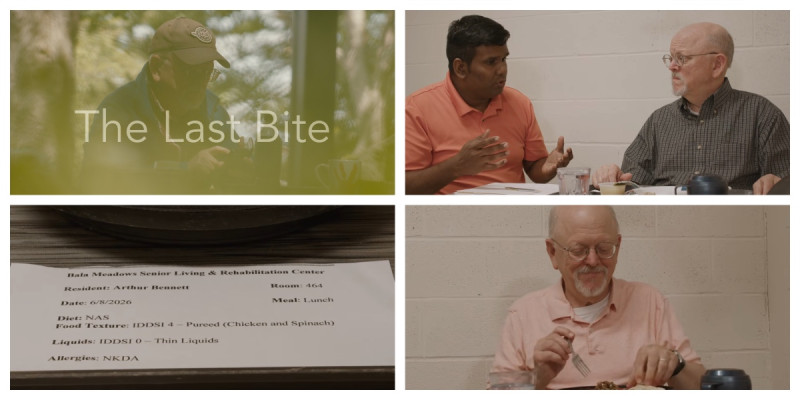
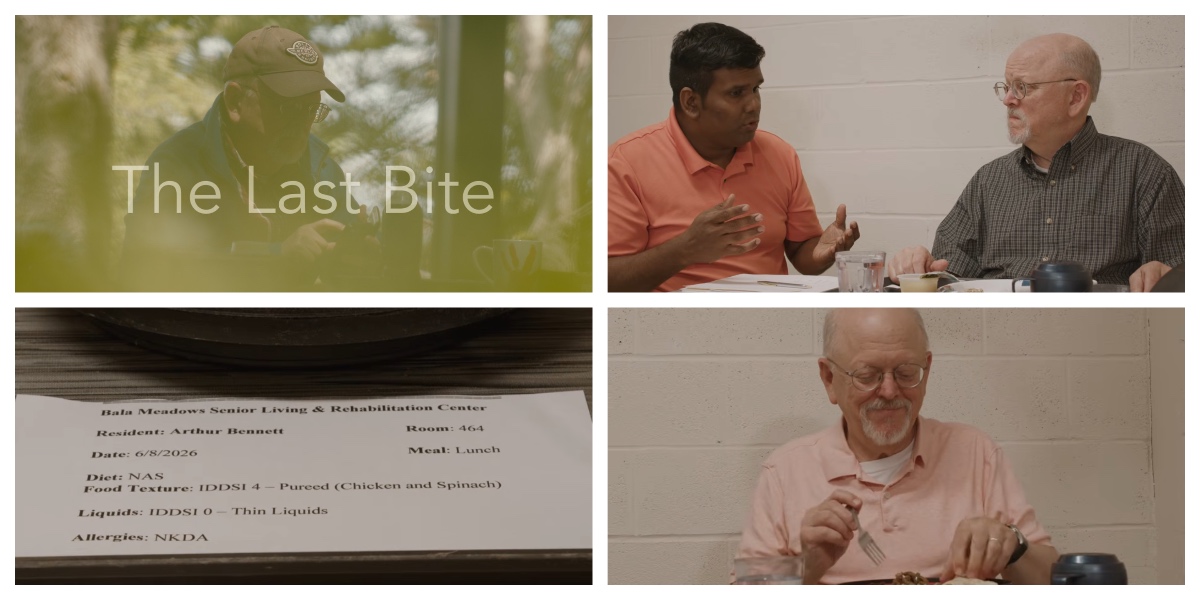
Long before Sundeep Venkatesan became a speech-language pathologist, he watched his grandmother struggle with swallowing.
“When I was in seventh grade, my grandmother went through what I only now understand to be dysphagia,” he said. “She had swallowing problems, and I remember that for a long time she was on a modified diet. We would blend the rice or many of the foods we gave her, and I remember her coughing. Most of the time, she would cough on regular water or anything else with a thin liquid consistency. Eventually, she developed aspiration pneumonia, and that was one of the main complications that made her medical condition really serious.”
Years later, after working clinically, teaching, and conducting research on dysphagia, he began to understand his grandmother’s experience and recognize its connection to the work he was doing, leading him to specialize in treating dysphagia.
Today, Venkatesan is an assistant professor and co-director of the Brain and Swallow Laboratory in the Division of Speech and Language Pathology at Binghamton University’s Decker College of Nursing and Health Sciences. He recently created The Last Bite, a 13-minute narrative film about an older adult recovering from a stroke who develops dysphagia.
“I wanted to show people behind the clinical decisions what it might actually feel like, to suddenly lose the ability to enjoy food in the way they know,” he said. “I’m a visual learner, so I thought film could be a medium that would allow an audience to sit beside someone experiencing dysphagia and learn about it. For me, the film was about research and teaching graduate students to understand dysphagia and what it’s like to have it.”
While The Last Bite was created in part as a resource for students, it is more than a purely educational piece.
“Although dysphagia is a clinical subject, the film is really about dignity, independence, isolation, comfort, and quality of life,” Venkatesan said. “For me, food is more than nutrition — it’s memory and pleasure. We're connecting with culture, family, and a sense of normalcy.”
The original idea for The Last Bite was quite different. “I was initially trying to make it as an animated film so that it's fun for even the kids to watch, but I quickly realized I'm not going to be able to render a visually good output,” he said. “After that, I pivoted and turned the script around to be a narrative, live-action film.”
In terms of the actual filming and refinement, “most of it was fun,” Venkatesan said, “but there were some challenges. The biggest one was balancing the clinical authenticity with the storytelling; I wanted the clinical details to be as accurate as possible, but I didn’t want the film to just be an educational video. I wanted it to feel emotional.”
The Last Bite already has received festival recognition, winning Best First Time Director Short Film at the Hollywood Best Indie Film Awards and being named an Official Selection at the Al Mamoura Film Festival in Abu Dhabi. Responses from people who have personally connected with the film have been extremely moving for Venkatesan.
“One of my graduate students watched the film and then sent a really amazing message about how she connected it with her own grandmother, who had a stroke,” he said. “I've had a couple more similar instances with people from a variety of different countries and backgrounds. Their responses conveyed how important food is and how much we take it for granted. The feedback and comments that I'm getting are telling me that the work that went into this film was absolutely worth it.”
The recognition his film received has been a huge motivator for future projects, especially as a first-time director.
“I've just written a script that I'm planning to direct and act in, portraying a person who stutters,” Venkatesan said. “It will follow his experience attending an interview and accepting that stuttering is a part of everyday life. There's still so much stigma in the workplace for people who stutter. I also want to get the message out that stuttering does not define a person.”
Across his experience as a licensed speech-language pathologist with over 15 years of clinical experience in a variety of settings, Venkatesan has found assisting those struggling with dysphagia to be extremely rewarding.
Reflecting on what first drew him to the profession, Venkatesan said, “Learning about audiology, speech-language pathology, and the many different disorders we can help address really drew me to the field. Over the years, I’ve worked with patients across the lifespan, from infants as young as 3 months to a 104-year-old patient I treated for a swallowing disorder in a skilled nursing facility. That breadth of experience helped me understand where my strongest interest was.
"After completing my bachelor’s degree in India and working there for a year, I realized I was especially drawn to working with adults and older adults with swallowing and neurological disorders. By then, I had also begun to understand the connection between what happened to my grandmother and the work I was now doing.”
Venkatesan is particularly drawn to working with older adults and the relationships that can develop through that care.
“Seeing older adults in the nursing facility really drew me,” he said, “especially those in long-term care with all the support they need because of dementia or other complex medical problems. While a lot of families were supportive, some of the older adults didn’t have family that came to visit. I felt that the interactions that I had with the older adults allowed me to make more of a connection with them. With older adults, I could converse about life and their lived experience while trying to work on improving their quality of life, especially in regard to food.”