Olivia McLernon bridges engineering and healthcare
2023 alumna is energy engineer for Weill Cornell Medicine
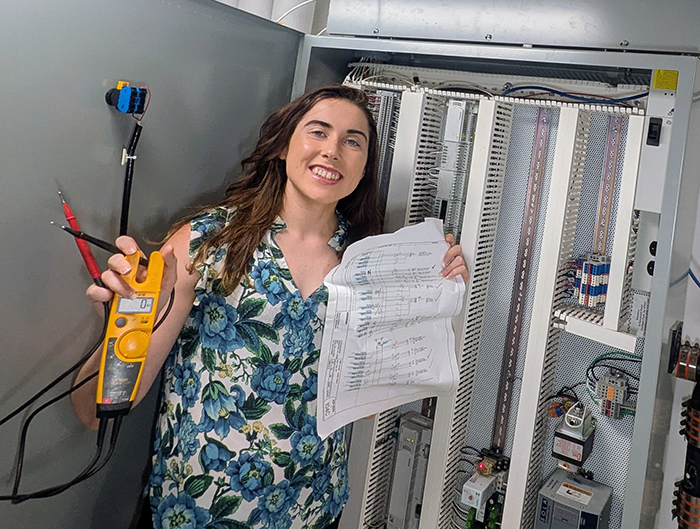
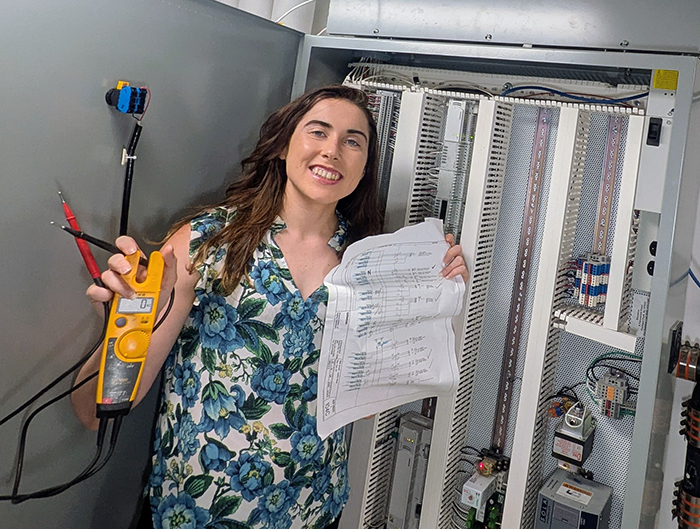
Olivia McLernon ’23 started her career in HVAC sales in New York, learning equipment and city building codes. She loved the work, but missed engineering’s technical side.
She transitioned to Weill Cornell Medicine (WCM) where, as an energy engineer, she obtains rebates for WCM from Con Edison’s Commercial and Industrial program, which provides funding for HVAC upgrades once yearly savings are calculated. She completed a fan wall project for a cooling tower and has started a fume hood energy-saving project.
“I’m grateful my work supports sustainability and healthcare,” McLernon says. “I see the impact our projects and building system improvements have on reducing carbon emissions from hospital operations. The healthcare-energy industry is collaborative, with engineers sharing ideas and solutions.”
McLernon also manages WCM’s compliance with city energy laws. One requires an outside firm to test the building’s equipment, document performance issues, and give the energy engineer a list of items to address.
“The year I started, I resolved more than 300 issues across three buildings. It was a quick way to learn energy engineering 101 and see how buildings can drift from their design operations when space use changes and equipment isn’t monitored.”
When talking to students, McLernon recommends they join the Association of Energy Engineers and take the FE and PE exams. Majoring in engineering is a plus (she was a mechanical engineering major), but not necessary, McLernon says.
“Energy engineering isn’t limited to traditional engineering majors. It’s a flexible field welcoming environmental science majors, economics majors, and anyone passionate about sustainability.”