Sentenced to 210 years for a crime he didn’t commit, exoneree shares his story at Binghamton
Harriet Tubman Center for Freedom and Equity hosts conference on prison reform and rehabilitation
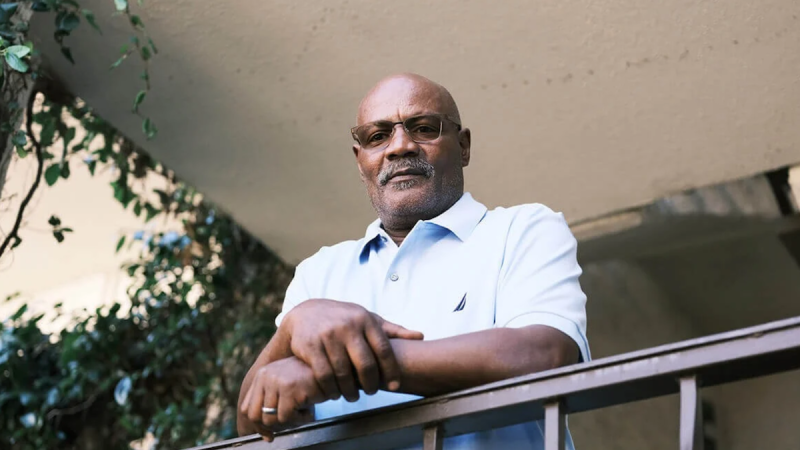
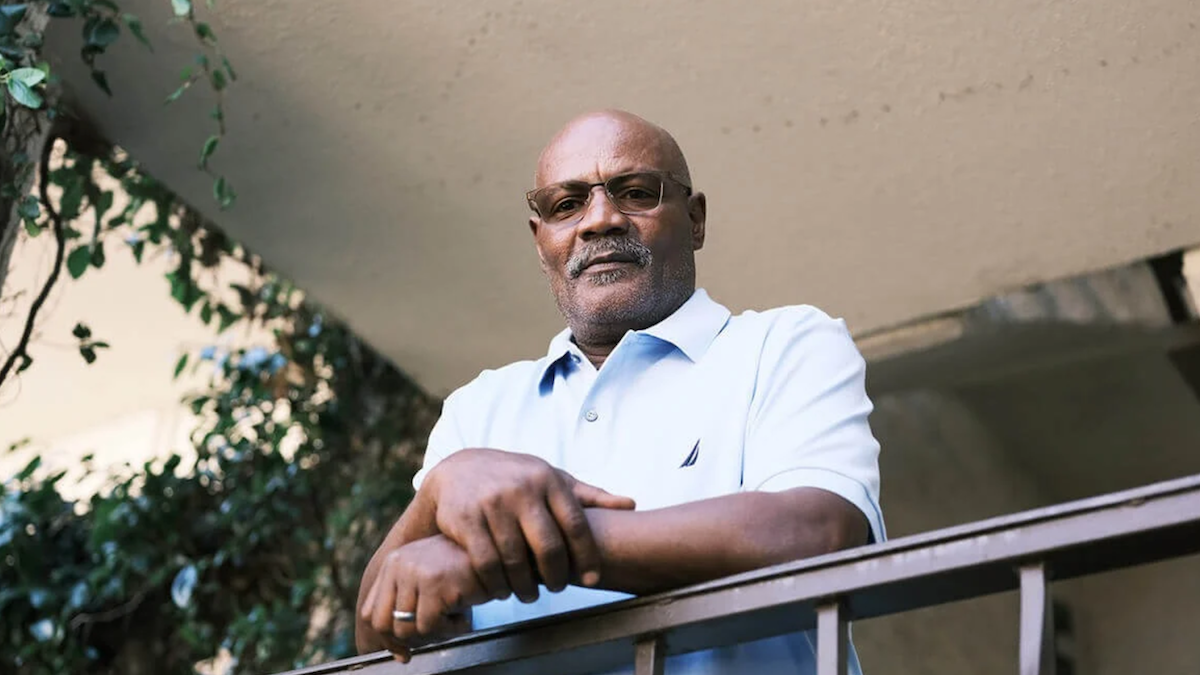
At 18 years old, Marvin Anderson was sentenced to 210 years behind bars for a crime he did not commit. He spent 15 years in prison and 4 years on parole fighting to prove his innocence. In 2002, he became the 99th person in the United States to be exonerated due to post-conviction DNA testing. Today, he serves on the board of directors for the Innocence Project, a nonprofit that works to free the innocent, prevent wrongful convictions, and advance reform.
Anderson shared his story at "From Punishment to Rehabilitation: A New Prison Paradigm,” hosted by The Harriet Tubman Center for Freedom and Equity at Binghamton University on Oct. 29.
“You all have the power; you're able to vote now. That's what changes everything,” Anderson said. “For years and years, a person of color was not allowed to vote, women were not allowed to vote, but now you have the power to change all this.”
Co-sponsored by the School of the Arts, the Kaschak Institute for Social Justice for Women and Girls, and the Decker College of Nursing and Health Sciences, the conference was aimed at moving beyond a predominantly punitive model of incarceration and exploring approaches that recognize rehabilitation, education, mental and physical health, successful reentry, and community safety. Particular attention was given to mental health and education within correctional settings, while also considering how incarceration and reform affect women, young people, families, and other vulnerable populations.
Christina Swarns, executive director of the Innocence Project, gave the keynote address. Swarns is notable for her work in Buck v. Davis, a 2017 Supreme Court case that challenged explicit racially biased evidence in a Texas death penalty case. She was the only Black woman to argue in the 2016 Supreme Court term, and is one of the few Black women to have argued before the nation’s highest court.
She encouraged participants to participate in civic duties. “Vote! When a jury service summons comes, please don't crumple it up. Bring yourself in there, and be critical, and bring scrutiny to the cases that are being heard,” Swarns said.
Today, Anderson lives a life he once thought he would never experience. He is a proud father and grandfather who accomplished his dream of serving as chief of the Hanover, Va., Fire Department. He hopes to continue bringing awareness and help wrongfully incarcerated individuals. The messages of hope and calls for reform that Anderson and other speakers provided resonated with conference guests, including New York State Senator Lea Webb.
“All the speakers here today are talking about very important intersections within our criminal justice system and how we can actualize the justice aspect,” Webb said.
Since its establishment in 2019, the Tubman Center has built its programming around history, education, and equity. As it grows, addressing structural inequities through the lens of abolitionist Harriet Tubman remains its top priority, and the conference exemplifies this mission.
“We ask, ‘What would Harriet do next?’” said Anne Bailey, director of the Tubman Center. “For anyone asking why we are doing a program on prison reform, this is the answer to this question. The struggle for freedom is continual. In this day and age, her descendants, and the rest of us, agree that she would be looking at our system of mass incarceration and our prisons in general.”