A new angle on stage lighting: Binghamton students transform ‘The Late Wedding’
Working across engineering, music and theatre, students built and programmed a lighting design that explored the possibilities of white light
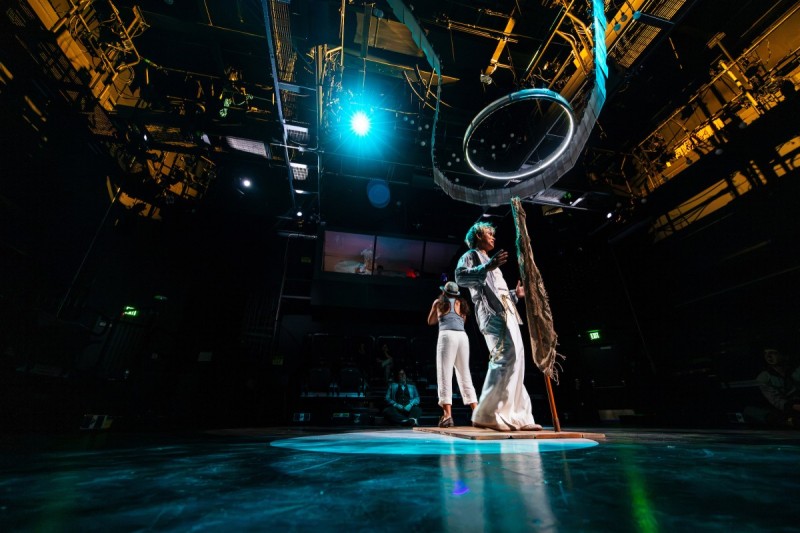
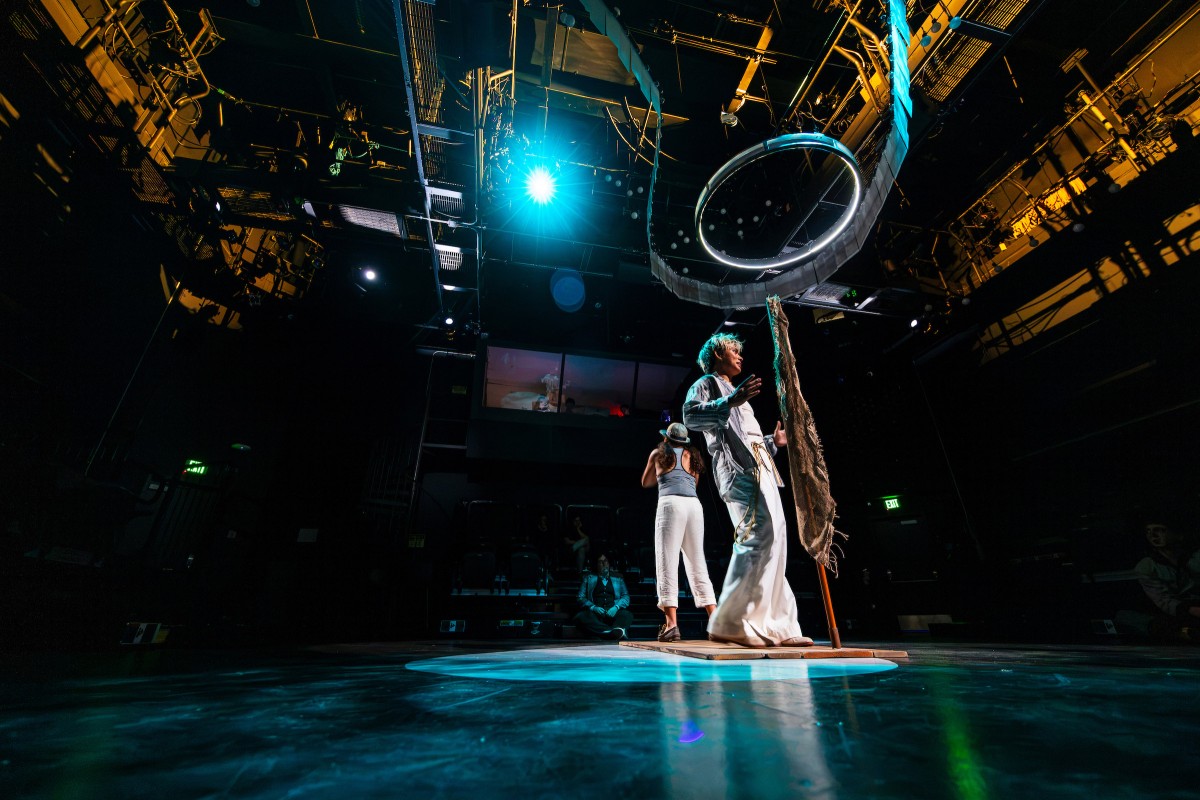
For Binghamton University's production of The Late Wedding, students worked with lighting designer Michael Rathbun to explore how the angle of white light could alter the appearance of the stage and its performers.
The team built structures in Studio A to hang lights at different heights and angles, creating shadows and shifts in mood while keeping the fixtures stationary.
Rathbun, an assistant professor in the Theatre Department and a professional lighting designer for more than a decade, developed the design with students for the production, directed by guest director Jose Zayas. Alex Shultz, Jane Leifer, Ayelet Lederman, and Matt Bellanich were among the students involved. The broader student team also helped build, install, program, and operate the lighting system, working through both the creative decisions and technical details behind the design.
Rathbun described it as "a beautiful study in angle."
To make that study possible, the team built structures from metal framing and pipe inside Studio A, the department's black box theater. The additions created three new levels of lighting positions, giving the designers more options for placing fixtures at different heights and horizontal angles.
"There are a lot of lights in places where there normally aren't," Lederman said.
The relatively spare palette was intentional. By limiting the use of colored light, Rathbun allowed the costumes to stand out. With that approach, adjustments in direction and intensity of the light could dramatically impact the emotional tone of a scene.
Students helped build the show from the ground up. They drafted plans with computer-aided drafting (CAD), rigged and installed equipment, ran electrical cables, and programmed and operated the lighting. Each creative choice was a hands-on puzzle. Students problem-solved how to secure fixtures, get power where it needs to go, and make lighting cues land at just the right moment.
Lederman worked as an assistant master electrician, helping realize the design through its physical installation. Shultz served as assistant lighting designer. Bellanich contributed to rigging and electrical work, while Leifer programmed the lighting.
"I am the person who is the one that actually tells the lights to look like that," Leifer said.
Programming connects the designer's creative vision and technical execution, translating the desired look into settings that can be recalled at precise moments throughout the performance. It is one part of a collaborative process in which the finished design depends on both creative judgment and technical execution.
The students also brought different academic perspectives to that work. Their studies span mechanical and electrical engineering, music, technical theatre, and linguistics. Building and programming the design put those fields into practice alongside one another.
"Lighting is the intersection of the artistic, technical, and scientific," Rathbun said.
That interdisciplinary approach is at the heart of the School of the Arts' Lighting Minor, where students explore both the technical and creative sides of lighting through theatre, cinema and studio art. They learn skills they can use in live performance, film and media production, museums, galleries, and architectural spaces. The school's Sound Technologies Minor offers a related pathway across theatre, music, cinema, and studio art.
With the fixtures in place, students could see how their choices changed what an audience could see and feel. A different angle could bring a performer out of shadow, a sudden increase in brightness can shift the mood of a scene, or trailing lights can give the appearance of falling rain, giving each technical decision a role in telling the story.
Audiences saw the finished production onstage. For the students, it was practical experience in taking a design from paper to performance, one lighting position and one cue at a time.