Harpur Fellow investigates water quality — and builds valuable community connections
Raya Mahmud lays the groundwork for future research at Long Island’s Great Pond
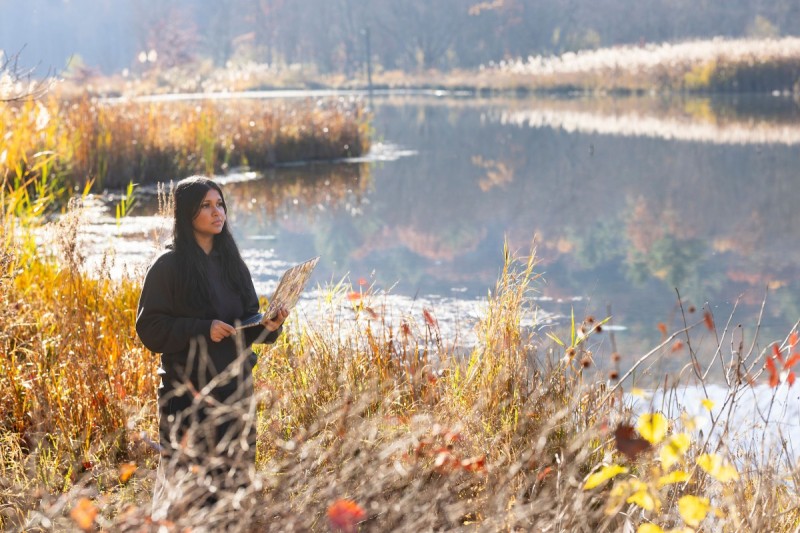
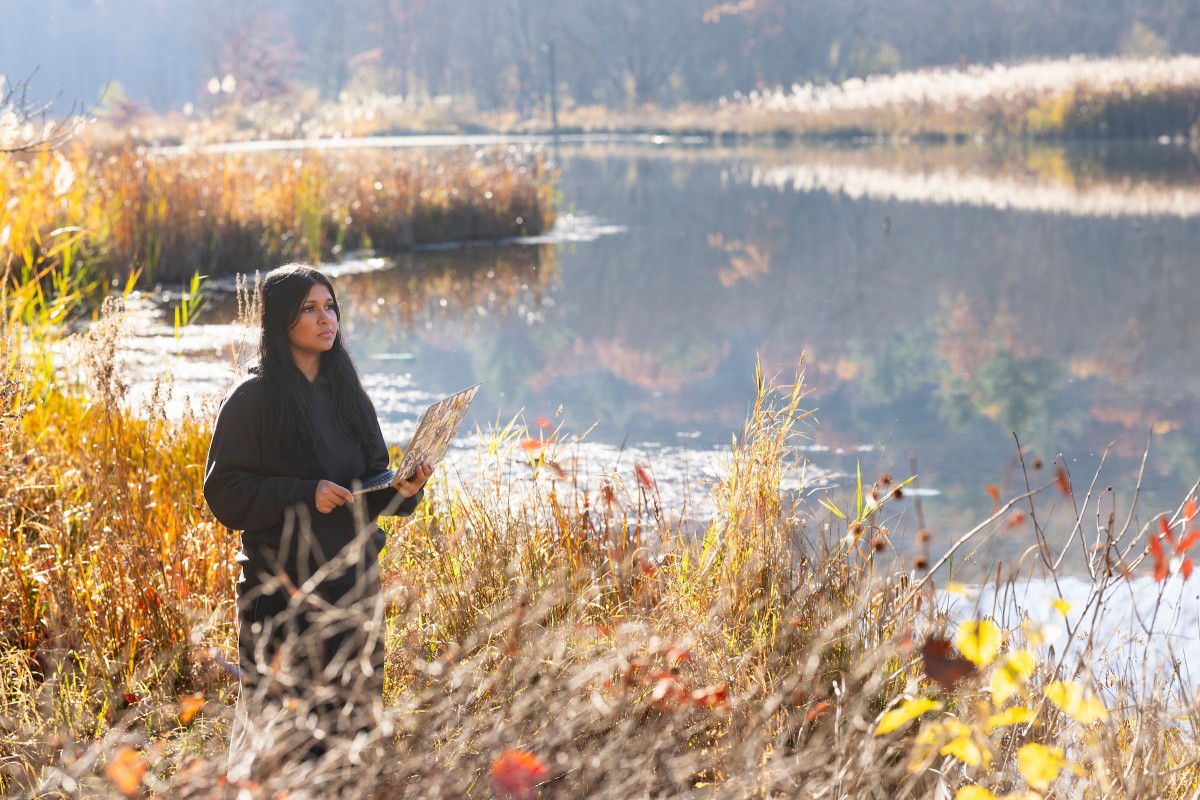
According to local rumor, the water at Great Pond is, well, a bit gross.
A hotspot for fishing and kayaking in the Long Island community of Southold, the rumors recommend against swimming in the pond — which is awkward, because the Peconic Dunes Camp is right there, full of kids looking for fresh air and summer fun.
“Kids in the camp used to swim in the water, but they don’t anymore, so everyone has these bad connotations about the pond,” said Binghamton University sophomore Raya Mahmud, who completed a research internship at the site. “But the measurements I did this summer showed that the water was actually really healthy.”
A Bennett Harpur Fellow, the biochemistry major received a $4,000 grant to conduct research at the pond, in collaboration with the Kenney’s/McCabe’s Beach Civic Association, a community group looking to restore it.
“I’ve always been interested in chemistry, and right now, I’m exploring both the research field and maybe the pre-med path,” said Mahmud, who is from Queens, NY. “I decided to major in biochemistry so I can get a broader range of knowledge. It’s a rewarding major, and I feel like I’ve learned so much.”
She’s had an early start in research, as part of the First-year Research Immersion (FRI) program’s ecological genetics stream. To continue her research over the summer, Mahmud joined biological sciences instructor Sarah Marcus’ summer internship program, balancing her research time with work as a camp counselor.
The 2025 intern, Zoe Marte, measured dissolved oxygen at two locations around Great Pond and found surprisingly healthy levels, Marcus said. With Mahmud on board, the project expanded to three additional sites and included additional water quality metrics, such as phosphates and nitrates, as well as a microbial community analysis.
To that end, Mahmud’s Harpur Fellowship funds were used to purchase a dissolved oxygen probe, which will enable future Binghamton interns to work on the project for years to come.
“I took water samples from the pond and brought them back to Binghamton. We’re currently testing the water in the FRI lab to see what microbes are present, and whether there are sources of pollution we should be worried about,” Mahmud said.
The expansion is providing a more in-depth understanding of the pond, which is critical in making future management decisions, Marcus added. Mahmud’s collaboration with the Kenney’s/McCabe’s Beach Civic Association also opened the door for a decade or more of collaborative research.
“Next summer we hope to determine if harmful algal blooms are occurring on the Great Pond and if so, under what conditions. Answering this question will be key to determining the safety of Great Pond for swimming,” Marcus said. “In addition to her research, Raya also shared her passion for science, research and freshwater ecosystems with the campers at Peconic Dunes, sparking the curiosity and passion of the next generation of nature lovers.”
Mahmud expressed deep gratitude for the opportunities she received through the Harpur Fellows program.
“I learned so much. On the research end, I learned how to create an entire project by myself and reach out to people,” she said. “Even if you’re not expecting a response, you don’t know where that connection may lead. It showed me how scientific research can help communities.”