Orientation welcomes incoming class to campus
Sessions throughout June and July for incoming freshmen and transfers
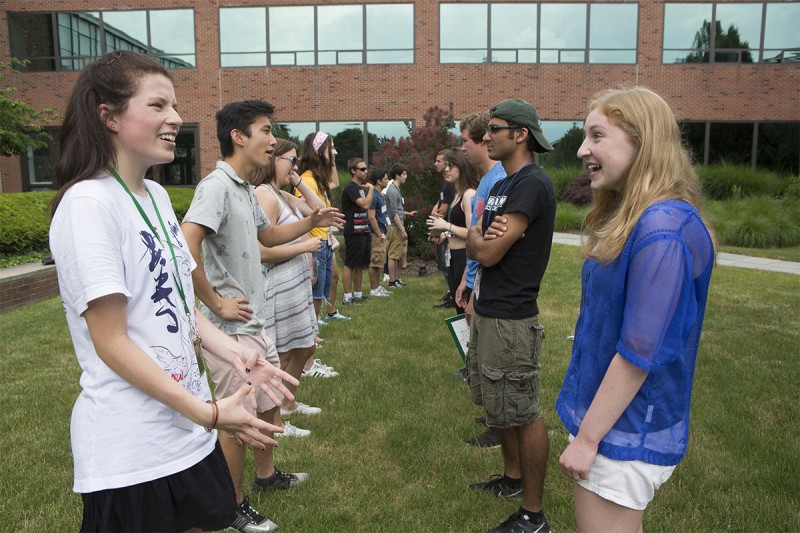
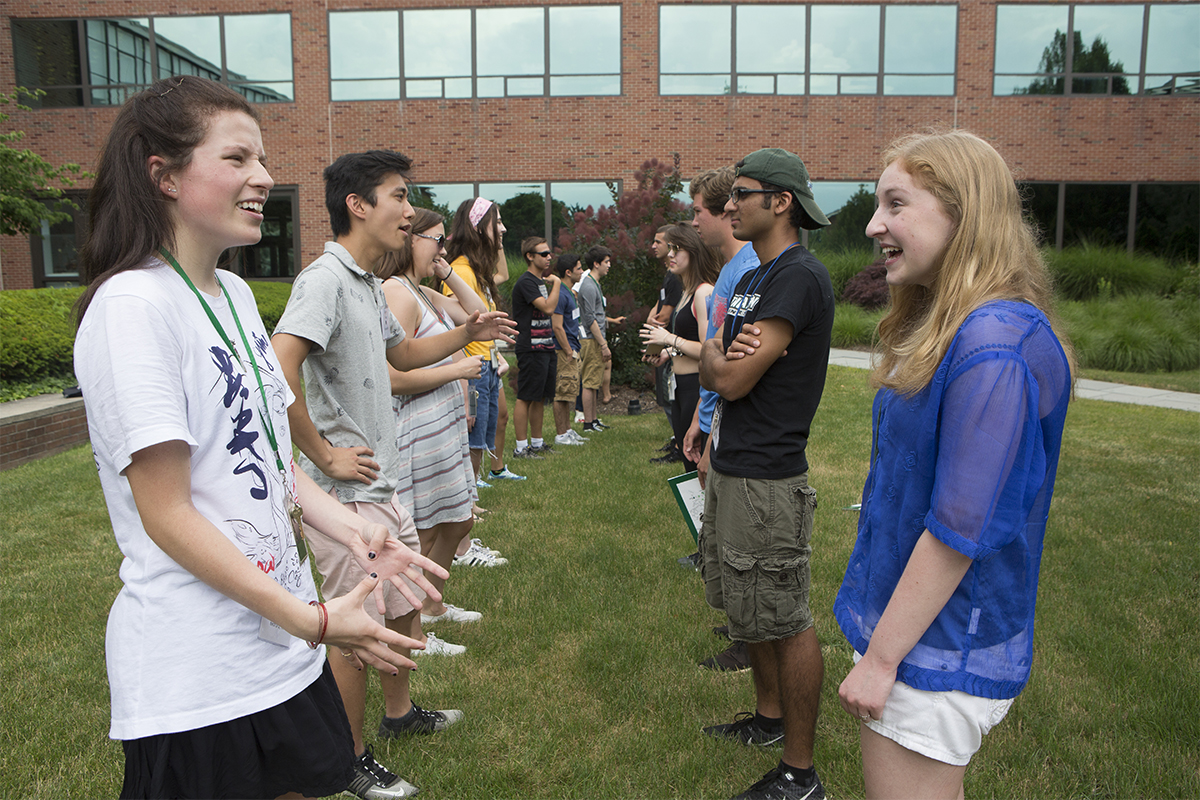
Orientation looks a little different at Binghamton University in 2017, compared to prior years. For one, check-in and the Campus Services Fair are now in Mountainview College to make it easier for families.
“Now everything is in Mountainview, so it’s a one-stop shop, which simplifies the process,” said Betsy Staff, associate director of New Student Programs, which coordinates Orientation.
An invaluable resource for incoming students, Orientation is designed to help provide a seamless transfer experience for students from high school or another college. It’s not mandatory, but students new to Binghamton University and their family members are encouraged to participate.
Another focus in the past few years has been developing a more student-centered registration process – one of the major activities students complete during Orientation.
“Registration was formerly held in the Glenn G. Bartle Library where students were seated at computer pods and anxiously counted down the seconds before they were permitted to enter the system to register,” said Peter Nardone, former associate director of New Student Programs. “This was particularly troublesome as most students were unfamiliar with the system they were attempting to navigate.”
“That’s one of the things we wanted to eliminate,” said Staff. “With this years changes, it’s a lot calmer now and it’s not a rush to get in right at the exact minute.”
“Now registration is more of a group process where you’re sitting around a table with about eight peers and you have the support of two advisors – one student and one staff advisor – to help you through,” Nardone said, although this model is more geared to Harpur students. Registration also no longer takes place in Bartle Library, but in Old Union Hall and various locations on campus.
Due to its larger enrollments and the focus on academic advising while students register for their classes, separate Orientation sessions are held for Harpur College of Arts and Sciences freshman and the professional schools. This year, unlike years in the past, transfer students are also being separated into three Harpur College and two professional school sessions.
“We focus on both the academic and social side,” said Staff. “We also encourage incoming students to make connections with their classmates, advisors, faculty and staff while they’re here.”
Orientation covers a wide variety of topics and activities. Students attend some sessions together, like the Campus Services Fair where they can talk to staff from offices all across campus, but there are times when they split off from each other.
“When family and students part ways, family members can get some exposure to University resources including hearing from Office of the Dean of Students, speaking with academic advisors, financial aid and student account representatives, and members of the Fleishman Center for Career and Professional Development,” said Nardone.
Staff said families also learn about safety and wellness initiatives, get firsthand perspectives from student advisors, view the residential communities and familiarize themselves with transportation resources. In addition, they have opportunities to meet with other families and attend optional tours including the Recreation Center, the Nature Preserve and even take a virtual tour.
Orientation Advisors (OAs) play an enormous role in the success of the program, said Nardone, adding that OAs are selected to represent a wide range of the student population, including from the University’s different schools as well as for diversity in age, class year, and traditional and non-traditional students.
“We want all different majors and schools represented and try to find the most diverse group of students so that when new students come in, they hopefully have someone that they can make a connection with,” said Staff.
“There are 20 Orientation Advisors each year and although the number of OAs hasn’t changed to accommodate an increase in admitted students over the years, there has been an increase in the number of orientations we host,” said Staff. “When I first started we did about seven or eight orientations and now we do 13.”
“Our program is pretty comprehensive,” said Nardone. “It’s evolving and has been adjusting to the needs of our students as well as the needs of our campus, which has gone through a lot of changes. I think that working collaboratively across the board has been critical to the success of the program.”
For those who are unable to attend an orientation session during one of the regularly scheduled dates, accommodations can be made. Students have the option to attend Orientation in August before the official start of classes, said Nardone.
For international students, Orientation takes place just before the semester begins, when they work with the Office of International Student and Scholar Services to navigate immigration regulations and the various procedures associated with their transition to the U.S. The amount of time needed for general orientation is strictly dependent upon the needs of the individual student.
For more information about Binghamton University’s summer Orientation programs, visit the web.