Who you gonna call?
Binghamton University's Director of Emergency Management called to help run Florida shelter during recent hurricanes
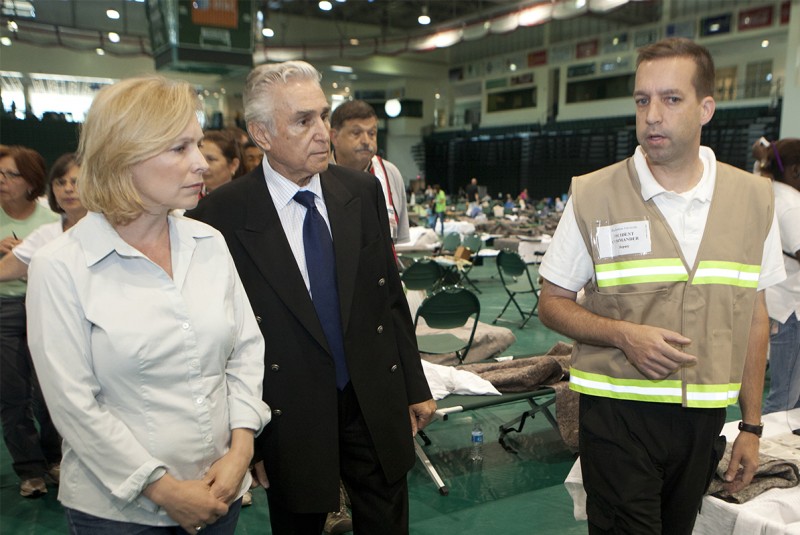
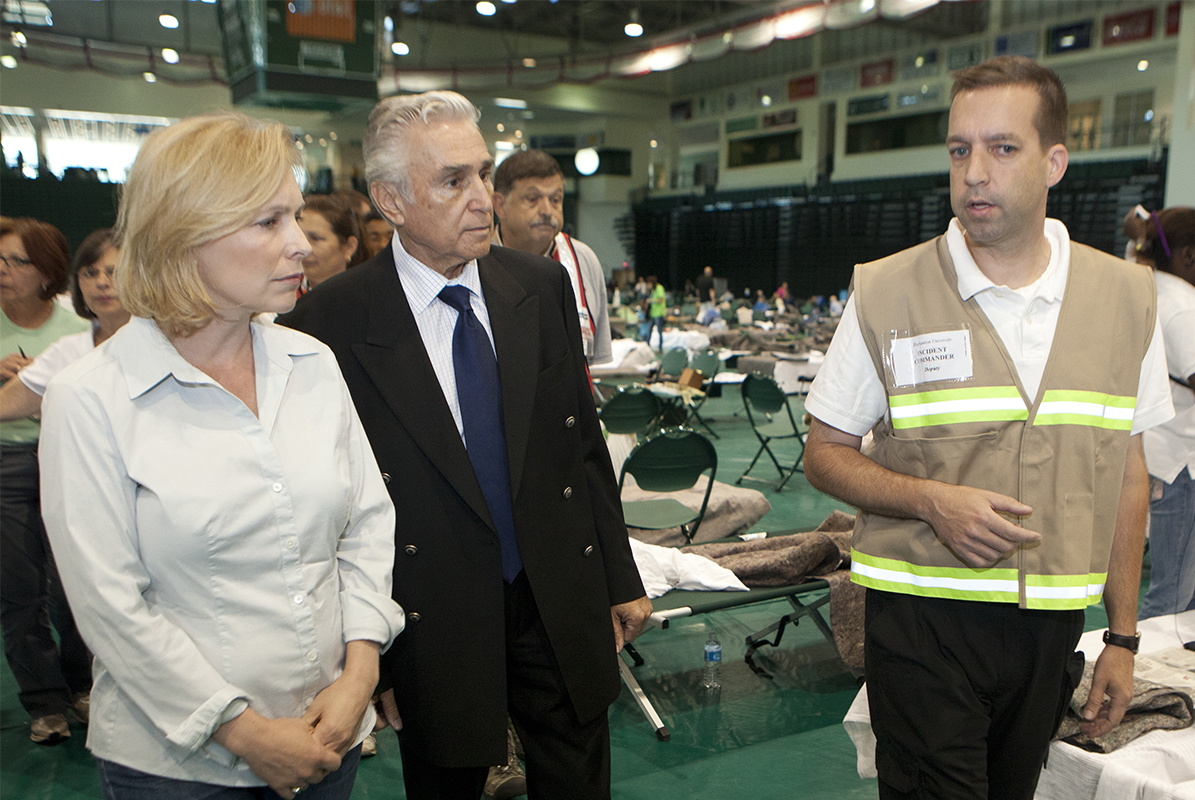
Who you gonna call?
Just recently returned from his deployment to Miami, Dave Hubeny is the man you want on your side when disaster strikes. As the director of emergency management at Binghamton University, he has been in charge of providing solutions to campus emergencies since 2002.
An experienced veteran in his field, Hubeny is no stranger to intense situations. When the Susquehanna and Chenango rivers flooded in 2006 and 2011, he coordinated the use of ‘mega-shelters’ on campus to provide housing to local evacuees.
“Working with both campus and community partners was a valuable experience for me,” he said. “Colleges and universities do not typically shelter people this way, and it made what I did unique.”
With the Events Center housing over 2,000 people during each incident, Hubeny was responsible for the largest Red Cross shelter ever opened in the northeast United States at that time. The experiences made him a popular speaker at several professional conferences nationwide.
“The circle of emergency managers working at colleges and universities is a small one,” Hubeny said. “At the conferences, most of my peers were able to learn of my expertise in managing disaster situations.”
It was this impressive experience in shelter management that prompted a Sept. 6 call from the University of Miami, requesting his aid as Hurricane Irma approached Florida. With the storm’s projections showing it to be a Category 4 or 5 storm, plans were being made to open temporary housing for any students unable to evacuate.
While Miami has seen plenty of hurricanes before, the University of Miami’s campus buildings are only built to sustain Category 3 storms. The plan to open an off-campus shelter for students had already been developed, but was untested. With this in mind, Hubeny flew down to Florida Thursday, Sept. 7, and stepped into the role of assistant shelter manager for the university.
“I hadn’t had any experience regarding disaster relief with hurricanes before this,” Hubeny said. “However, we tend to take an ‘all-hazards’ approach in any situation like this, so I was still very familiar with what measures needed to be taken.”
In any natural disaster, the objectives are the same: provide shelter and aid to those displaced from their homes. As a key figure in managing the shelter, Hubeny was responsible for coordinating shelter supplies, organizing the comfort of shelter evacuees, and managing operations such as medical services and mental health counseling.
But it was the people he worked with that made his experience memorable.
A team of university workers cooked and served every meal as well as provided entertainment with board games and dance lessons, taking the situation beyond the disaster.
“Without the incredible staff, the shelter would have been much less enjoyable for everyone involved,” Hubeny said..
And staff weren’t the only ones contributing; students made it memorable as well. Rather than sitting around watching Netflix on their cellphones or laptops, they chose the unthinkable: human interaction with people they didn’t know. Their willingness to make the best of the situation and to get to know each other created a wonderful atmosphere for everyone, Hubeny said.
Spending time with the students in Miami allowed Hubeny to realize new measures he can take to better prepare Binghamton University students for an emergency.
One of the ways he has ensured Binghamton’s readiness is through the University’s Incident Management Team, which holds regular training sessions. Unique to SUNY schools and one of few in the country, the IMT is on standby and ready to respond to any campus crisis.
“Disasters, emergencies and unplanned incidents often come with little or no warning,” Hubeny said. “Each individual must be prepared and know how to make smart decisions.”
So how should students prepare themselves?
- Sign up for B-Alerts. This campus system is the fastest and most effective way for students to know that an emergency situation is happening. Signing up to get the text alerts online allows students to be aware of any safety concerns that may be an issue.
- Know campus emergency phone numbers. Dialing 911 on campus landline phones is an effective way of getting help, but dialing 607-777-2222 from any phone will also reach the University Police.
- Take a CPR/ Stop the Bleed class. Medical emergencies do happen, and that’s why AEDs and bleeding control kits have been placed around campus. Take a CPR and a Stop the Bleed class to know how to use this equipment effectively when an urgent medical situation occurs.
- Know what to do if the outdoor siren is activated.
- In specific emergency situations, an outdoor siren will sound with voice announcements accompanying it. Even if you can’t understand what the message is saying, always go inside when the siren airs. To hear what the siren sounds like, go to the web.
- Be informed.
To learn more about different emergencies and how to prepare for them, visit Binghamton University’s emergency management website.