From classroom to patient’s room
Clinical instructors combine education and practice to teach students
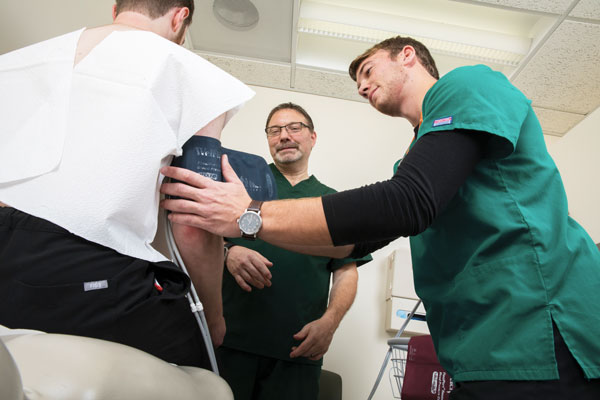
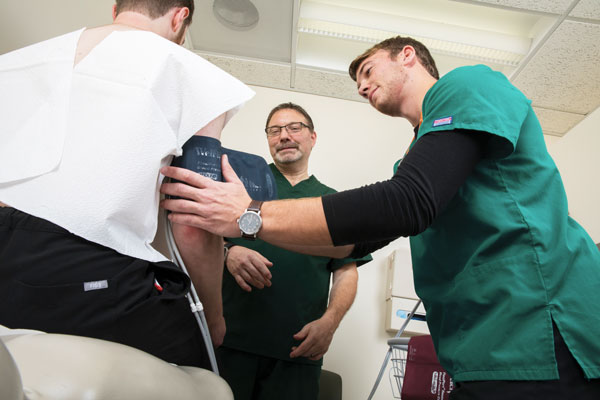
Ask nurses about nursing school and almost all will tell you about a good — or bad — clinical instructor.
Clinical instructors help students take what they’ve learned in the classroom and put it to use in the practice setting. They’re an integral part of a quality clinical experience and play a vital role in preparing students to become competent nurses.
But what motivates someone to become a clinical instructor? How do they help students deal with their anxiety at a clinical site? What’s the best part about being a clinical instructor? These are some of the questions we asked three clinical instructors at the Decker School of Nursing.
Q. Why did you become a clinical instructor?
Gilbert: I became a clinical instructor at an LPN level in Cortland [N.Y.], and I really enjoyed working with students and other faculty. In 2012, I did an internship with the Decker School and noticed how dedicated and compassionate the nursing faculty are to the needs of students, and I wanted to be a part of that.
Klimachefsky: I’ve always felt called to be a teacher; it’s something I love doing. I’ve been a clinical instructor at Binghamton for three years. I’ve facilitated clinical rotations in classrooms, hospitals, nursing homes, home care and in the community.
Q. What characteristics are essential for a clinical instructor?
Baidoo-Davis: The most important qualities about a good instructor are knowing the material, being prepared and being able to bridge the cognitive/didactic knowledge with point-of-care experiences to enhance [learning]. Also important is having compassion not only for our vulnerable clients, but also for our learners; being flexible enough to adapt to the constantly changing clinical environment; and being able to work well with patients, their families and the interdisciplinary team. Above all, a good clinical instructor must exemplify Binghamton’s education theory, which is rooted in humanism.
Gilbert: A clinical educator should be compassionate and understanding of the requirements of the clinical setting. The clinical instructor should also be supportive and understanding to students and to the unit they’re working on.
Q. How have memories of your own clinical instructors affected your teaching?
Baidoo-Davis: I have good and bad memories about my past clinical instructors, and what is important is that I learned from them. We live among good and bad, so I share with my students that even if they think an instructor is bad (no one is perfect), then “What’s your takeaway?” When students complain about preceptors, I encourage them to do better when they’re nursing leaders.
Klimachefsky: I had amazing clinical instructors as a Baccalaureate Accelerated Track student at Binghamton. Allison Dura always stood out as an example of the integration of scientific knowledge with social strength; she cares for people with both intellect and compassion. Meg White taught me how to remain calm in the midst of the profession’s storms. Lori Sprague’s love for working with the geriatric population was contagious and helped me to find real joy working in nursing homes. Maureen Daws, who I now work with at UHS, helped me view patients as whole people — not as objects or simply tasks — and encouraged me to integrate spirituality into my practice of nursing. The examples of these amazing instructors [Dura, White and Sprague are current faculty members] and others at Binghamton continue to call me to be a better nurse.
Q. How nervous are students during clinical experiences and how do you help them deal with that?
Gilbert: Every student has a little anxiety starting a clinical rotation. Whenever students get nervous, I sit down and actively listen to what their thoughts are so I can help them cope with the task at hand.
Klimachefsky: In the beginning, almost all students are very nervous. By very nervous I mean off-the-charts nervous. I do my best to let my students know that I remember what it was like to be in their shoes and that it’s OK to feel whatever emotions they’re feeling. Sometimes just talking about the anxiety can help. But the best thing for most students struggling with anxiety is to face their fear head-on and keep returning to the clinical setting. Every clinical day builds upon the last.
Q. Do you think tough clinical experiences that challenge students provide better preparation for nursing?
Baidoo-Davis: We learn most from our toughest and most-challenging experiences. If something is easy to attain then you don’t really value it because you didn’t work hard to achieve it.
Klimachefsky: Challenge tends to be a quicker pathway to growth if we’re willing to submit to the process. I think this is as true for nursing students as it appears to be for everyone else.
Q. What is your favorite part about being a clinical instructor?
Baidoo-Davis: The greatest pride of all is to see the students working with me at the hospital as colleagues. Working alongside former students now turned clinical nurses reminds me of the popular adage: “Today’s student, tomorrow’s colleague.”
Gilbert: I enjoy the time when the student figures out a situation and finally gets why nurses do what they do.
Klimachefsky: I’m passionate about getting to know my students and helping them process their inner responses to clinical experiences. I love getting to be a part of their “aha” moments. I love watching them grow as they positively impact the lives of their patients.