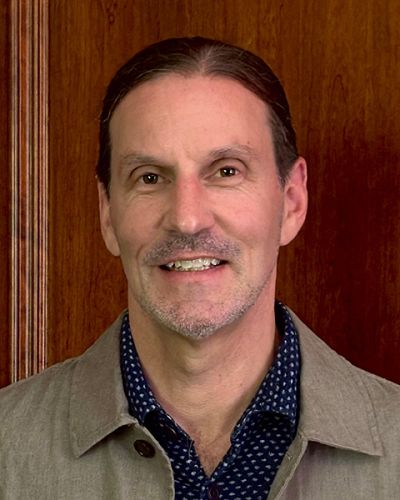
Thomas Foley, MPH
Clinical Associate Professor, Public Health Division
Decker College of Nursing and Health Sciences
Biography
Thomas Foley joined Binghamton University’s Decker College of Nursing and Health Sciences in September 2023 as a clinical assistant professor in the Division of Public Health. In addition to teaching several graduate-level courses, Foley is the division’s representative for interprofessional education (IPE) at Binghamton University.
Foley was the lead editor of Health and Healthcare Systems: A Global View (Springer Publishing, October 2025), which promotes international diversity and global equity by analyzing more than 50 countries across 13 regions, in addition to exploring strategic approaches that can mitigate climate change, improve mental health, address forced migration, and combat threats from communicable and noncommunicable diseases. The chapters in Health and Healthcare Systems: A Global View provide comparative analysis of healthcare structures, financing and coverage across cultural, economic and geographic contexts while exploring diverse healthcare practices, including traditional and complementary medicine. The textbook's authors represent a diverse range of countries and health disciplines worldwide. Several Binghamton faculty members and student researchers contributed to the content.
Foley has over 15 years of experience in planning, implementing, managing and evaluating health education and promotion programs, as well as providing instruction, leadership, mentorship and training. He has designed, implemented, and managed interprofessional, community-based student service-learning projects and has precepted field experiences for undergraduate and graduate students.
As a community organizer and teacher in the Peace Corps Guyana, Foley conducted needs assessments, managed middle and high school classrooms, promoted student academic and personal growth, facilitated community meetings, created and advised youth-led health and environmental clubs, and participated in cross-cultural events. He then worked in disease prevention and treatment, promoting mental, physical and social health in diverse cultural settings in Washington, D.C., at the individual, organizational and community levels. He designed, implemented, managed and evaluated individual and community-based programs, using Community Organizing Theory and Transtheoretical Model of Change concepts when developing community programs and individual plans for sedentary adults with poor nutrition habits and substance use disorders.
While earning his MPH degree at George Washington University, Foley worked as a health behaviorist and researcher on patient-centered collaborative teams at the GWU Medical Faculty Associates' Weight Loss Clinic. He planned and implemented a hybrid telehealth/in-person approach to developing physical activity and nutrition self-management skills among a diverse set of clinic patients. He fostered intrinsic motivation within the patients using Motivational Interviewing and the Transtheoretical Model of Change. He designed and conducted a mixed-methods evaluation of aspects of the collaborative approach.
After earning his MPH, Foley worked as a graduate research and teaching assistant at Portland State University and Oregon Health & Science University’s Institute on Aging. He helped establish the Bridges Collaborative Care Clinic, a student-led nonprofit serving Portland’s homeless, and co-led its training and education programs. Foley also created an internship program and supervised students. Later, he joined Eastern Washington University’s MPH faculty, teaching epidemiology, participating in course design, and serving on the Spokane Homelessness Coalition and its Chronic Conditions Subcommittee.
Foley was the founding unit lead and a health sciences lecturer at Indiana University Fort Wayne, expanding the program in three years. He served on the IUFW Executive Committee, chaired the Student Affairs Committee, presided over the Faculty Council, and was part of the Diversity, Equity, and Inclusion Taskforce. Foley initiated the ADA Amplified Symposium to raise disability awareness and collaborated with community organizations to start ADA Amplified. The inaugural symposium featured Judith Heumann and Paralympic athletes from Rio and Tokyo. Additionally, Foley co-organized health and resource fairs at local YMCAs, offering student experiential learning and community health screenings.
Education
- Master of Public Health, health promotion, George Washington University
- BA, English language and literature, University of Maryland, College Park
Research Interests
- The prevention and treatment of chronic diseases via health behaviors
- Raising awareness of the susceptibility and severity of sarcopenia and the benefits of progressive resistance training as sarcopenia prevention and treatment among community-dwelling older adults
- Global health and healthcare
Teaching Interests
- Health promotion
- Disease prevention
- Social health
- Behavioral health
- Global health and healthcare
- Etiology of chronic conditions
Clinical Interests
Use of the Transtheoretical Model and the Stages of Change to help healthcare participants select and achieve health goals
Promoting holistic health and a participant-centered healthcare approach