The world is entering a quantum era where information is encoded, processed and sensed using the uniquely nonclassical resources of superposition, entanglement and squeezing — reshaping secure communication, ultra-precise measurement and scalable computation.
As quantum devices move from lab curiosities to deployable systems, the ability to generate, control, network and error-correct quantum states is driving the next technological revolution.
The Quantum Information Science and Engineering (QISE) Cluster in the Department of Electrical and Computer Engineering brings together quantum photonics, atomics, quantum dots, solid defects, superconducting circuits and quantum algorithms/software to build end-to-end quantum capabilities — from entangled-photon and triphoton sources, low-loss superconducting hardware and integrated photonics to fault-tolerant protocols, verification tools, and quantum-network architectures.
Through interdisciplinary training and hands-on research, we prepare engineers and scientists to lead this frontier- delivering reliable quantum technologies for computation, communication and sensing that make a real-world impact.
Specialties
- Quantum photonics and integrated optics
- Atomic, molecular and optical (AMO) platforms
- Superconducting quantum circuits
- Quantum networking and repeaters
- Quantum sensing, imaging and metrology
- Quantum error correction and control
- Quantum algorithms and software systems
Related courses
- Loading Course Info...
- Loading Course Info...
- Loading Course Info...
- Loading Course Info...
- Loading Course Info...
- Loading Course Info...
Potential career pathways
Quantum Hardware Engineering: Design, fabricate and characterize qubits, resonators and photonic/atomic interfaces as a quantum hardware engineer, superconducting circuit designer, photonic integrated circuit (PIC) engineer or cryo/RF test engineer
Quantum Networking and Communications: Build entanglement distribution, repeaters and interoperable links across optical-microwave systems as a quantum network engineer, quantum repeater architect or quantum communications systems engineer
Quantum Sensing, Metrology, and Imaging: Develop sensors/imagers that beat classical limits for timing, fields and imaging as a quantum sensing engineer, quantum Imaging scientist, metrology R&D engineer
Controls, Calibration, and QCVV: Create pulse sequences, feedback and benchmarking stacks for reliable operation as a quantum controls engineer, QCVV engineer or quantum reliability/devOps engineer
Quantum Algorithms and Applications: Translate domain problems to quantum workflows (NISQ and fault-tolerant) as a quantum algorithm developer, quantum applications scientist or hybrid classical– quantum ML engineer
Quantum Error Correction and Architecture: Design logical qubits, decoders and architectures as a QEC research engineer, fault-tolerant architect or compiler/runtime engineer
Materials and Device Physics for QISE: Engineer low-loss materials and interfaces (e.g., Ta/Al, dielectrics, defects) as a quantum materials scientist, process integration engineer or nanofab R&D engineer
Systems Integration and Productization: Bridge lab prototypes to fieldable systems and cloud services as a quantum systems engineer, solutions architect, product manager (quantum) or field applications scientist
Standards, Policy, and Security: Shape interoperability, security and spectrum/standards as a standards engineer, quantum policy analyst or technology foresight specialist
Academic, National Lab, and Government R&D: Advance QISE at universities, national labs and agencies (e.g., DOE, NSF, NIST, DARPA, AFRL/ARL/ONR, IARPA, NASA, NSA) as a professor, staff scientist or program manager
Entrepreneurship and Venture: Found or join startups in quantum hardware, networking, software or sensing as a founder, early engineer or venture/BD associate focused on quantum technologies
Faculty
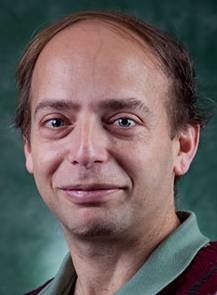 View Full Profile
 David J. Klotzkin
Associate Professor
Electrical and Computer Engineering
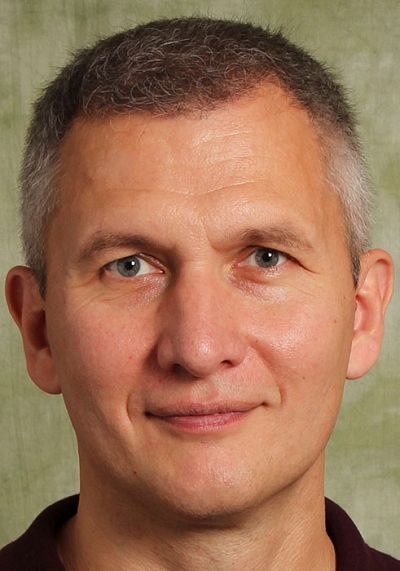 View Full Profile
 Vladimir V. Nikulin
Associate Professor; Director of Graduate Programs
Electrical and Computer Engineering