The making of a scientist: Curiosity, research and networks of support
Biological sciences alum Dylan Jones started off with a GED. Today, he’s a scientist at the EPA
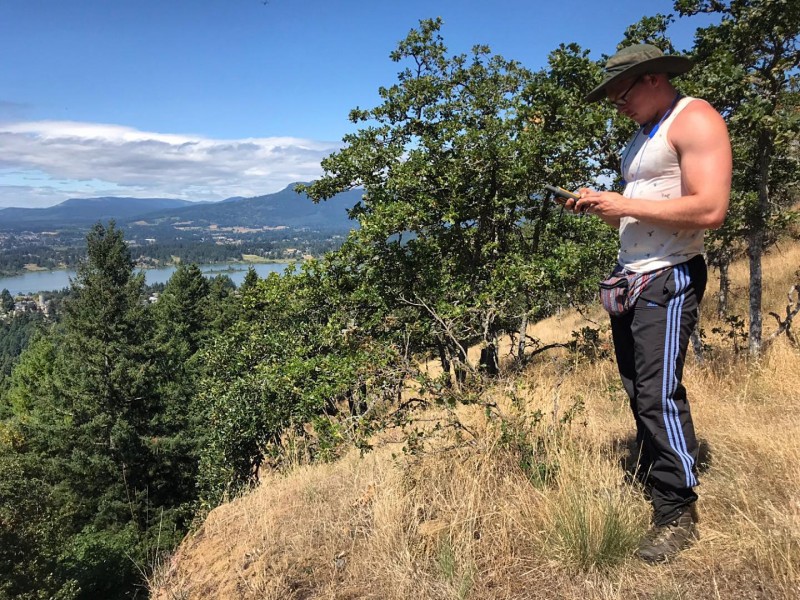
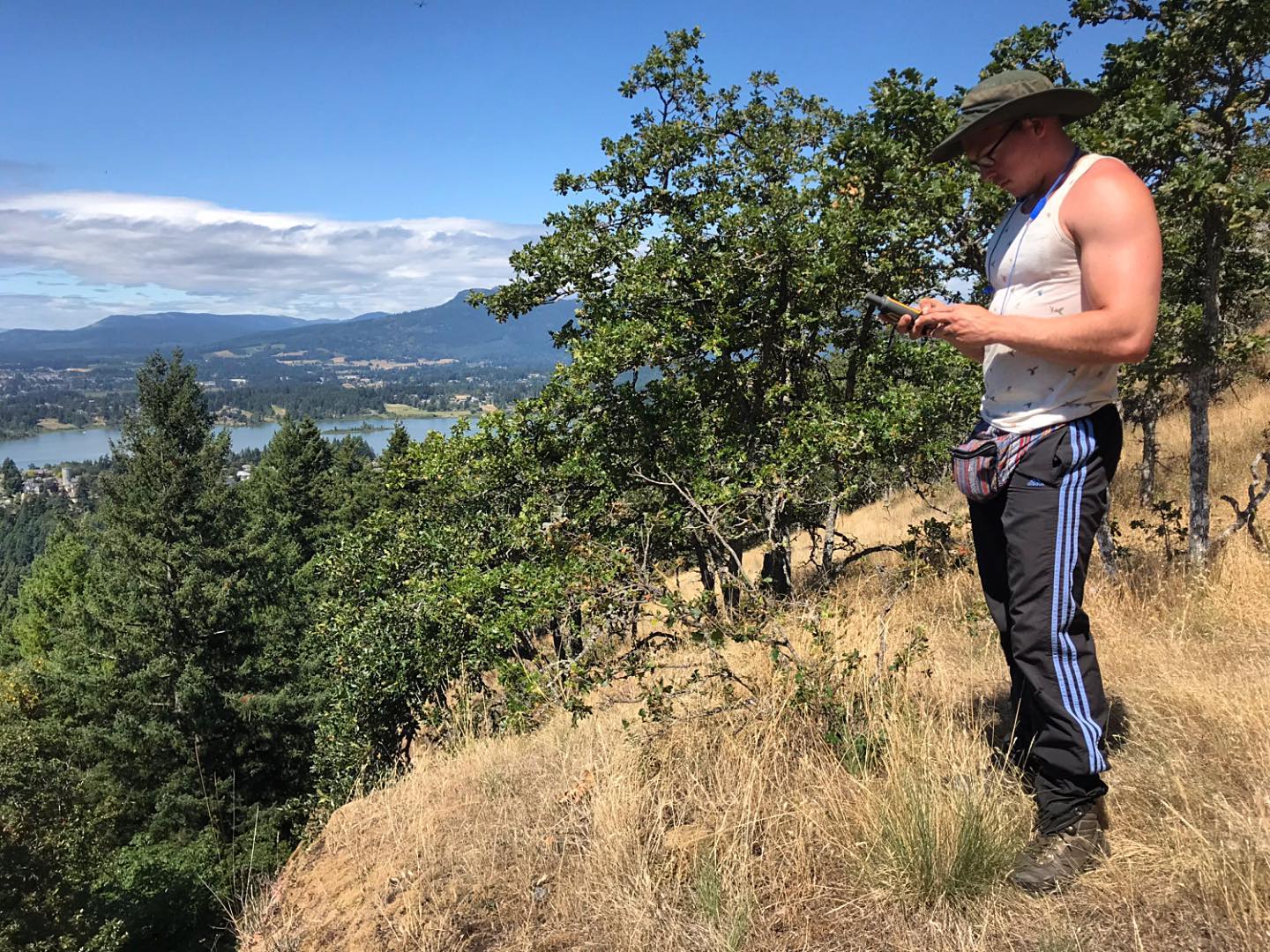
Dylan Jones has always been a bug guy.
Growing up in rural southwestern Virginia, he often found himself in the woods, fascinated by the diversity of living creatures there. His first job was in a Walmart, where he gently shepherded stray insects out of the store and regaled his coworkers with insect facts while taking out the trash.
“People are afraid of bugs, but they’re misunderstood,” said Jones, who completed his doctorate in biological sciences in May. “I wanted to take the opportunity to convince people that we need our creepy-crawlies.”
Today, the Binghamton University alumnus is a scientist for the Environmental Protection Agency, conducting environmental assessments of pesticides. It’s a trajectory he never would have imagined during his teen years, when he lost his academic focus and started hanging out with the wrong crowd. By the 10th grade, he stopped doing homework.
“I was getting into behaviors that were pretty destructive for my overall productivity and life,” he admitted.
A few months after his 18th birthday, a car accident jolted him into a new perspective. Realizing where his life was headed, he turned to his parents for help making a fresh start.
The first step: earning a GED.
“I had no idea what I was going to do,” Jones remembered. “Reflecting on that, I never would have thought I’d be smart enough or good enough to be where I am. I didn’t have that confidence in myself.”
After his GED, he signed up for classes at Patrick & Henry Community College. He found that he enjoyed science classes, particularly biology, and received encouragement from a faculty mentor and the college’s student support services for non-traditional students. He went on to earn his bachelor’s at Roanoke College, his master’s at Montclair State University and finally his doctorate at Binghamton.
“I never knew what my next steps would be because I came from more of a working-class background rather than an academic background. You don’t have that exposure, so you don’t know what your options are,” he said. “Every time I went to the next step, I kept falling in love with science and someone saw potential in me.”
Non-traditional life lessons
As he refashioned his life, his love for bugs returned on six feet and diaphanous wings.
“When I rediscovered my passion for science, I was very proud to be a nerd at heart,” he said.
His interest in entomology led him to Binghamton, when he saw that Assistant Professor of Biological Sciences Kirsten Prior had openings for graduate students in her lab. She and Assistant Professor of Biological Sciences Thomas Powell proved encouraging mentors, as did his fellow graduate students.
When Jones first interviewed for a position in her lab, Prior was struck by his curiosity, understanding of ecology and his ability to communicate the questions he was interested in, she said.
“His hard work and persistence paid off, with his thesis work making novel and significant contributions that have been recognized in the field,” she added. “Dylan’s non-traditional background makes him a role model, not just for other non-traditional students. He inspires others in science to be empathetic, understanding and inclusive mentors and colleagues.”
At Binghamton, Jones received a Clifford D. Clark Diversity Fellowship, awarded to candidates who have a history of overcoming disadvantage or from groups underrepresented in graduate education. He also won the Graduate Student Excellence in Research Award for his work on the impact of climate change on oak gall wasps and their predators.
Support and encouragement are crucial for high-level academic success, Jones pointed out. Marked by cognitive challenge and a heightened level of responsibility, doctoral programs involve an immense amount of work, from coursework to research and teaching.
“When you feel like you’re overwhelmed or that you’re not making enough progress, they help you stick to the program,” he said of the friendships he made. “Because PhD programs are so long, having a good support system really matters.”
Fellow non-traditional students looking to follow the same path shouldn’t be shy about reaching out for help. Faculty and staff want students to succeed, and there are services available to help with the challenges and transitions. Above all: Know that you really are good enough.
“Coming in with a non-traditional background, it’s sometimes hard because you feel that you don’t know what everyone else does,” he said. “You need to believe in yourself and not be afraid to reach out to people for guidance and mentorship.”