Nourishing minds: Dietitians guide Binghamton students through dining challenges
Dietitians Julie Lee and Alexa Schmidt provide support for students balancing mental health and healthy eating

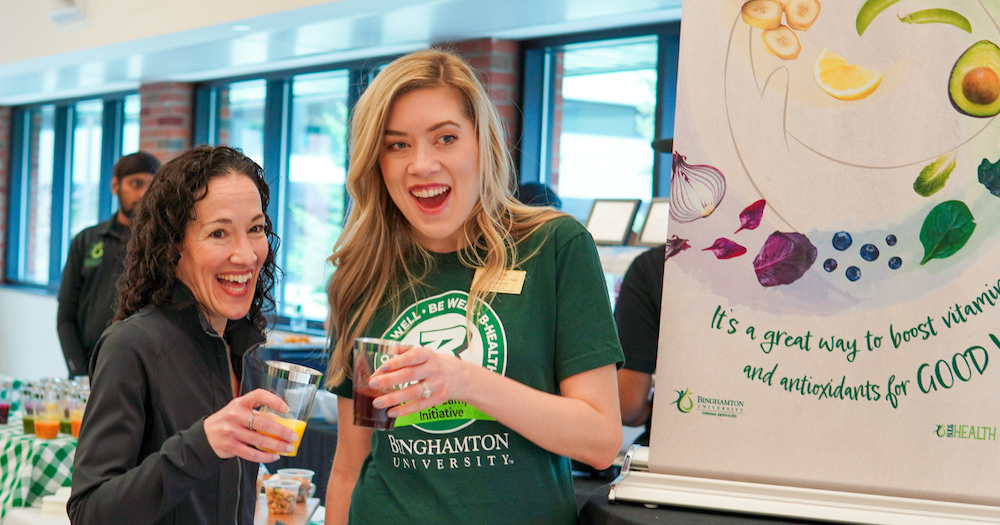
For students with mental health challenges, something as seemingly simple as grabbing a bite to eat at the dining hall can feel overwhelming. But Binghamton dietitians are stepping up to help make these choices easier.
As students at Binghamton University start the 2025-26 school year, they are supported by academic advisors and professors, and have resources available from many campus departments – including dietitians at Binghamton University Dining Services (BUDS). Registered Dietitians and Certified Dietitian-Nutritionists Julie Lee and Alexa Schmidt also support students during their academic career. While people may think of dietitians mostly in the realm of physical health — eating healthy to manage weight or muscle mass or managing food allergies and intolerances — Lee said they often play a role in mental health.
“Many mental health conditions are especially known for causing eating behavior issues, sensory issues and digestive problems,” Lee said. “A dietitian who specializes in this area can provide great benefit for understanding how your condition is impacting your eating – providing resources for support, and helping to improve quality of life and ensure an adequate, balanced diet.”
Lee and Schmidt are available for free, confidential meetings with students to discuss dining options, eating strategies and accommodations on campus. While many students come directly to them for appointments, they also work with different campus departments for referrals and partnerships.
Students who have food allergies or require special diets can often develop dining anxiety because they are concerned about the safety of their food. Schmidt has met with students with food allergies who are anxious and afraid to eat but want to dine on campus. She said meeting with the team can help ease their fears.
One solution has been to demonstrate to the students how they can prepare their own meals in the Culinary MakerSpace kitchen. In addition, the Simple Servings stations in C4 and Appalachian Dining Halls provide safe and appetizing food choices for students with some of the most common allergies.
Another solution has been to tour the dining hall with students and introduce them to the dining team, particularly chefs, cooks and managers, who are an important part of ensuring students’ needs are met, Lee said.
“It’s helpful to tour the hall and introduce the team,” Schmidt said. “The students feel more at ease knowing they can reach out to a member of the management team. Increased awareness of all the options and additional ways to order special items is helpful, too.”
Lee said the on-site dining team can point out safe options in real time.
“And if the staff member knows what the student likes and needs, they can better anticipate their needs when they come into the dining hall,” she said.
Sometimes, the issue isn’t the food itself but the environment, in which case Lee said they help provide education about dining during quieter periods, checking the menu in advance, or picking up extra food to plan ahead for future meals.
“In rare cases, we have arranged pickups so that a student can just pick up their food, pay for it and leave,” she said. “This is especially helpful for those with strong auditory sensory issues and find the dining hall environment to be too overwhelming.”
As guidance and information about working with mental health disorders evolves, Lee said she makes sure to stay on top of it by looking for and participating in continuing education opportunities.
“Recently, I have been purposefully seeking and engaging with education opportunities focusing on ARFID (avoidant/restrictive food intake disorder) and neurodivergent conditions like ASD and ADHD to expand my knowledge in that area,” she said, adding that she also watches educational webinars, attends in-depth trainings, and is a member of EDRDPRO (Eating Disorder Registered Dietitians and Professionals).
Whatever issue or concern a student may have about dining, Lee said the best thing to do is to take that first step.
“I would suggest to any student who is struggling with eating in any way to reach out for support from a dietitian and/or a mental health professional.”