Meet some of the newest faculty at Binghamton University, and learn what’s in store for the year ahead
Schools University-wide launch innovative programs, events to enhance student experience
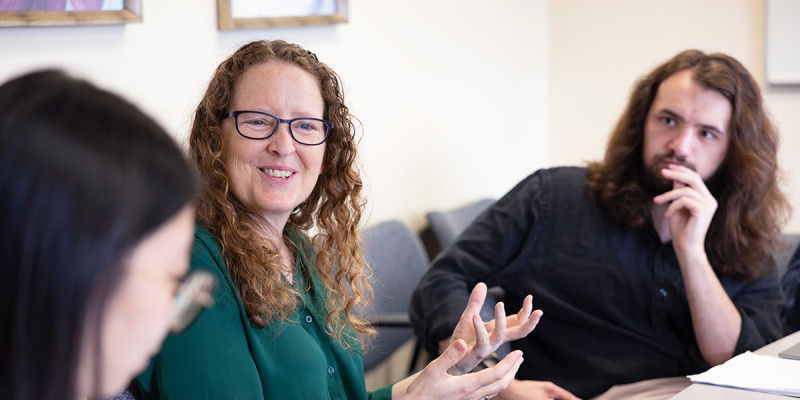
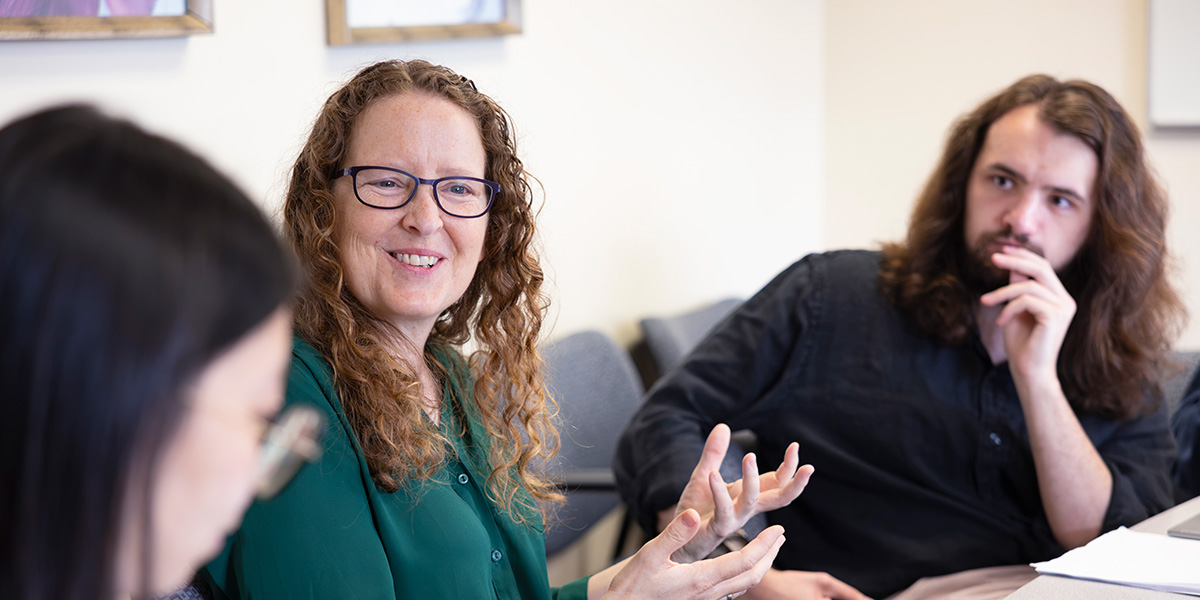
This academic year, Binghamton University welcomed 61 new faculty members to join the ranks. Among them is Willie Eggleston, who worked in the School of Pharmacy and Pharmaceutical Sciences (SOPPS) from 2017 to 2024, then decided to return.
After two years at the Upstate New York Poison Center, Eggleston said coming back to Binghamton has refueled his excitement to build relationships with students and mentor them along the way.
“Having stepped back to do more clinical teaching at the Poison Center over the last couple of years has really cemented for me the importance of a hands-on application for learning,” said Eggleston, now a clinical associate professor of pharmacy practice. “This year, I’m challenging myself to teach some new things. It's easy to fall into your patterns and stick with it, so, I want to push myself to do more engaged learning in the classroom and think about how we incorporate critical thinking and generative AI into our courses.”
With the fall 2026 semester at Binghamton University in full swing, it kicks off innovative new academic programs and paves the way for fascinating research projects that, together, will create exciting possibilities for what members of the campus community can accomplish.
“We always challenge ourselves to make Binghamton a place where our students and faculty not only learn from each other, but also work together on projects that fuel their academic and creative passions, ultimately allowing our students to grow as leaders in whatever industry they choose after graduation. This year is no exception,” said Provost and Executive Vice President for Academic Affairs Donald E. Hall. “Each of our incredible schools is kicking off the semester with exciting new programs and events designed to advance the University’s strategic vision and provide a student experience that’s second to none.”
What new faculty are looking forward to
Binghamton University employs 1,235 faculty, and some of the newest members are eager to learn how to become better teachers by working more closely with their students.
Among them is Sandeep Srinivas, assistant professor of management information systems in the School of Management, who investigates the societal and strategic impacts of new platforms. He’s particularly interested in examining ways in which technologies such as artificial intelligence and blockchain improve lives or change societal structures.
“I'm trying to understand more of myself as a teacher by learning all I can about what the students need,” he said. “My hope for this year is that it will show me a way to manage my teaching even more effectively in the future.”
Skye Naslund, an assistant professor of geography who was previously a lecturer in the department, is looking forward to weaving more research into the student experience. One of her projects, made possible by a grant in partnership with the health departments in Broome and Tioga counties, is part of a railway safety initiative. The research examines where people cross at railroad tracks and where accidents are happening in order to find opportunities for intervention to improve safety.
“I know student-involved research is a big initiative here at Binghamton,” Naslund said, “and it's really nice to have the support to be able to bring them into projects, especially since I do a lot of research here in the community and it’s really important for students to do that type of work in a community they’re a part of.”
For Linda Radzik, a professor of philosophy, Binghamton also represents a fresh start. She left her previous role at Texas A&M University after the university began to regulate speech about race and gender in the classroom, under pressure from the state. At Binghamton, she’s especially interested in social, political, ethical, and legal philosophy, as well as the University’s undergraduate degree in philosophy, politics, and law.
“I’m already impressed with the aptitude of the students at Binghamton University,” Radzik said, adding that she did a lot of work in her old position to expand opportunities for undergraduate research, and saw how their skills improved dramatically.
“The undergraduate researchers here are part of a real community. They learn from one another and work with multiple mentors,” Radzik said. “Binghamton University’s new initiative to expand capstone opportunities is also exciting. My hope is that it will create even more pathways for students to do creative, philosophical work.”
More online programs, more learning options
To remain at the forefront of online programming, the College of Community and Public Affairs introduced two new online programs this year: the Master of Public Policy and the Master of Science in Higher Education and Student Affairs. Each program was designed to address an evolving world and job market, and the needs of all students, including accelerated options for working professionals.
Thomas J. Watson College of Engineering and Applied Science has also launched two online graduate degree options: computer science and information systems, both of which offer students the same access to tenure-track faculty, classroom materials, and rigorous scholarship as in-person instruction. However, online students can also benefit from high-quality pre-recorded lectures broken into short segments to help them learn at their own pace.
Decker College of Nursing and Health Sciences, meanwhile, launched a Master of Public Health (MPH) and Master of Science (MS) in Community Health Nursing double-degree program in June, providing exciting opportunities for graduates with expertise in both fields. This option allows students to complete the program in three years instead of four.
How Binghamton University schools are kicking off a new year
Take a closer look at what’s in store at each school during the academic year ahead:
- College of Community and Public Affairs
- Decker College of Nursing and Health Sciences
- Harpur College of Arts and Sciences
- School of Management
- School of Pharmacy and Pharmaceutical Sciences
- Thomas J. Watson College of Engineering and Applied Science