Meet Binghamton University’s new chief sustainability officer
Elizabeth Drake brings more than a decade of experience as a strategic leader in guiding institutional change
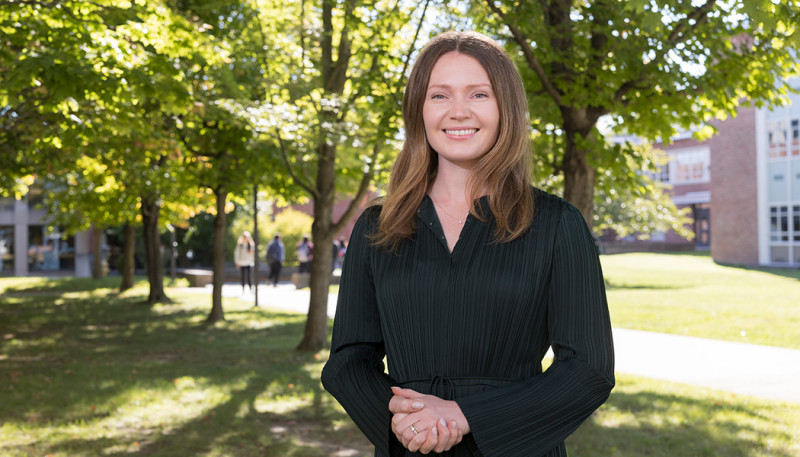
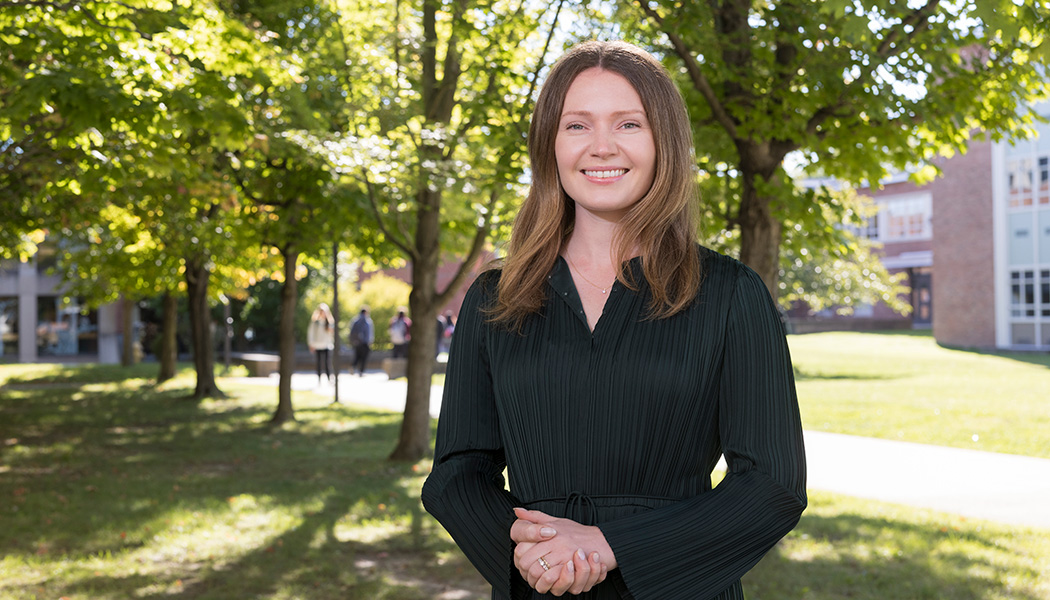
Elizabeth Drake has joined Binghamton University as its new chief sustainability officer, bringing more than a decade of experience as a strategic leader guiding institutional change in higher education and the private sector.
Sustainability remains one of the University's top priorities, as represented by its campus landscape, built environment, curriculum offerings, and clubs and organizations. Within the University’s Office of Sustainability, Drake will oversee a broad network of programs, projects, and initiatives that affect every member of the campus community.
A native of the Ithaca, New York, area, Drake is committed to advancing climate action and environmental stewardship by fostering collaboration and integrating sustainability practices into the workplace culture and operations.
Drake, who began her new role Sept. 10, met with BingU News to discuss her career path and what she hopes to accomplish at Binghamton.
How did you become interested in a career related to sustainability practices?
Growing up in the Finger Lakes region, spending time outdoors sparked a deep appreciation for the natural environment and a desire to protect and conserve it however I could.
When I entered college, I knew that I wanted to focus on this topic, which led me to study environmental science and sustainability. That education helped broaden my perspective beyond ecology and the natural environment to encompass the critical human and social dimensions of sustainability, a holistic lens that guides my work today.
How has our view on sustainability evolved in recent years?
The overall momentum around sustainability has grown exponentially during my time in the field. It’s become much more mainstream, accompanied by greater public literacy about climate issues and a deeper understanding of how environmental issues are intertwined with broader social issues, such as access to resources and systemic inequity.
I also think that we’ve moved past the idea that sustainability belongs to just one group or discipline; today, there are countless entry points and diverse pathways for everyone to contribute to solutions.
What have been your first impressions of Binghamton University?
I’ve long admired Binghamton’s strong reputation as a premier public university here in New York and beyond. I was drawn to the opportunity to serve a public institution, especially one with such a robust research focus and a vital role in the surrounding community and region. As a sustainability leader in higher education, my goal is not only to make our own campus more sustainable but also to serve as a catalyst and a resource beyond our campus boundaries.
From my initial impressions, this philosophy seems to align with Binghamton’s emphasis on community engagement, creating an exciting synergy.
In my role, I see an opportunity to take our sustainability efforts to the next level by building on the great work already underway here while also looking ahead and crafting our vision for what’s next.
What are you most looking forward to in your new role?
I'm most excited to collaborate with students, staff, faculty, and other members of the campus community to help shape our collective vision for sustainability and climate action. Every campus and every context is different, so my priority is to listen and learn about the existing landscape, including what’s already working, where the challenges are, and what matters most to this community.
From there, I look forward to bringing my own perspective to build on Binghamton’s strengths and to position the University as a true leader in higher-education sustainability.
What do you believe is the most misunderstood aspect of good sustainability practice?
There’s a misconception that sustainability has to be “all-or-nothing,” a mindset that can leave people feeling discouraged. In reality, sustainability is a continuum — every individual has agency to drive meaningful change. Small, intentional choices in our daily operations and campus routines add up to real, measurable change over time. At the same time, those collective actions help build the momentum and cultural buy-in that we need to push for larger systemic changes.
You believe in embedding sustainability into the culture and operations. What are the biggest challenges in accomplishing this, especially in higher education, and how can they be overcome?
Higher education presents two unique dynamics. First, because our student body is always changing, and making changes to advance sustainability requires ongoing engagement. However, that turnover also brings fresh energy, new perspectives, and opportunities to shift culture and build on our progress.
On the operational side, every department on campus has its own pressures and priorities. If sustainability is treated as an add-on practice, it inevitably faces resistance. The key is finding synergies, or areas where sustainability can become an amplifier of the work already being done rather than a competing priority.