Remote sensing techniques are more efficient than traditional archaeological excavation
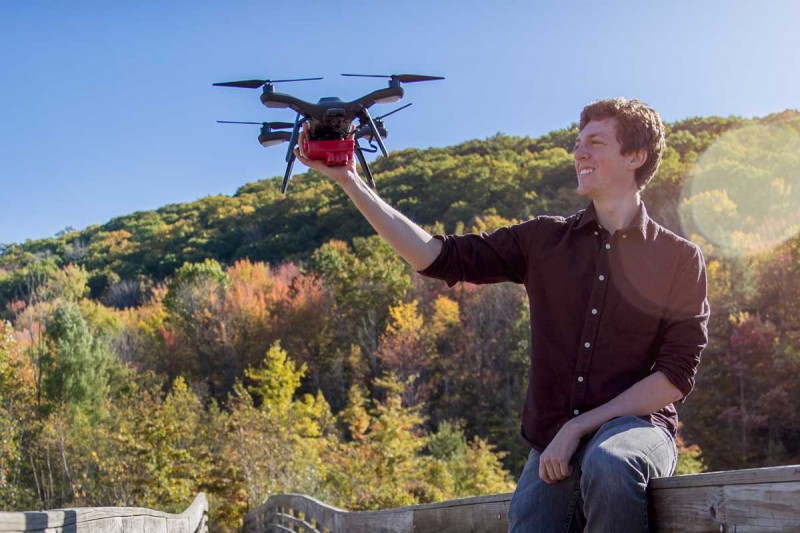
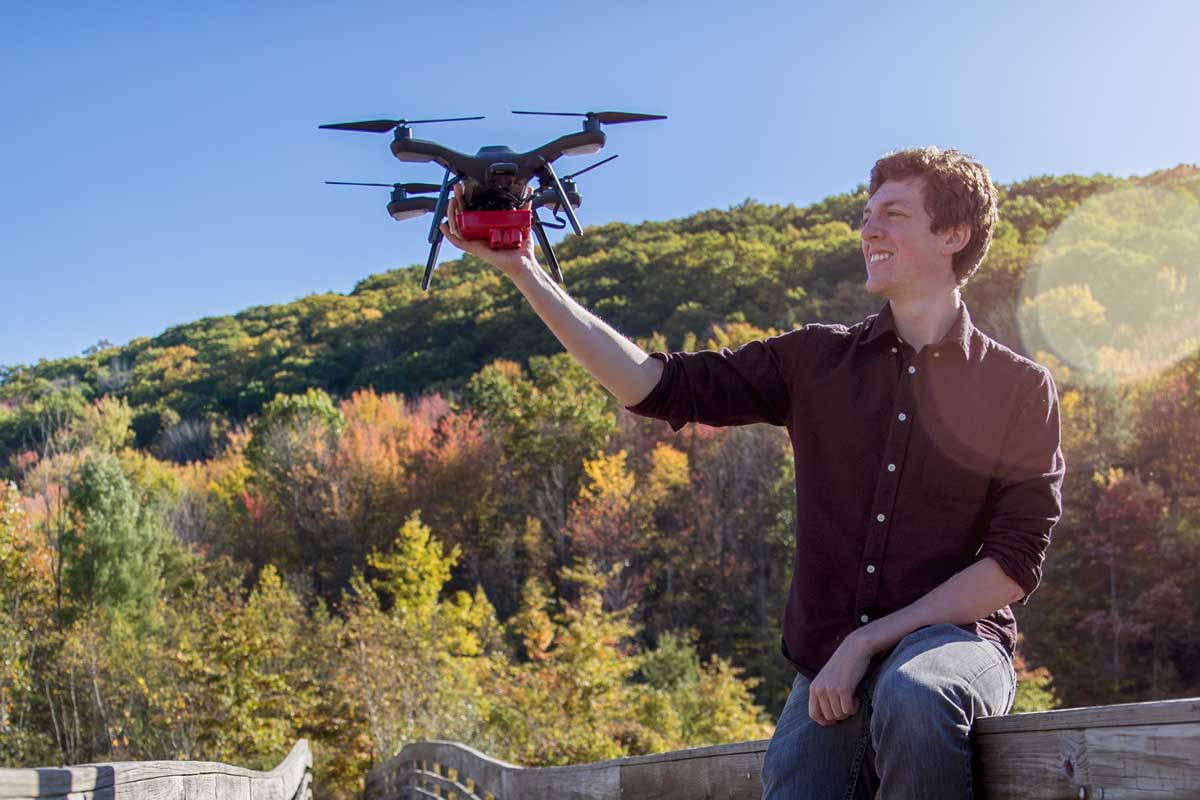
Imagine your research could change the way history is told? Junior William Frazer’s work in the Freshman Research Immersion’s environmental visualization stream could do just that.
Frazer was part of a team that travelled to an archeological site in Louisiana known as Poverty Point.
“There’s a huge mound (16 million basket loads of dirt) that was built 3,500 years ago by hunter- gatherers,” said the geological sciences major. “The current theory suggests three-to- nine thousand people built it in 30-90 days which means it was built rather quickly and used as an annual trading site.”
But by using drones and ground-based measurements to collect data, the team’s findings could change the story of this famous site.
“We collected samples to see if there’s anything in the geophysics to indicate the pace at which this mound was built,” said Frazer. “If they planned on leaving an area and coming back to continue to build the mound they would have ‘capped’ it, meaning using material like clay to cover the mound in order to preserve it. If we found that it would indicate that the mound was not build in 30-90 days.”
So far their research shows there was likely not a cap, but more work is still needed. Frazer, a junior, presented the results at the American Geophysical Union Conference.
“Although my research is incredibly specific, it’s nice that there’s a story to share with the public. I presented for one afternoon so besides that I got to walk around and look at some of the 2200 posters in each hall. They also had 60 or 70 talks going on so there was so much to be immersed in. I recommend FRI students go to conferences. It’s really worth the time.”
Since completing the FRI program, Frazer has continued his interest in geophysics. His research is now focused on determining whether there is an association between fracking and earthquakes in Pennsylvania.
“The hope is that ultimately my research can influence policy. I hope regulatory agencies will respond to the science as things are understood. Ideally, I would like us not to frack for natural gas and to use renewable sources of energy instead, but we’re at a point where that’s not possible.”
After he graduates from Binghamton, Frazer plans to pursue a PhD in geophysics. Although he’s not sure what his angle will be, his work in Louisiana helped him realize his passion is for working outside in the field in addition to working in a lab.