An Interview with Professor Mei HAN from the Center for Chinese Music and Culture at the Middle Tennessee State University
SONG Chenqing
SONG Chenqing (Interviewer): Good morning, Professor Han. Thank you for accepting our request and giving me the opportunity to interview you. Could you please describe, from your own perspective, who you are as both a musician and a teacher?
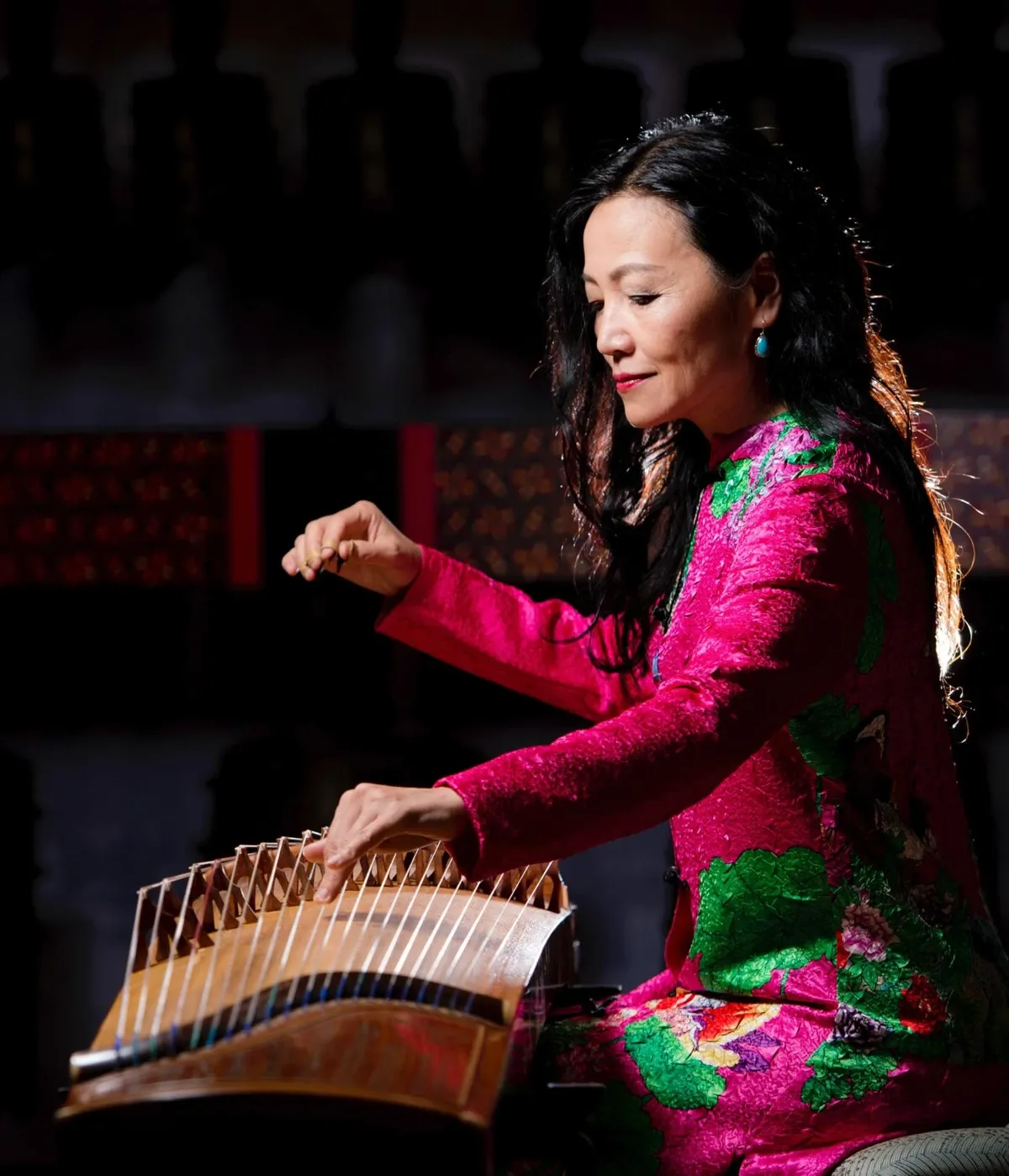
Mei HAN (Interviewee): Thank you for giving me this opportunity. I am Mei Han, Professor of Music at Middle Tennessee State University and the founding Director of the university’s Center for Chinese Music and Culture (CCMC). I specialize in playing the Chinese long zither, called zheng, and as an ethnomusicologist, I focus on studying Chinese Han instrumental music.
SONG Chenqing: As a very famous ethnomusicologist, you have been interviewed many times and you’ve published articles, where you articulated the connections between the Chinese music tradition, your personal musical journey, and Chinese philosophical traditions, especially Taoism and Confucianism. Could you briefly talk about that?
Mei HAN: To address your question, I will begin with a pair of concepts—tradition versus traditional. Tradition, as I understand it, encompasses ongoing cultural practices that can be both old and new, representing the entire spectrum of a culture. On the other hand, 'traditional' refers to a specific period within a tradition. For example, in Chinese musical history, there is pre-history, a classical period, a traditional period, and a contemporary period.
Regarding the second question, the foundation of Chinese music and the broad aesthetics are influenced by Confucianism, Taoism, and their interactions. Taoist writings express a pure and broad acceptance of various arts and musical practices. The notion that 'the greatest sounds have no sound' pushes the boundaries of Chinese music, particularly evident in qin (琴,Chinese zither) music—an instrument associated with scholarly self-refinement. Taoism has also played a significant role in promoting Chinese music on the global stage, especially in North America. In my personal journey to find my own voice, the permission to be myself stems from the spirit of artistic individuality found in Taoist thought.
SONG Chenqing: Confucius argues that there is both good and bad music based on the didactic function of music. Do you agree with this perspective? If not, what standards define good music in your opinion?
Mei HAN: In ancient China, when music was correlated with cosmology, serving as a part of science, governance, and the understanding of the universe, it assumed many functions beyond entertainment. Confucius’ comments about music, such as “the Zheng State’s music is excessive (and therefore morally degrading),” were made to articulate the connections between music and the harmonious stage of the cosmos. According to Scott Cook, who translated Yue ji (乐记,Record of Music), Confucius aimed to characterize the disharmony in Zheng's folk music due to its missing shang (or D note), failing to embody the harmony of the universe. But, personally, I don’t believe any music can be labeled as 'good' or 'bad.' It all depends on the receiver and their mindset, emotions, and background. My study of Confucianism in music focuses on two key words in Yue ji—sheng 声 and yin 音—representing Confucius's key viewpoints on music. Sheng, according to Confucius, is the sound source coming from a natural object or human voice. As emotion is stirred, the human voice or sheng is released. However, sheng becomes yin when the sound is organized in patterns. This idea is easily demonstrable on the zheng, the instrument I play. On a zheng, a bridge divides each string into two parts: plucking the right side produces a musical note on the pentatonic scale, whereas pressing the untuned left side enables a wide range of manipulations in pitch and timbre. When the left and the right are combined, music is created, embodying the idea of duality in music through the relationship between sheng and yin. Such effects are found in other traditional musical instruments, practices, and repertoires, where the beauty of the music arises from nuanced changes in pitch and timbre.
SONG Chenqing: You are not only a world-class zheng performer but also developed a music concept that you call “zheng music.” What is it? By introducing this concept, what theoretical and practical aims do you intend to achieve?
Mei HAN: I’d like to start from my personal story. Starting to play the zheng as a child, I studied with traditional musicians. My first teacher was Gao Zicheng, a zheng master from Shandong. As I got older, I became interested in music history, theory, and Chinese music in general. I left China in 1996 with a master’s degree in Chinese Music to pursue a second master’s at the University of British Columbia in Vancouver, Canada. I continued to play the zheng there after my graduation but discovered that I had only a few pieces at my disposal, some being contemporary Chinese compositions based on the compositional ideas and aesthetics of 19th-century Western classical music. To someone who is familiar with more than one music tradition, it is very strange that, despite a history of 5000 years, such a prominent instrument has only produced such a small number of pieces; and that the programmatic notes of these pieces, written in the 1970s and 1980s, all contain politicized formulaic language. When I met Randy Raine-Reusch for the first time in 1998, he played an album for me in which zheng, flute, and double bass were playing what is known as “free improvisation.” At the time, the music sounded to be lacking “melody,” harmony, or even a steady pulse, all the elements that I had been familiar with in Chinese zheng music. But I was struck by the sheer energy and freedom in the music, something I never experienced in prior music training, and it touched me. It was still zheng music, as it was played on the zheng, but there was more to it. Randy was surprised and overjoyed when I agreed to play with him and suggested we improvise together. I had never improvised before, but following his suggestion, I tried my first improvisation using the fingering of a traditional Chinese piece Hanya xishui (寒鸦戏水, “Winter Ducks Frolicking in the Water”) on an altered tuning. After ten minutes of playing, my eyes opened wide, I felt empowered, awakened, and free. This encounter started my journey to explore more individual music and a greater variety of voices for the zheng, which includes collaborations with different ensembles, Western-style string quartets, chamber music, free jazz, free improv, and world music.
In my recent presentation at the 68th annual meeting of the Society for Ethnomusicology (SEM) in Ottawa, I argued that instruments should find contemporary relevance through their traditional aesthetics. The trajectory towards a wider imbalance between sheng and yin, in my opinion, should not be continued. I believe the ability to craft the sound with the instrument is the key to connecting tradition with contemporary practice. I don’t just follow the pentatonic scale anymore; on one string, I can create a vast number of tones over a wide pitch range, including semi-tones, quarter tones, whole tones, a third, etc., in addition to timbral change. The essence of contemporary music, departing from Classical music’s harmonic approach, lies in the subtlety of sound. I found this link or bridge between contemporary music and Chinese music, in which the anchor is the balance between sound and music, or sheng and yin. We can use this traditional or ancient aesthetic idea, music philosophy, or theoretical form, to connect Chinese music with those of the 21st century. The zheng is an instrument with a great amount of potential awaiting to be freed, thanks to its unique balance of the two elements of sheng and yin. Historically, the zheng was played as a delicate and beautiful court instrument by courtesans and also played by peasants and local artists in some parts of the countryside for the purpose of refining one’s virtue. Today, the zheng is moving beyond China’s borders. It is played as a concert instrument and a global instrument, surviving and growing through so many social-political changes in different contexts. All the Western composers with whom I have collaborated agree that what attracts them to work with this instrument are portamento, sliding tones, bending tones, tonal inflections, in other words, the very essence of the traditional practice of zheng. These new globally infused works are what I refer to as zheng music, rather than Chinese music.
SONG Chenqing: As an expert of Chinese instrumental music, you have put a lot of thought into the Chinese traditional music aesthetics. Some people are saying that Chinese traditional music is dying, and needs a revival. What is the current status quo of Chinese traditional music in your opinion? What is your attitude toward the attempts to "revive traditional music"? Do you believe it should be done, and if so, by whom and how?
Mei HAN: First of all, I must say that traditional music does not die easily. Influences from Western Classical music, the westernization of music, the impact of Cultural Revolution, and many other disturbances throughout the entire 20th century all had effects that marginalized Chinese traditional music, but it survived them all. Today, we are rediscovering traditions that we once thought were lost or on the brink of extinction in the countryside among different minority ethnic groups. So, I believe a revival is already taking place in China. Another practice is to recreate music that we no longer have access to within the tradition. Unlike the music repertoire in the living tradition, music that once accompanied Tang poetry for example has been lost for a long time. Although we haven’t heard this music, and we don’t live in the time when it was created, therefore lacking the mindset of that time, I believe we still are able to recreate them by listening to music outside of China. I visited Japan and Korea, where I heard what I thought Chinese ancient music could have sounded like in the Gagaku Japanese court music and the Aak Korean ritual music. Being practiced outside of China, this music preserves Chinese classical music as an extended tradition from ancient China. In this sense, political boundaries do not define tradition or music. We need to pay attention to how culture is disseminated. Also, the close connection with these two countries through tradition allows me to free myself from a narrow concept of one culture or one country. Being a global citizen brings a lot of satisfaction to me.
Returning to what we can do in China, the first and foremost is to start from the places where traditions are located, such as in Shandong 山东, Hakka 客家, or Chaozhou 潮州, where music is practiced in the community in daily life. In Dong 侗 ethnic minority villages or zhaizi 寨子, dage (大歌, Kam Grand Choirs) is still practiced. The job for professional musicians is to study the old music now before it undergoes further changes. The responsibility of every musician and music scholar is to know the tradition. As a Chinese musician on the global stage, I also observe that there is only such a small repertoire of Chinese traditional music, from which only a dissected view of the broad tradition is presented. The Han Chinese traditional music, as we know it by this name, was mostly created in the 20th century. Using zheng music as an example, let me explain.The current zheng pieces were originally not played as solos but parts of ensembles in local music, such as Shandong Peng baban 碰八板 or Chaozhou Xiyue 细乐, or Hakka Sixian 丝弦. During the 1950s, the government created conservatories, and collected local music pieces, and invited masters of traditional music to the conservatories to teach, as an effort to foster traditional Chinese music. Individual instrument sessions extracted from the ensembles were played and transcribed using the Western music score system. While changes in music are inevitable, in China, many changes result from social and economic changes. When villages disappeared, the music played for the villagers lost its stage and may find a new audience in playgrounds, parks, or plazas in the city. Music does not die but changes occur.
SONG Chenqing: Your personal growth was deeply affected by your experience in China and in Vancouver. Now in a different environment in Tennessee, do you find yourself growing more within the local context?
Mei HAN: Certainly, I’ve grown a lot in Tennessee. Vancouver is a mega city, truly multicultural under Canadian multicultural policies. Tennessee is different from Vancouver; it is located in the part of the US that is politically conservative and culturally rich, especially in traditional music represented by Nashville country music and eastern Tennessee Bluegrass. Middle Tennessee is a place in between these centers of music but is a blank slate where Chinese music may find a great space for growth. I have a fresh beginning here to design and develop a program that is most suitable for this part of the world.
Chinese music is introduced here, not for the purpose of promoting Chinese culture. I promote music and I happen to be Chinese. As a cultural musicologist who embraces the core concept of cultural relativity, I am here to share Chinese music, including various pieces of musical instruments, coming from different regional and ethnic cultures in China—some historically brought to China from other cultures. This room is an example of cultural interaction, filled with cultural products, offering multiple perspectives. It is wonderful to have this learning facility to show cultural interactions, in a more tangible, audible form. I am here to show the students that there are other kinds of music, languages that your music may not have, and if you embrace them, your world becomes more colorful. There are many cases in contemporary Western music, especially in the domain of New Music, where famous musicians drew music elements from a different culture. For example, some research suggests John Cage's famous “4’33”" is influenced by Taoism.
SONG Chenqing: Since your first encounter with Randy, improvisation has been a key element of your musical creativity, granting you individuality and artistic freedom. However, music is also a cultural product that reflects collective experiences and group aesthetic preferences. Do you strive to balance these two aspects in your musical creativity?
Mei HAN: Most musicians and listeners of music, in general, only know the music they hear during their time, and few look back in history. However, if they delve into the history of Chinese music, particularly within Han culture, they would discover that the practice of music performance in the past closely mirrors what I do today—structural improvisation. Traditional Chinese music was crafted based on preexisting tunes called qupai (曲牌, tune templates), originating from poetry, some dating back to the Han Dynasty. These qupai pieces became the mother tunes of Chinese traditional instrumental music, disseminated through both a written score and oral teaching. For instance, much of the zheng music is derived from a mother tune called baban (八板, eight beats), consisting of eight phrases, each with eight beats, except the fifth phrase, which has 12 beats. The written notation provides the framework of the music, including the number of beats, main beats, main notes, especially the ending note—all unalterable. Yet, within the phrases, performing musicians infused additional notes and beats into the mother tune, stretching and contracting it, operations absent in the written score. In essence, the written scores served as a reference rather than a guide for direct performance. Musicians in China historically engaged in improvisation, and much of the music we have today was created through what we term structural improvisation. Having collaborated with Western bands, playing music such as bluegrass, I discovered a striking similarity between contemporary practices and historical Chinese music performance—creating new music pieces through the improvisational process with one mother tune. The spontaneity inherent in music-making, where musicians interact and spark on stage during real-time performance, is the most thrilling aspect. In the Chinese tradition, performing musicians seamlessly assumed the role of composers, embodying two roles in one.
However, a shift has occurred in modern times in China, separating these roles, with most contemporary composers trained in the Western form of composition. Typically composed on the piano and relying on chords, they are unable to change pitch with each keystroke, a fundamental departure from the zheng, which allows for fluent pitch changes between notes. A visual metaphor that I often share with students to illustrate the fluency of Chinese music involves a stream with rocks in its flow. In piano music the notes resemble the rocks in the middle of the stream, hard and immovable. Yet the essential part of traditional Chinese music is pitch fluidity, like the water in the stream bending, flowing, around the stones. So, the music is both the stones and the water.
Ancient Chinese musicians improvised in live performances, creating spontaneous moments that captivated audiences. An anecdote about zheng master Zhao Yuzhai 赵玉斋, who, after being imprisoned during the Cultural Revolution, played Gaoshan liushui (高山流水, “High Mountain and Flowing Water”) with full energy and embellishments upon regaining freedom, highlights the excitement of spontaneity. The next day, with a smaller audience, he played the same piece, but the audience did not recognize it. When he revealed that it was still Gaoshan liushui, he humorously explained, “I am a little sleepy today.” This story underscores the mastery of artists who not only adhere to rules but also know when and how to break them—a stark contrast to some contemporary artists bound by technicality and a reluctance to improvise.
SONG Chenqing: Do you teach improvisation to your students? Do you believe that teaching improvisation should follow different pathways and methodologies for students from diverse cultural backgrounds and music traditions? If so, how?
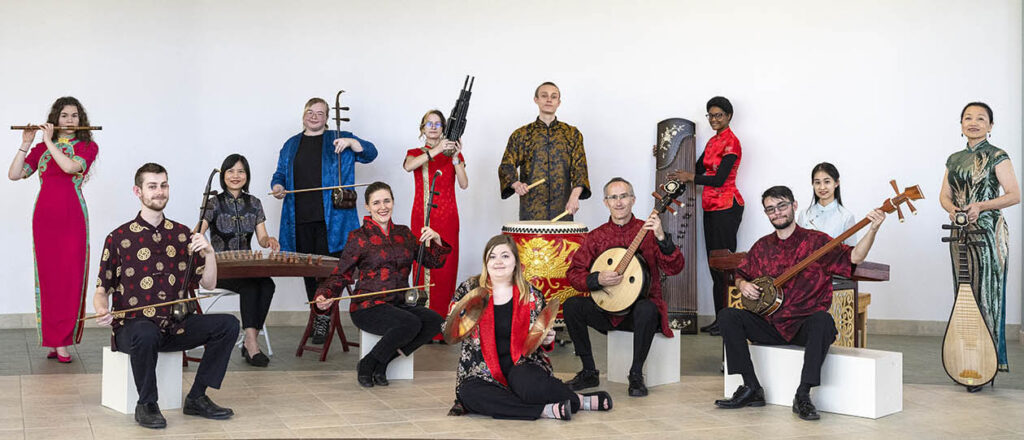
Mei HAN: In our university, I teach a Chinese music ensemble class where a group of American students learn to perform on Chinese instruments. Most of them have no previous knowledge of Chinese music. Although they are primarily music students, they have little experience with improvisation. My goal in teaching is to provide them with hands-on experience in playing Chinese instruments, which came from a completely different culture. This experience is multidimensional: they move their hands on the instruments, hear the sounds, and read the notation. All of these elements offer the students something to incorporate into their own music practices, whether it be music composition or violin playing, adding new sounds to their personal musical language and new colors to their artistic palette.
Improvisation requires specific techniques. This is the second semester in which I have incorporated improvisation into the ensemble class. To prepare the students for this, last semester, I taught them the liuban (六板,six beats) mother tune and also the sounds in-between notes. The students not only learned pieces but also gained an understanding of how traditional pieces were created. My approach to teaching aims to extend learning beyond just a few standardized Chinese music pieces created in the 1950s and onwards. I want them to explore the older tradition so that they can draw from it when listening to Chinese music in the future or when teaching it to their own students.
Mei HAN: The numbered notation is more closely related to how Chinese music was practiced in the past, where listening and singing were more important than sight-reading. Especially for students who can read music in staff notation, I don’t want them to take the shortcut in their learning. I hope they could experience music from another culture. In fact, in the majority of cultures worldwide, outside of the Western music canon, music is learned by listening. The purpose of teaching Chinese music in U.S. educational institutions, or any educational institutions outside of China, is to offer something that is lacking in these institutions and to broaden the horizon of education rather than assimilating Chinese music into existing systems.
SONG Chenqing: If you were to teach the same Chinese music in China to the Chinese students, would you do the same thing? Are there adjustments that you will make to the class of Chinese students?
Mei HAN: Yes, there will be a lot of adjustments. I believe the students in China would already know the pieces well, and they are already good performers on their own instruments. So, as soon as I demonstrate what I do on the instruments and explain the rules of music-making, they are capable of starting to play right away. In fact, I taught such classes in China and had firsthand experience with the students there. They still have to break the limits set by their former training, but the limits are not in their techniques but in their conceptualization of music-making. In this sense, the problem under discussion here is not their musical ability but their mindset. Qualities such as open-mindedness, artistic curiosity, a broad view, and the audacity to step out of the comfort zone are not just a result of music education but of general education.
I drew these conclusions from my own personal history. After many years, I have overcome the doubt about whether I am good enough or whether I am doing it right. As a Chinese musician, my early childhood education was full of criticism, and it was never good enough. It is that kind of judgment and the demand for perfection that we carry into our adulthood and later into music performance. But improvisation is spontaneous, always happening at the moment. There are no rights or wrongs, only wrong notes at the right time or right notes at the wrong time. Once you break the wall of judgments that confines you as an artist, your view enlarges, your ears grow, and you discover many more ways of making music. You start to learn from everything around you in your life, from poetry to comedy. Human emotions are complex, resulting in many gray areas that are not black or white, happy or sorrowful. In improvisation, a skillful artist who is self-aware can delve into the depth of the internal world and find many ways to express themselves through music. In this sense, music is for personal growth, and this growth is exactly what I've been through.
SONG Chenqing: What projects are you currently working on? What significance do they hold for your personal development trajectory?
Mei HAN: One of the biggest projects I have for myself is writing a book about the zheng. This book will be an extension of my dissertation, completed about ten years ago. It will go beyond the dissertation, addressing topics about the zheng and also recounting my life experiences as a person born in China, growing up during the Cultural Revolution, learning the instrument to avoid being sent to rural areas, and paying the teacher with a few eggs or a bottle of cooking oil. It will culminate in my journey, many years later, performing at numerous prestigious international venues. The book aims to give a voice to my teachers’ generations and provide a comprehensive study of the instrument. The writing process of the book is also a healing journey, addressing the traumas I carried through those years—traumas, whether big or small, from families or society—that many Chinese of my generation experienced, whether they are aware of them or not.
As the Director of the Center for Chinese Music and Culture, I am also teaming with the Center for Popular Music at Middle Tennessee State University to present at the String Band Summit, an annual music festival focusing on American string band music, including Bluegrass and other folk music. But the one in April 2024 will feature both American string bands and string band traditions from East Asia, from where I will bring in a Hakka string band and a Shandong Peng baban band, as well as a scholar who will present a paper on Xiansuo shisan tao (弦索十三套, “Thirteen Suites for Strings”), all representative of Chinese traditional string band music. So, in this festival, we will bring the string music of East Asia and America together to extend the original platform of the music summit and facilitate a dialogue.
SONG Chenqing: I am conducting this interview on behalf of the E-journal of TheaComm, which aims to facilitate the exchange of information and scholarship in both Chinese and Western performing arts. From your personal experience and expertise, what do you believe are the benefits of such exchanges and the most crucial elements in facilitating them?
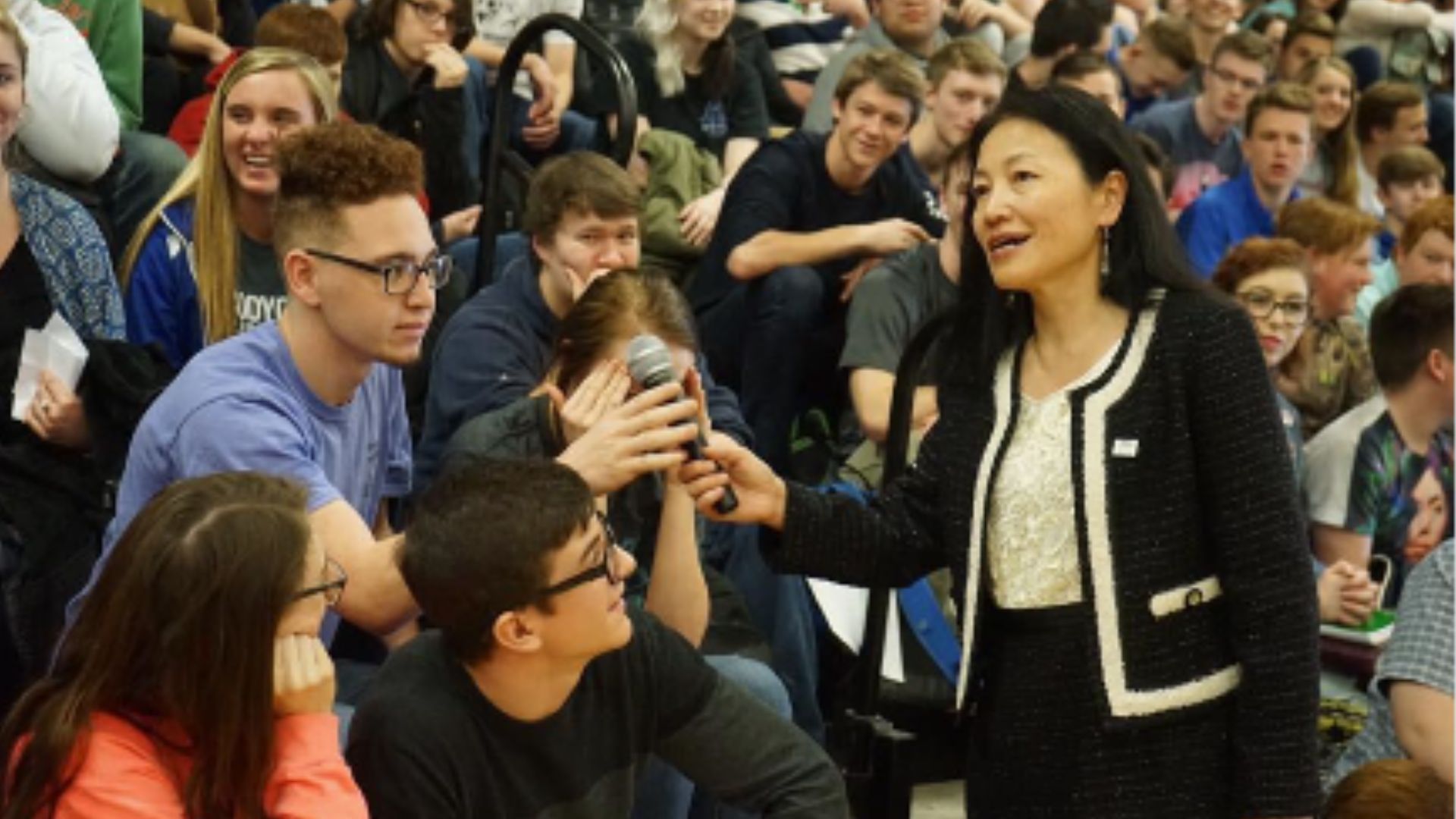
Mei HAN: The benefits of cultural exchange are for understanding—understanding yourself, understanding others, and understanding the environment. This extends beyond the local immediate environment to the global environment, considering both geographical and historical contexts. Understanding the relationships between oneself and the environment is of great importance in the current time. To achieve this goal, in my opinion, there are two indispensable elements. The first one is performances accompanied by scholarly informed explanations, providing the cultural context of the performance, including its history, origin, and ways to appreciate it. Chinese musicians should be able to explain to the audience what the music is about and give them instructions on what to listen for in the music, in the most accessible language to the audience. I developed this teaching approach during my trips to school shows. Kindergarteners have only ten to fifteen seconds of attention span, and they can only understand simple language. I had to provide them with more comprehensible keywords in that short period of time in a way they could understand—dancing, laughing, clowning if needed. Despite the entertaining approach, I was delivering serious knowledge. I honed my skills in cultural exchange in these performances and extended the method to teaching college students or senior citizens in the community, with little difference in essence. Performers need to have a deep understanding of the audience’s culture to draw connections, offer examples, and parallel concepts found in their culture. For instance, my American audiences often have no idea about the Chinese pentatonic scale. However, when I brought up the scale used in blues and played a few notes from a blues song, they immediately grasped the idea.
SONG Chenqing: In this method, the connections can show the similarities, but how do you show the differences?
Mei HAN: Remember the visual metaphor I gave you earlier—the image of a running stream and static rocks? I used this visual metaphor to explain to the audience that the key to appreciating Chinese zheng music is not in the movements from each note, but in the flow between the notes. Then, everybody in the audience understood it.
SONG Chenqing: What is the other indispensable element?
Mei HAN: The second element is having a good command of the language, for example English in this country. Many musicians excel in technique and artistry but can't deliver the full package of an informed performance. I gave lectures for two semesters to students in a special program called "International Music Communication" at Beijing Language and Culture University. I helped them form the idea of combining communication and music, which is a form of communication itself. Music is not a universal language that, if I play, you will automatically understand. So, I explained to the students that to share Chinese music with others, you have to have your own music, a good command of English, and a strong academic foundation in your studies. When I read the job description for my current position, I thought, "I need to get this job because nobody other than me has the skill set that this job demands."
SONG Chenqing: This question concludes my interview. I have learned an enormous amount of things from you. Thank you!
Mei HAN: Thank you for giving me the opportunity to share my opinions and stories.
Date of the Interview:
10/31/2023
Interviewee:
Professor Mei HAN is a Professor of Music at the Middle Tennessee State University (MTSU). As a leading educator of international Chinese music education, she had experience founding and directing Chinese Music ensembles in North American High educational institutions. In 2015, Han was appointed the founding director of the Center for Chinese Music and Culture at Middle Tennessee State University, where she curated Chinese musical instrucments and a research archival collection. The Center has now become a vital hub for cultural exchange between the United States and China, offering various academic and outreach programs through instruction, performance, exhibitions, and scholar/student exchange.
Interviewer:
SONG Chenqing
Associate Professor
Department of Asian and Asian American Studies; Translation Research and Instruction Program (TRIP)
This article was published in the second volume of TheaComm: an E-Journal of Theater Arts Communication in October, 2025. DOI.org (Crossref), http://doi.org/10.22191/theacomm/volume2/article7.