Frequently Asked Questions about housing at Binghamton University
This FAQ explains how campus housing and university enrollment fit into the broader local housing conversation.
How many students can Binghamton house on campus?
Binghamton currently has approximately 7,729 on-campus beds. That capacity is expected to increase to 8,090 with the opening of Grace Hall in fall 2027.
Has Binghamton grown without adding housing?
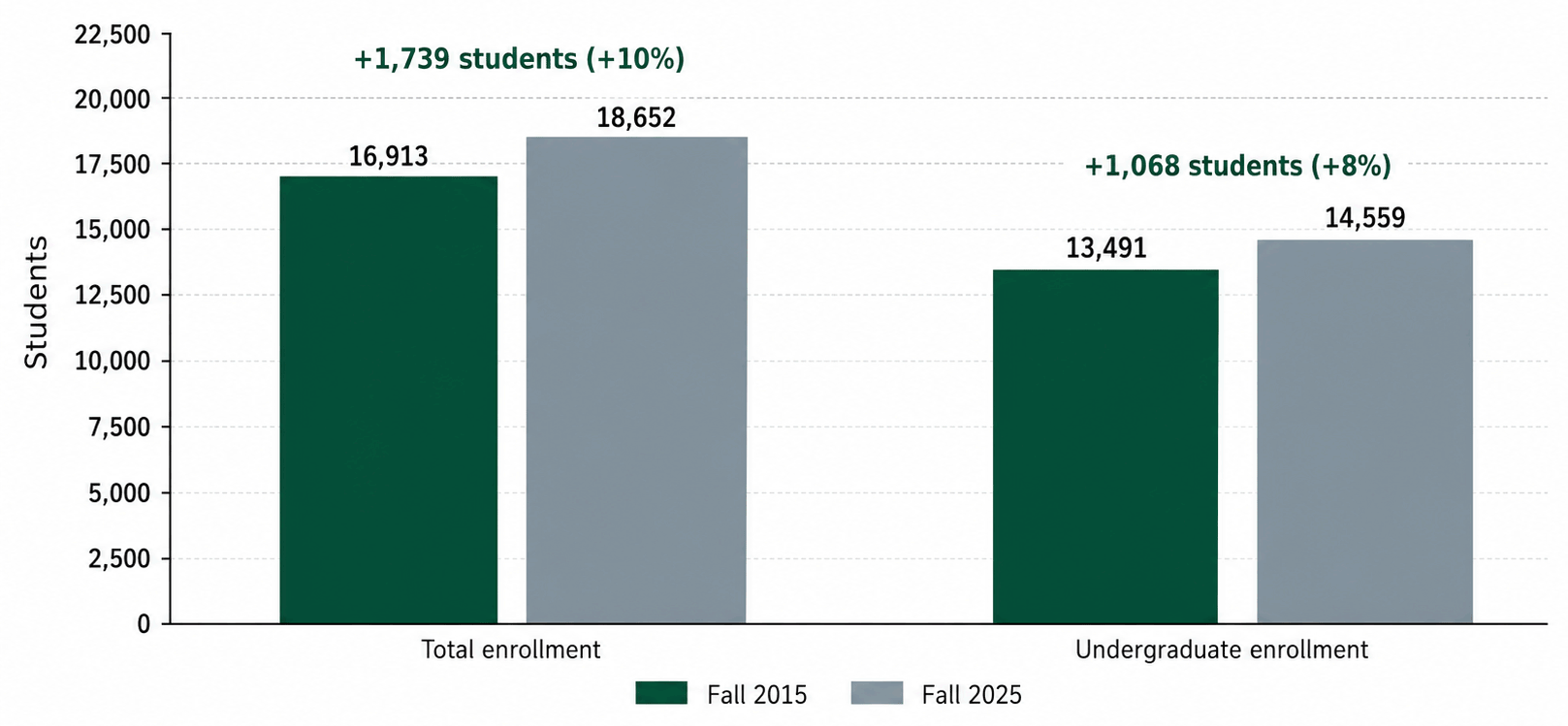
No. Over the past decade, undergraduate enrollment increased by 8%, while the University kept on-campus housing capacity aligned with that growth, consistently providing housing for roughly the same share of undergraduate students year after year. The University previously added the East Campus Housing complex, creating approximately 1,000 additional student beds. Another residence hall, Grace Hall, is now under construction and will bring total on-campus capacity to 8,090 beds by fall 2027.
How does the university balance enrollment growth with community housing capacity?
Binghamton’s enrollment growth over the past decade has been modest, steady and part of a deliberate, long-term strategic plan, with total enrollment increasing by 10%, and undergraduate enrollment increasing by 8%. To manage relevant needs, the University maintained on-campus housing for approximately 53% of undergraduate students each year. That consistency demonstrates the University has kept pace with enrollment growth, rather than allowing enrollment to outpace its ability to house students.Our future growth will remain aligned to our on-campus infrastructure and housing capacity. See the chart below.
Will the University continue to grow?
As part of the University’s new strategic plan, Binghamton will develop and publish a strategic enrollment management plan that addresses future growth in a thoughtful and responsible way.
The goal is to ensure that enrollment decisions are aligned with the infrastructure, personnel, housing, classroom space, student support services and campus resources needed to provide the high-quality experience students and families expect from Binghamton. Any future growth must be matched by the capacity to support it well.
How does on-campus housing affect the local rental market?
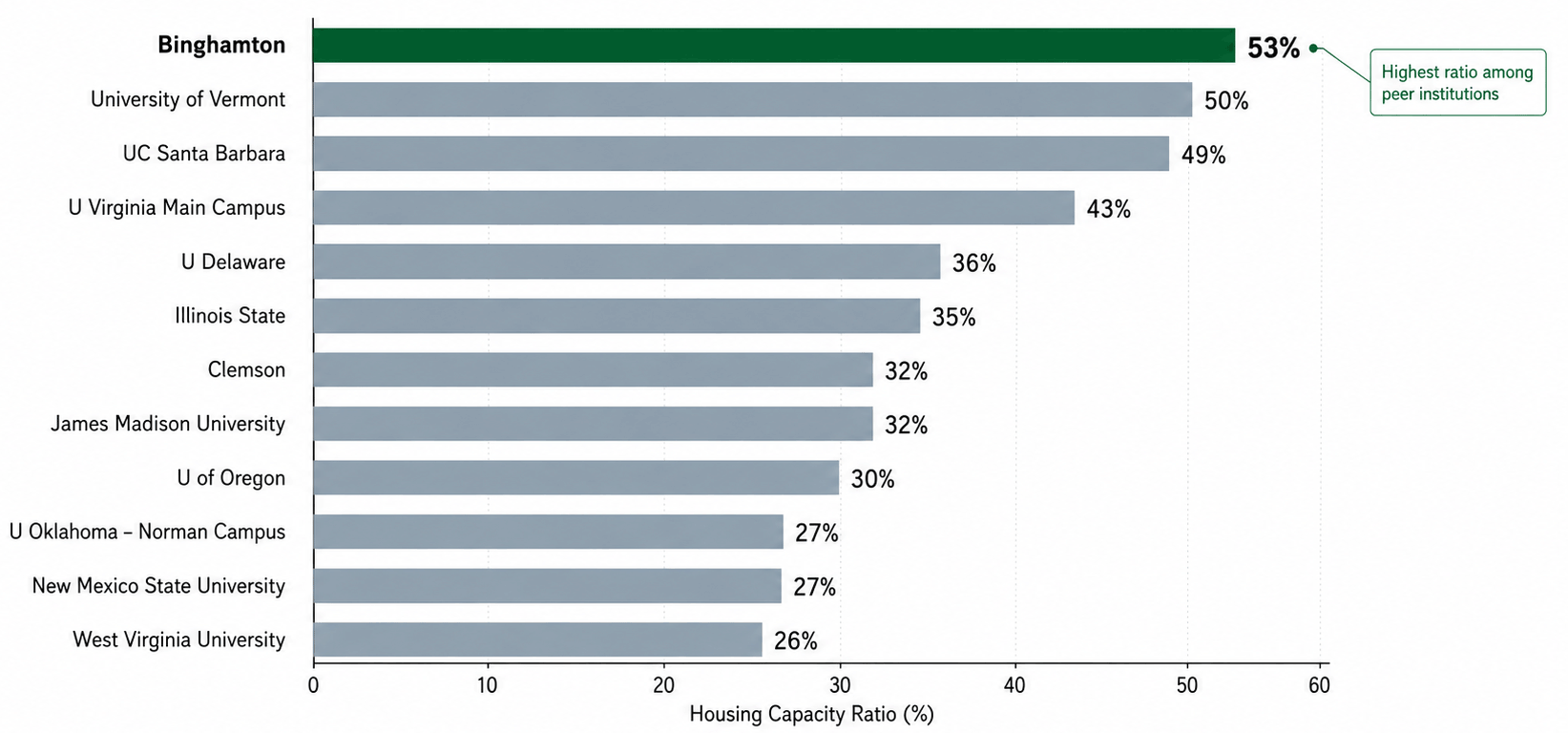
Binghamton provides on-campus housing for a larger share of its undergraduate population than most comparable institutions. Among larger peer universities with more than 10,000 undergraduates, Binghamton ranks first in the percentage of undergraduates it can house on campus. The University houses 53% of its undergraduate students. For comparison, the University of Delaware houses 36%. See this chart for more comparisons.
Why doesn’t Binghamton house every student on campus?
Like most public universities, Binghamton University's does not house every student on campus for every year of study. First-year students are required to live on campus, while many upper-level students choose to live off campus. Graduate students are also generally less likely to use traditional residence halls on campus.
That balance is consistent with Binghamton’s educational mission. Part of preparing students for life after college is helping them learn how to live responsibly in a community, be good neighbors and contribute to the place they call home while they are here. Students who live, work, shop, volunteer and build relationships in the local community are also part of the reason Binghamton University has such a significant positive economic and civic impact on the region.
Has the University invested in residence halls?
Yes. Binghamton has consistently invested in its residence halls. The University has invested $80 million in remodeling residence halls over the past five years and nearly $500 million over the past 20 years to refurbish residence halls and build new ones, strengthening housing options across its five unique residential communities.
Binghamton has not only maintained its residential infrastructure; it has expanded and modernized it. Those investments are part of a broader commitment to campus infrastructure, including new and upgraded academic, research, dining, recreation and student-support spaces that help ensure the University’s physical campus keeps pace with student needs and institutional growth.
What is the University currently doing to expand housing?
The University continues to invest in on-campus housing to meet student needs. Grace Hall, located between the College-in-the-Woods and Mountainview College residential communities, will house an additional 362 students in the core of campus and bring the total beds to 8,090 by fall 2027.
What role doe the University play in off-campus housing?
While Binghamton University does not own, operate, or hold financial interests in private off-campus housing, we remain deeply invested in how our students integrate into the community. Off-campus housing is governed by private landlords and local municipal zoning laws. However, the University actively supports our off-campus population through tenant education, community standard guidelines, and regular dialogue with city officials to promote safe, fair housing for students and local residents alike.
How does the City of Binghamton regulate student housing?
The City of Binghamton already has zoning rules in place that restrict where certain student-housing arrangements can be located. Those rules generally prohibit housing arrangements with four or more unrelated college students in single-family and two-family residential zoning districts. Student housing is allowed in higher-density multi-unit residential areas and commercial zones, with review requirements in some cases.
Decisions about where private student housing is located are largely governed by city zoning, code enforcement, and private housing-market decisions, not by the University.
How do students contribute to the local community?
Students are a major economic and civic asset to the region. Student spending contributed $319 million to the greater Binghamton area in 2024–25. In addition, 9,186 students contributed an estimated $12 million in value to the community through volunteer service and civic engagement.
Is Binghamton University causing the local housing crisis?
Local housing challenges are shaped by many factors beyond any one institution, and include inflation, private rental-market conditions, short-term housing demand, and overall housing supply. Binghamton University has kept housing capacity aligned with undergraduate enrollment growth, compares strongly with peer institutions, continues to invest in residence halls, and is expanding its on-campus housing supply with additional beds.
Binghamton enrollment growth
Change from Fall 2015 to Fall 2025
Source: Binghamton University Office of Institutional Research and Analysis, Analysis of Housing/Residential Hall Capacity.
On-Campus housing capacity as a share of undergraduate enrollment
Peer institutions with 10,000+ undergraduate students
Source: Binghamton University Office of Institutional Research and Analysis, Analysis of Housing/Residential Hall Capacity.