The Chair’s Message: History at Binghamton Newsletter Spring 2025
Dedicated alumni help foster the historians of the future
For more than half a century, our department has enjoyed the privilege of mentoring dynamic students in history and boasting of their many, many lifetime accomplishments as alumni. We want to seize upon this moment to thank you for becoming our colleagues as historians and sharing the value of historical knowledge with your loved ones, coworkers and the broader public. You make history the vibrant field that it is.
But we still have much work to do. We live in an era of grave threats to democracy and public support for education, of violence and inequity that reverberate on a global scale. In this context, political players often find it useful to refashion historical knowledge for their own agendas or to negate it altogether. Undergraduate students confront many misconceptions about the professional pathways that degrees in history can illuminate. In their uncertainty, they fear limitations and migrate from the discipline whose moral value and purpose they recognize. As university administrations shift focus to the natural sciences and professional schools, history departments struggle to support opportunities for students of color, who are often first-generation college students.
Our faculty members have been devoted to meeting these challenges in our teaching, our mentoring and our research. Anne Bailey and the Harriet Tubman Center for Freedom and Equity are unveiling a statue of Harriet Tubman on March 21. Kent Schull and the Center for Middle East and North Africa Studies, supported by well over $1 million in external grants, now has a lecture series. Nancy Appelbaum, Bradley Skopyk and Farren Yero played central roles in organizing the symposium Health and the Body: Perspectives from the History of Latin America and the Caribbean at Binghamton University. Wendy Wall continues to teach a research-intensive cycle of courses on Mapping American Prejudice for the university’s Source Project.
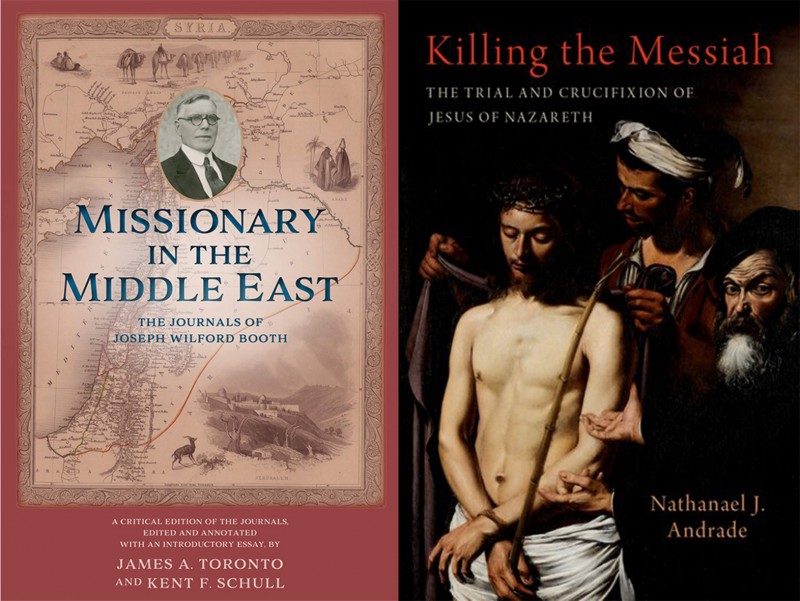
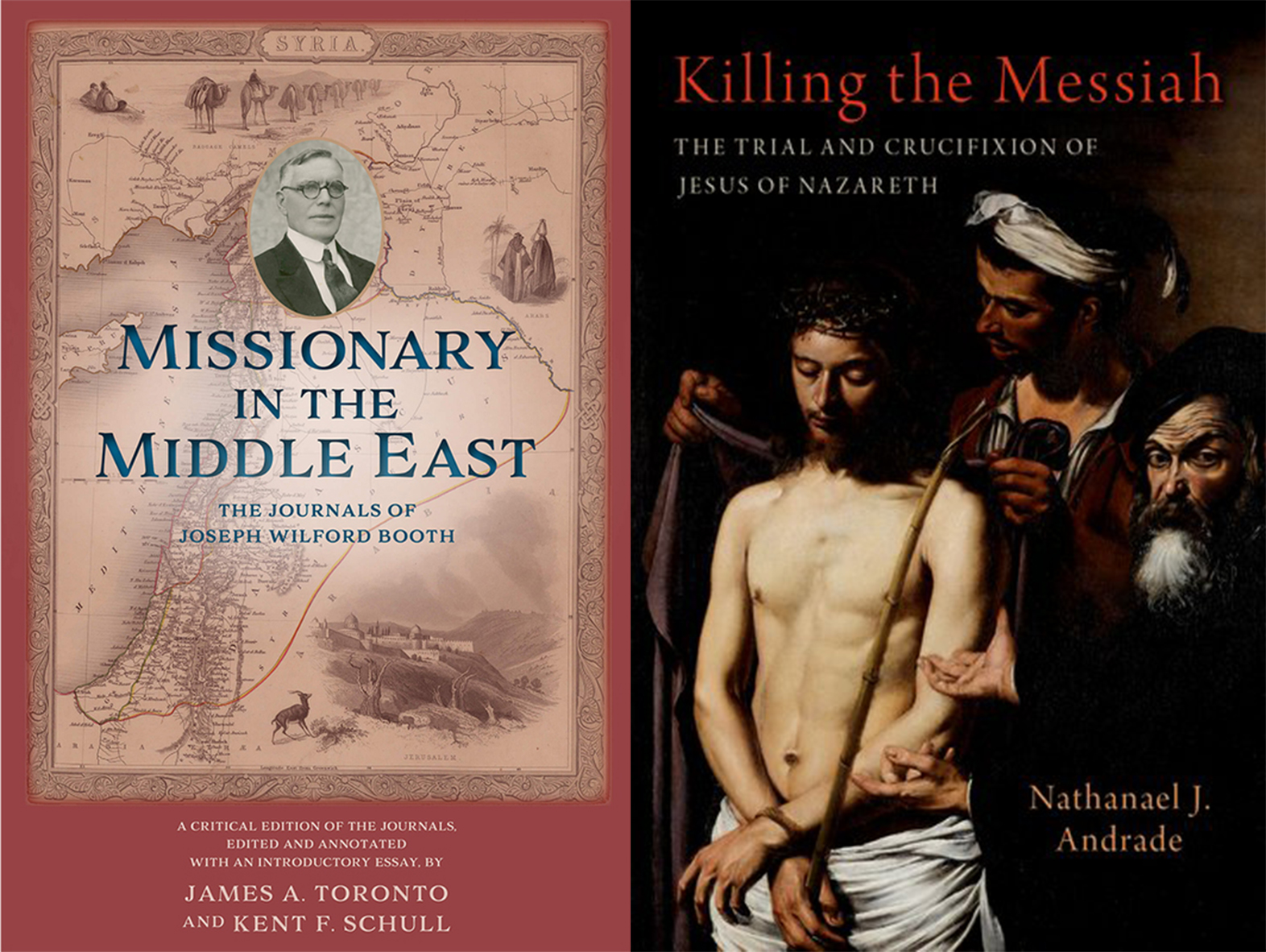
In our last newsletter, we celebrated the publication of Donald Nieman’s The Path to Paralysis: How American Politics Became Nasty, Dysfunctional, and a Threat to the Republic, a timely book that places contemporary U.S. politics in historical context. We now celebrate the publication of Missionary in the Middle East: the Journals of Joseph Wilford Booth, co-edited by Kent Schull, a work that foregrounds the political and cultural issues of the WWI-era Ottoman empire through the lens of a Mormon missionary. We also anticipate the publication of Nathanael Andrade’s Killing the Messiah: the Trial and Crucifixion of Jesus of Nazareth, which establishes Pontius Pilate’s agency in crucifying Jesus and challenges the pernicious viewpoint that Jews bear responsibility for Jesus’ death.
In this letter, we celebrate in greater detail the achievements of some of our distinguished faculty, students and alumni. But we still have much more work to do.
A discipline without dedicated alumni is nothing, and today our students and future alumni need your support more than ever. This support can take many different forms. Is there a type of historical work that you would like to help facilitate? You can contribute to our general fund or to whatever purpose you define, including student scholarships, high-impact learning experiences, faculty and student research, or projects in public or digital history. Would you like to mentor our future alumni by contributing time and energy? You can offer to host student interns at your professional workplace, lead a workshop on career pathways, or serve as a career mentor to a major or a potential major. Do you have any ideas or personal updates to share with our community? We warmly welcome them and hope to see you at our alumni events in September.
But above all, we thank you for being our colleagues and for your dedication to the discipline of history. It would not exist without you.
Connect with Binghamton University History on Facebook, Instagram and LinkedIn.