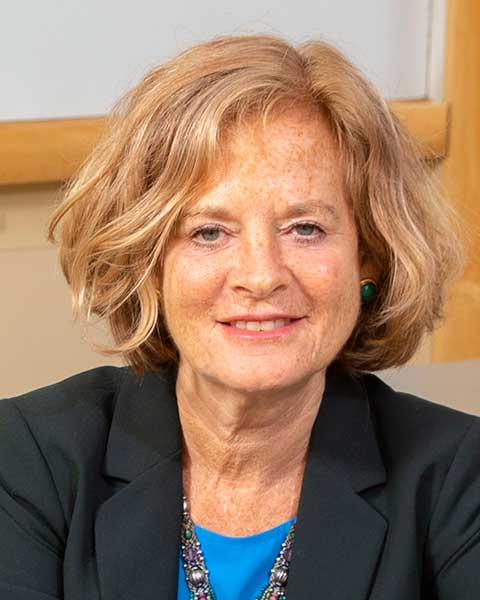
Laura Bronstein is a founding member of the Binghamton University Department of Social
Work and currently serves as Dean of the College of Community and Public Affairs,
and as Founding Director of the Binghamton University Center for Community Schools.
Laura's research revolves around interdisciplinary and interprofessional collaboration,
as well as community schools. Laura created the widely-used Index of Interdisciplinary Collaboration and published A Model for Interdisciplinary Collaboration. Laura has a 2016 co-authored book, School-Linked Services (Columbia University Press) and a 2018 co-edited book, A Guide for Interprofessional Collaboration (Council on Social Work Education Press). Laura has led teams that have been awarded
tens of millions of dollars in grant funding, has over 70 peer-reviewed publications,
and has been an invited keynote for lectures around the globe. She has received far-reaching
recognition for her work including the John A. Hartford Foundation Outstanding Dean
in Aging award and Binghamton University's first Lois B. DeFleur Faculty Prize for
"innovative work that crosses boundaries". She received the Esther W. Couper Memorial
Award for "outstanding service and dedication to the children and families of our
community." In 2023 and 2024, she was cited as among the top 2% of scholars in the
world in her field in the Stanford World Scientist and University Rankings. In 2025
she was inducted into the State University of New York Distinguished Academy.
Associate Director, Binghamton University Center for Community Schools Assistant Professor, Community Schools Program rimkunas@binghamton.edu
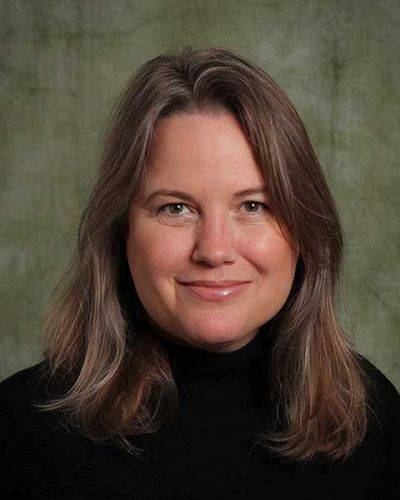
Dr. Naorah Rimkunasis Assistant Professor of Community Schools in the College of Community and Public
Affairs. Her scholarship and teaching focus on university-school partnerships that
advance student learning, positive development, and community well-being. As Associate
Director of the University-Assisted Community Schools (UACS) National Network (Netter
Center for Community Partnerships, University of Pennsylvania), she supports university
leaders in New York State and across the country in strategizing and implementing
UACS clinical and academic partnerships.
She also leads two federally funded school mental health initiatives in Broome and
Tioga Counties, which expand access to critical mental health supports in rural and
small-town schools while offering rich learning opportunities for social work students.
Dr. Rimkunas has provided technical assistance and project evaluation for organizations
such as the U.S. Department of Education and the National Science Foundation. She
holds a master’s degree in Clinical Mental Health Counseling and a doctorate in Community
and Public Affairs.
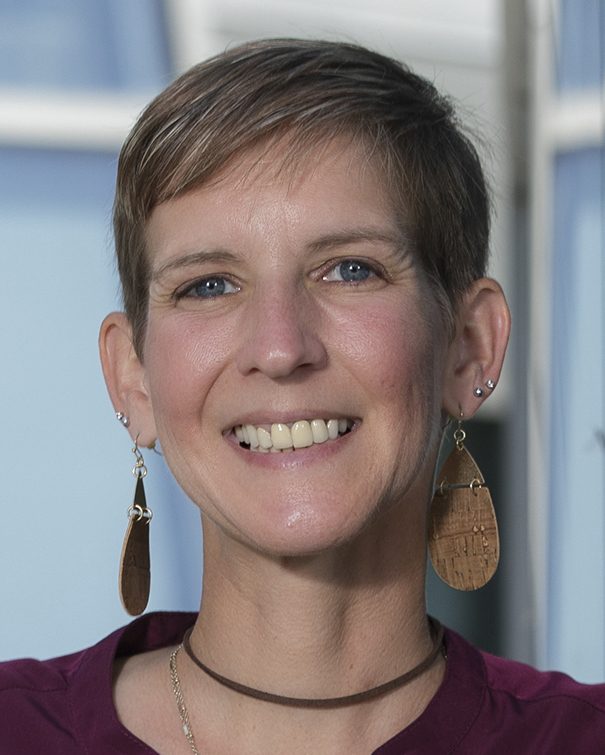
Amber Simpson joined the Department of Teaching, Learning, and Educational Leadership
in 2017. She received her undergraduate degree in Mathematics, Secondary Education
from East Tennessee State University, and her Master's degree in Curriculum and Instruction
and Educational Specialist degree in Education Administration and Supervision from
Lincoln Memorial University. Amber spent five years as a high school mathematics teacher
in Tennessee before returning to Clemson University to receive her PhD in Curriculum
and Instruction, Mathematics Education.
Amber's research investigates how leaners and educators engage with STEM in ways that
shape relationships, identities, and opportunities for meaning-making. Her research
is focused on: (1) investigating family engagement in and interactions around STEM
activities, (2) examining individual's identity(ies) in one or more STEM discipline,
(3) exploring the ways that individuals engage with an embody mathematical concepts
and practices within non-formal learning environments, and (4) examining how youth
and educators navigate and make meaning of failure during STEM activities. Amber further
supports her research through providing STEM activities and events for children and
their families in partnership with local schools and community organizers.
Executive Director of University-Assisted Community Schools (UACS) Implementation lkida@binghamton.edu
Luann Kida (she/her) is a social worker with more than 20 years of experience working in primary, secondary,
and post-secondary education. She has spent her entire career serving marginalized
and disenfranchised populations in their quest for educational equity. Her experiences
include school social work, college retention and disability services, and community
schools. As executive director, Luann leads a team of dedicated directors as they
provide technical support to school leaders, out of school providers, and institutions
of higher education. Locally in Broome, Tioga, and Chenango County, Luann guides
the implementation of three mental health projects designed to connect social work
field experience to strategically align with identified school needs. Her family
engagement experience provided the foundation for the Binghamton University Center
for Community Schools Family Engagement Institute designed to provide professional
development and implementation support to partners build strategic multi-tiered systems
designed to engage families as educational partners. In 2024, the Family Engagement
Institute launched their Binghamton University Center for Community Schools Leadership
Institute for Family Engagement (BUCCS LiFE) and family cafe model providing resources
to schools for the implementation of a systemic approach to connecting family, community,
and school partners by building trust and leveraging expertise to optimize student
outcomes. She holds a Master’s of Arts and Social Sciences and a Master’s in Social
Work. Luann is an active member of the NYS Community Schools Network, the Coalition
for Community Schools State Coalition Network, and the Coalition for Community Schools
Leadership Network.
Kathleen Provinzano
Kathleen Provinzano
Binghamton University Center for Community Schools Associate Professor tmay@binghamton.edu
Kathleen Provinzano (she/her) is an Associate Professor in the College of Community
and Public Affairs at Binghamton University, State University of New York, and Co-Director
for Research and Evaluation at the Binghamton University Center for Community Schools.
She teaches courses in educational leadership, policy, and research methods. Her scholarship
sits at the intersection of education policy and public policy, with a focus on community
schools, integrated student supports, and their implications for educational equity.
As a social science researcher, Kathleen is particularly interested in how school
and community partnerships impact student outcomes, support collective decision-making,
and shape practice and policy decisions.
An accomplished scholar, Kathleen has published widely on education leadership and
policy-related topics within community school contexts. In addition to contributing
multiple book chapters, her research appears in leading peer-reviewed journals such
as Urban Education, Educational Administration Quarterly, Education Policy Analysis Archives, Education Sciences, Journal of Education for Students Placed at Risk (JESPAR), and Leadership and Policy in Schools. She serves as a reviewer for educational policy and leadership journals and as an
Associate Editor for the Handbook of Research, Policy, and Practice in School-University
Partnerships (Cambridge University Press). Before her faculty appointment, Kathleen
served as a Program Director for graduate educational leadership programs. Prior to
that, she held various roles in K-12 education, including elementary school administrator,
secondary school counselor, and high school social studies teacher.
Binghamton University Center for Community Schools Professor tmay@binghamton.edu
Toni A. May is a Professor in the College of Community and Public Affairs and Co-Director
for Research and Evaluation at the Binghamton University Center for Community Schools.
She teaches graduate and undergraduate courses in program evaluation and research
methods. Her scholarship centers on two core areas: (1) implementing design-based
research processes to guide social science instrument development and validation across
fields, and (2) applying rigorous quasi-experimental and mixed-methods approaches
to assess the impact of educational initiatives—particularly in community school settings.
Published in top-tier journals such as American Educational Research Journal, Urban Education, Educational Policy, and Journal of Education for Students Placed at Risk (JESPAR), her work spans both methodological innovation and applied impact. In addition, she
has held leadership roles on numerous federally funded projects supported by entities
such as the NSF, NIH, and U.S. Department of Education. Supporting others in building
capacity through the development of strong, practical evaluation skills remains a
central priority in her work with program implementers, researchers, and community
partners.