Stop the Bleed
No matter how rapid the arrival of professional emergency responders, bystanders will always be first on the scene. A person who is bleeding can die from blood loss within five minutes.
"Stop the Bleed" is a nationwide campaign to empower individuals to act quickly and save lives. Bystanders can take simple steps to keep an injured person alive until appropriate medical care is available.
Bleeding Control Kits
Binghamton University has placed bleeding control equipment throughout all University-owned/operated property:
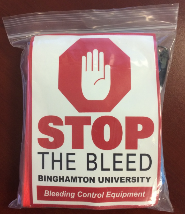
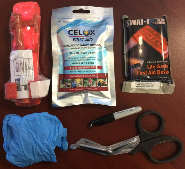
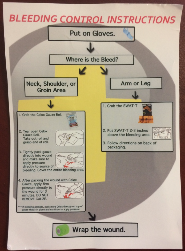
How to Use Bleeding Control Equipment
The ABCs of bleeding control:
A = Alert: call 9-1-1 or tell somebody to call 9-1-1
B = Bleeding: Find the bleeding injury
C = Compress: Apply pressure to stop the bleeding by...
-
- Covering the wound with a clean cloth and applying pressure by pushing directly on it with both hands, or
- Using a tourniquet, or
- Packing (stuffing) the wound with gauze or a clean cloth and then applying pressure with both hands.
Prioritize Your Own Safety:
- Before you offer any help you must ensure your own safety! If you become injured, you will not be able to help the victim.
- Provide care to the injured person if the scene is safe for you to do so. If, at any time, your safety is threatened, attempt to remove yourself (and the victim if possible) from danger and find a safe location.
- Protect yourself from blood-borne infections by wearing gloves, if available.
Usage Guides:
For illustrated guides on use of bleeding control equipment, click the links below.