Political Science Graduate Degrees
The Department of Political Science offers a graduate program of study leading to the master of arts (MA) and doctor of philosophy (PhD) degrees. The primary goal of both the MA and PhD programs is to educate scholars who will contribute to the development of political science through careers in teaching and research.
Master of Arts Program
The MA can be taken in either of two tracks, one requiring the completion of a thesis; the other a comprehensive exam. Either track provides graduates with advanced training suitable for policy analysis, journalism or other professional careers. Our graduates leave Binghamton University prepared for employment in academia, research institutes, government or private industry.
- Admission
Applicants for admission are not required to submit scores of their Graduate Record Examinations. An undergraduate specialization in political science is desirable but not essential. A broad background in the social sciences, humanities, languages, statistics and mathematics is considered a desirable preparation for study in the discipline.
For a student with insufficient preparation in political science or related subjects, the departmental graduate committee may, at the time of matriculation, specify:
- Additional credits to be earned beyond the 32 to 40 normally needed for the MA degree; or
- Additional study without graduate credit in subject areas in which the student may be deficient.
- Committee Selection
During their first or second semesters, master’s degree students must organize a guidance committee composed of their principal academic advisor and two other faculty members.
To do this, students should obtain the nomination form from the graduate secretary and approach the relevant faculty members for their signatures. The director of graduate studies must approve each student's selected committee.
The Nomination of Guidance Committee Form must be filed with the graduate committee each time a change in committee composition is proposed. The director of graduate studies must approve all committee changes.
- Coursework
Conventional master’s degree candidates may choose either a thesis or non-thesis option. Students adopting the thesis option must complete seven seminars with a B average or better, plus a thesis. Of the seven seminars, at least six must be taken within the department; three of the six must be in the student's primary area of specialization and one must be PLSC 500 (Research Methods and Statistics I).
Students adopting the non-thesis option must complete nine seminars with a B average or better. Of the nine seminars, at least seven must be taken within the department; three of the nine must be in the student’s primary area of specialization and one must be PLSC 500 (Research and Methods and Statistics I).
- Examinations
Different examination procedures exist for thesis and non-thesis students. Thesis students are examined by their guidance committee on the thesis and on knowledge of their area of specialization. Non-thesis students must take a written examination, which tests the student’s general knowledge of the field of political science as well as specific knowledge in the specialization area. Students choosing to take master's exams will do so during the third semester (nine seminars) of course work.
Prior to that semester, students should designate a committee chair in their particular subfield; that committee chair will then participate with members of the subfield in constructing questions for and grading a written, one-day (8-hour) exam to be scheduled by the director of graduate studies. That same committee will evaluate the written answers and assign grades of Pass or Fail.
In the event an exam receives a grade of Fail, the student, in consultation with the director of graduate studies and the committee chair will determine if and when the student will retake the exam. The exam can only be retaken one time and must be retaken by the end of the semester immediately following the first exam.
All master’s degree students must file a Graduate Application for Degree (GAFD) Form, available on the Graduate School website, during the semester in which they intend to receive their master’s degree.
Doctor of Philosophy Program
Students pursuing the PhD are normally required to take five semesters of coursework, including five courses providing training in research methodology and statistics. Beyond coursework, completion of the PhD program requires passing comprehensive examinations in both of a student's primary areas of expertise. When a student passes these examinations, completes all the requirements outlined above and presents a prospectus for the dissertation, the student receives a master’s degree. Remaining requirements for the PhD consist of researching, writing and defending the PhD dissertation.
- Admission
Applicants for admission to the PhD program are not required to submit scores of their Graduate Record Examinations, but are expected to have a minimum undergraduate grade-point average of 3.3. Formal admission to the PhD program occurs only when the student has completed at least one semester in full-time residence in the department's graduate program and has successfully passed the qualifying examination in the fall of their second year. Until these requirements are fulfilled, all admissions to the PhD program are provisional. - Committee Selection
Doctoral candidates must have a guidance committee and a dissertation committee during their stay at Binghamton University. These committees may be composed of the same members throughout or may change if the student or a committee member wishes. Each committee serves a slightly different function, as described below.
General Guidance Committee: Doctoral candidates must organize a general guidance committee by the end of their fourth semester in residence. This committee is made up of three members of the department faculty. The guidance committee advises the student on courses and other requirements needed to complete the degree. The guidance committee may be organized by obtaining the Nomination of Graduate Committee Form from the graduate secretary, collecting the signatures of the proposed members and submitting it to the director of graduate studies for approval.
Dissertation Guidance Committee: The dissertation guidance committee serves in advisory and evaluative capacities during the preparation of the dissertation prospectus and the dissertation itself. Again, this three-member committee may be different from the general guidance committee and may include extra-departmental faculty. If changes are made, the Nomination of Graduate Committee Form should be filed immediately after the student passes the comprehensive examination. Admission to candidacy may not be completed without the dissertation guidance committee in place. Changes may be made during the dissertation phase as the student deems necessary and with approval of the director of graduate studies. An examiner from outside the department is assigned to the committee by the vice provost and dean of the Graduate School to participate in the oral defense.
- Coursework
The PhD curriculum is divided into four sub-fields: American Politics, Comparative Politics, World Politics and Political Methodology. Students are expected to identify two sub-fields in which they will specialize from among the substantive subfields of American Politics, Comparative Politics and World Politics. The exact mix of courses and the distribution requirements are determined in consultation with a student’s General Guidance Committee.
All students must take five courses in political methodology: PLSC 500 (Research Methods and Statistics I), PLSC 501 (Research Methods and Statistics II), PLSC 502 (Introduction to Formal Theory) and two advanced skills courses.
These lay the foundation for the methodological skills and general theoretical framework required for political analysis. In addition, individuals are required to take the core graduate course in American Politics, Comparative Politics and World Politics, to ensure they acquire some sense of the breadth of the political science discipline.
Students are required, as well, to take a minimum of three seminars (beyond the core courses) in each of their sub-fields of specialization. Typically, students take three in one of their chosen sub-fields and four in the other of their chosen sub-fields. Additionally, all students are required to take PLSC 691 (Advanced Research Seminar) during the sixth semester, immediately following comprehensive exams.
A minimum of 16 seminars (61 hours) is required for the PhD degree, though a student’s Guidance Committee or the Graduate Committee may require courses beyond the minimum. Students may enroll in independent studies under the supervision of faculty in the department but only under special circumstances and only with prior approval of the Graduate Committee.
- Skill Requirements
The skill requirement has two parts: basic and advanced. Successful completion (with a grade of B or better) of PLSC 500, PLSC 501 and PLSC 502 (which are required for all PhD students) fulfill the basic skill requirement.
The advanced research skill may be acquired in either research methodology or a foreign language, though virtually all students pursue the research methodology option consistent with the focus of the program and the availability of suitable classes in the department. Further, students are encouraged to attend a summer Inter-University Consortium for Political and Social Research (ICPSR) program in methodology at the University of Michigan or a comparable alternative program that will materially aid their dissertation research.
Advanced Skill in Research Methodology: Students entering the program with a BA or BS degree must complete a minimum of eight credit hours (two seminars) in research methodology beyond the three-course basic skill requirements.
Advanced Skill in Foreign Language: Students whose native language is English may satisfy the foreign language skill requirement by taking and completing (with a grade of B or better) an advanced foreign language course at Binghamton.
The language course must include composition and conversation. Students whose first language is not English may satisfy the foreign language skill by passing a course requiring a substantial amount of attention to writing skills in Binghamton’s Department of English, General Literature and Rhetoric. The student’s General Guidance Committee as well as the Graduate Committee must approve (in advance) the use of a language to fulfill the advanced skill requirement, as well as the course(s) to be taken.
- Examinations
Qualifying Examination
In late November or early December of the third semester in the program, all graduate students must take a three-hour written exam in one sub-field of their choosing.
The exam will be written and graded by the entire faculty in the appropriate sub-field. The exam is open book and note. It will be administered and monitored by the faculty member teaching the advanced methods seminar that semester, either during a regular three-hour session of that class, or at a separate time the instructor designates.
The implementation of the exam, its structure, and style (hand-written, typed, etc.) will be determined by the director of graduate studies.
The director of graduate studies will make choices aimed at eliciting short and on-point answers. The faculty of the sub-fields themselves will write the questions, determine the number of questions, and place limits (if any) on length of answers.
There are three possible grades and outcomes to this exam:
Sufficient: To continue in the doctoral program.
Insufficient: To continue in the doctoral program, sufficient for MA. Student exits program at end of the third semester with an MA degree.
Fail: Student exits program.
Evaluation of the qualifying exam will also involve consideration of performance in the program so far, especially performance in classes, in determining whether the student should continue in the doctoral program.Once exam grades are determined by each sub-field, the full faculty must approve the grades. This will normally occur in a faculty meeting, but implementation is left to the chair of the department and the director of graduate studies.
-
Comprehensive Exams
In January of their sixth semester, Ph.D. students must complete a written exam in each of
their declared subfields. Comprehensive exams encourage depth and breadth of knowledge
in student’s subject areas, facilitating both students’ ability to teach competently in these
areas and the development of successful research projects that contribute to the relevant
literature. Students will not be required to take exams concurrently. Subfield committees
may maintain reading lists to guide students' preparations, prepare slates of questions for
each examination period, and determine details of implementation.
All exams will:
1. Allow students a constrained choice over which questions to answer, e.g. by
including multiple sections with slates of questions from which the students may
choose;
2. Require responses to more than one question;
3. Solicit independent, original writing from students;
4. Last at most two calendar days.
There are three possible outcomes to an exam. Decisions will be rendered following a
subfield meeting chaired by the subfield representative on the graduate committee. The
outcomes are:
• Pass: The student continues in the program. The dissertation prospectus must be
successfully defended within six (6) months of the successful completion of the
comprehensive exams.
• Provisional Pass: The student must retake the exam. The provisional pass is a
temporary grade and will be replaced with a grade of Pass or Fail based on the
retake. The deadline for the retake is at the field’s discretion but may not be later
than one month after the student has been notified of the exam result. Depending
upon the nature and quality of the answers provided on the original exam, and at the
field’s discretion, the retake may be in whole or in part, and may be oral or written in
format. The retake must be in the same field as the original exam.
• Fail: The student may retake the exam one time. The deadline for the retake may
not be later than the end of the semester. The retake will follow the same format as
the original exam and must be in the same field as the original exam. A second
failure results in dismissal from the program. - Dissertation & Defense
The development of the dissertation is aided by the dissertation supervisor. Students should take care to choose someone with whom they can work closely and who has an interest in the proposed research. The supervisor gives advice on the direction the research should take, critiques work in progress, encourages the advisee to finish the task within a reasonable time frame and assists in job placement.
A final draft of the dissertation must be submitted to the dissertation committee within five years of successful completion of the PhD comprehensive examination. Before the PhD may be conferred, the candidate must defend the work in an oral public defense.
The dissertation committee must unanimously recommend conferral of the degree. Specific guidelines regarding the dissertation may be found in the Graduate School Manual. The handbook clearly outlines all the procedures for proper preparation and submission of the dissertation, including formatting, microfilming and binding. Protecting the research through copyright is explained as well. Students are advised to consult the handbook throughout the degree process.
For more information on degree requirements please visit the University Bulletin.
For More Information
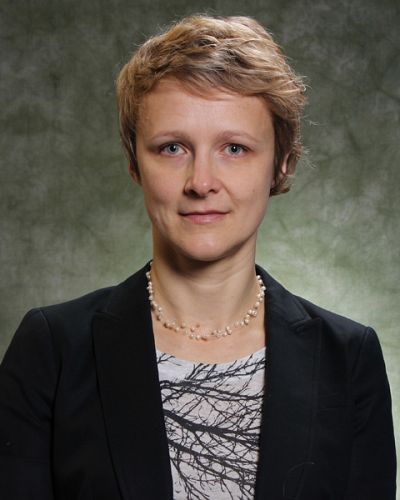
Katja B. Kleinberg
Associate Professor; Director of Graduate Studies
Political Science