About Mamun Al-Mamun and the HealBig (Health Services, Outcomes, and Big Data Informatics) Lab
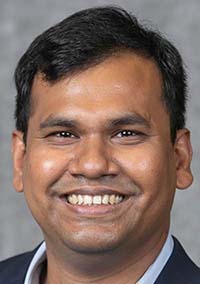 I am a health system, services, and outcomes researcher. My research program focuses
on developing practical health data science methods to address important public health
and clinical problems. I hold a PhD in computing and information sciences, and Icompleted
four years of postdoctoral training in population medicine and public health epidemiology.
This training has prepared me to lead interdisciplinary collaboration across data
science, medicine, pharmacy, and public health.
I am a health system, services, and outcomes researcher. My research program focuses
on developing practical health data science methods to address important public health
and clinical problems. I hold a PhD in computing and information sciences, and Icompleted
four years of postdoctoral training in population medicine and public health epidemiology.
This training has prepared me to lead interdisciplinary collaboration across data
science, medicine, pharmacy, and public health.
HealBig focuses on complex data challenges in health services and outcomes research. We develop and apply methods such as statistical modeling, decision support systems, data mining, machine learning, and mathematical and agent based modeling. I welcome research collaborations and student involvement. My long-term goal is to build methods that are scientifically rigorous and clinically useful, and to translate results into evidence that can inform public health practice and policy.
People
HealBig includes faculty collaborators, trainees, graduate students, and undergraduate researchers working across health outcomes research, informatics, and applied machine learning. We value interdisciplinary teamwork and mentorship.
Research
As a health systems, services, and outcomes researcher, my long term goal is to develop quantitative methods and tools that address real world healthcare data problems and translate findings into evidence for clinical practice and public health policy.
Research areas
RenaLytics (Renal Analytics)
Chronic kidney disease affects more than 37 million U.S. adults, yet many patients remain undiagnosed. Hospital acquired acute kidney injury is also common in critically ill populations and contributes to substantial morbidity, mortality, and cost. Our work aims to identify early prognostic markers of kidney disease progression, quantify nephrotoxic medication risk under different comorbidity profiles, and evaluate quality of life and healthcare utilization among patients with CKD and acute kidney injury. This work has been supported by NIH Network of the National Library of Medicine (NNLM).
Drug Overdose and Related Mental Health Disorders
Overdose patterns have shifted from prescription opioids to heroin, then to synthetic opioids such as fentanyl, and increasingly to polysubstance combinations that include opioids, benzodiazepines, stimulants, and antidepressants. Our research aims to characterize polysubstance patterns, develop near real time prediction methods for high risk cases, and quantify spatial and temporal burden to support prevention and response. We use state level toxicology data and prescription drug monitoring program data. We also conduct related work in mental health and neuropsychiatric conditions, including Attention-deficit/hyperactivity disorder (ADHD), and Alzheimer’s Disease and Related Dementias (ADRD).
Medication Reconciliation, Regimen Complexity, and Hospital Readmission
Medication errors affect patient safety and contribute to avoidable utilization and cost. Medication reconciliation failures remain common during transitions of care, particularly in hospitalized and critically ill patients. Our research focuses on medication reconciliation quality, polypharmacy, and medication regimen complexity, and how these factors relate to readmission and adverse outcomes. This work is supported by the American College of Clinical Pharmacy.
Interdisciplinary Collaboration for Rare Diseases
Rare diseases affect an estimated 30 million Americans and remain difficult to diagnose due to heterogeneous symptoms and limited data. Our work develops methods to support earlier recognition and better outcomes for rare conditions, including transthyretin amyloid cardiomyopathy, ANCA associated vasculitis, and intestinal malrotation. We collaborate across clinical specialties to build usable tools for rare disease detection and care pathways.
Publications
Contact
Abdulllah Al-Mamun
(He/Him/His)
Assistant Professor of Health Systems Engineering
School of Systems Science and Industrial Engineering
Thomas J. Watson College of Engineering and Applied Science
Binghamton University, State University of New York
Email: malmamun1@binghamton.edu
Phone: 607-777-5056