Goal 3 - Binghamton University will be a national leader in:
Fostering a University community of belonging, shared identity, and University spirit
Binghamton University’s strength is defined not only by its academic excellence but by the pride, connection, and shared identity that extend across the Bearcat community — from current students to a global network of alumni and all others who remain connected to Binghamton long after their time on campus.
This enduring link reflects the distinctive character of a Binghamton education and creates a powerful foundation for a more intentional, connected, and engaged university.
This goal outlines intentional efforts to cultivate an inclusive, bonded, and vibrant University community that endures well beyond the boundaries of our campus and across generations. It also identifies specific action areas that attend to our core members — students, faculty, and staff — and support their personal and professional growth.
Recognized as a Top 10 Public Ivy and a top 25 public university by Forbes.
Action Areas
Action Area 1
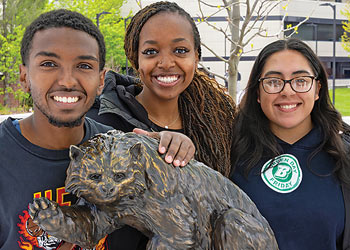
Cultivate traditions, visible symbols of pride, and common experiences that celebrate Binghamton’s distinctive strengths and bring together students, alumni, athletes, fans, and the broader University community.

Action Area 2
Build accessible, integrated student support systems that make it easy for students to find and receive support when needed.
Action Area 3
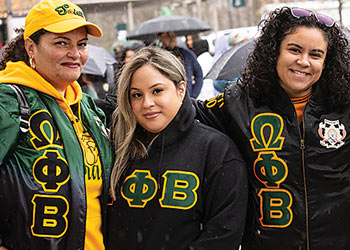
Develop students’ capacity to engage constructively with others, navigate differences, and foster empathy and collaborative problem-solving.
Action Area 4
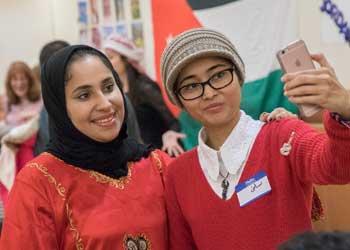
Advance diversity, equity, inclusion, and accessibility by removing barriers to participation and supporting communities of belonging.

Action Area 5
Invest in the professional growth, engagement, and well-being of faculty and staff and foster a workplace culture that encourages connection and participation in campus life.
Key Performance Indicators (KPIs)
KPI Number of students, faculty, staff, and community members participating in campus life and shared experiences
Metric Participation in campus life and shared experiences by category and audience
| Students | Faculty/Staff | Community | Total | |
|---|---|---|---|---|
| Arts and Culture | 7,853 | 1,632 | 7,745 | 17,230 |
| Athletics | 2,847 | 1,289 | 43,674 | 47,810 |
| Traditions | 5,702 | 154 | 344 | 73 |
| Engagements | 53,683 | 14,257 | 89 | 68,029 |
| Recreation and Wellness | 6,883 | 511 | 29 | 7,423 |
| Student Employment & Peer Roles | 3,885 | 3,885 | ||
| Total | 80,853 | 17,843 | 51,881 | 144,450 |
KPI Number of alumni participating in mentoring, events, and ongoing relationships with the University
Metric Unique engaged alumni by type of engagement
- 11,204 Unique engaged alumni
- 5,456 Philanthropic
- 4,919 Experiential
- 1,801 Communication
- 1,440 Volunteer
KPI Faculty, staff, and students’ self-reported gains in sense of belonging and inclusion
Metric There is a great sense of belonging (average, scale of 1-5)
| Persons of color: Yes | Persons of color: No | |
|---|---|---|
| Employees | 3.2 | 3.4 |
| Students | 3.2 | 3.3 |
Metric Our campus is inclusive (average, scale of 1-5)
| Persons of color: Yes | Persons of color: No | |
|---|---|---|
| Employees | 3.3 | 3.8 |
| Students | 3.6 | 3.9 |
KPI Students’ self-reported gains in interpersonal and social-emotional skills needed for constructive engagement and navigating differences
Metric As a result of this workshop, I feel more prepared to listen to someone I disagree with and be curious (strongly agree/agree)
- 96% Strongly agree/agree
Metric Learners who improved in affective polarization
- 52% Learners who improved