Goal 5 - Binghamton University will be a national leader in:
Building bridges locally to globally to promote the common good
Binghamton University is grounded in a deep commitment to vibrant partnerships that extend from the Southern Tier across the state and nation to the global stage.
Binghamton has cultivated enduring, mutually beneficial relationships that connect scholarship, education, and innovation with the priorities and aspirations of the communities and partners with whom it works.
Building on this foundation, Binghamton has a powerful opportunity to more intentionally align and elevate these connections to promote the common good. This goal envisions the University as a catalyst for shared progress — strengthening pathways, deepening reciprocal partnerships, and bringing people together to address complex challenges. By extending its reach and reinforcing its role as a trusted “bridge-building” partner and convener, Binghamton will help shape a more connected, collaborative, and impactful future.
There is, quite simply, extraordinary momentum across this institution.
Action Areas
Action Area 1
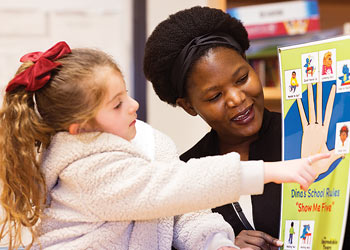
Advance partnerships between the University and local organizations, schools, industry partners, and nonprofits to identify economic development opportunities and workforce needs and address shared challenges and opportunities.

Action Area 2
Build pre-college pathways that connect students in the Southern Tier to a Binghamton education, while expanding opportunities for graduates to work in the region and support its economic vitality.
Action Area 3
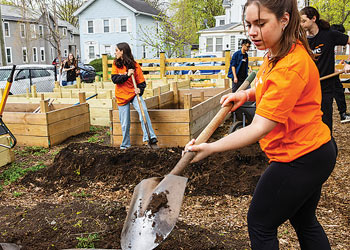
Broaden opportunities for community members, families, and regional partners to engage with the University through dialogue, collaboration, and shared learning.
Action Area 4
Deepen collaboration with SUNY institutions and state agencies to achieve shared priorities in research, education, economic development, and public service.
Action Area 5
Expand Binghamton’s national and global partnerships to foster cross-cultural learning and global problem-solving.
Key Performance Indicators (KPIs)
KPI Percent of graduating cohort participating in education abroad programs
Metric % of graduating cohort participating in education/study abroad
| Overall | URM | First Gen | Pell | |
|---|---|---|---|---|
| Education/Study Abroad | 9% | 8% | 6% | 7% |
KPI Number of distinct countries of international research collaborations
Metric International research collaborations and unique countries
- 80 International collaborations
- 29 Unique countries
KPI Number of applications from regional high school, community college, and four-year institutions to undergraduate degrees
Metric Students coming from the region
- 734 First-year students
- 337 Transfer students
KPI Percent of graduates remaining in the region and state post-graduation
Metric % of graduates employed in the region and in New York State
| Employed in region | Employed in New York State | |
|---|---|---|
| Undergraduates | 12% | 87% |
| Master's | 23% | 75% |
| Doctorates | 3% | 57% |
KPI Percent of faculty and staff who self-report community service engagement
Metric % of faculty and staff who self-report community service engagement
- 39% Faculty
- 45% Staff
KPI Partners report positive human impact of faculty, staff, and student engagement
Metric Partners report positive human impact of faculty, staff, and student engagement
Baseline data coming soon