Plan Implementation and Assessment
The preceding pages outline what Binghamton University intends to strategically focus on over the next five years. This section describes how we will operationalize the plan and assess our progress and impact. By combining annual plan assessment and implementation with regular campus-wide spaces for discussion of how we’re doing, our approach can adapt and enable continuous improvement.
At its core, we envision an annual implementation process that includes the following components:
- Collaborative engagement among divisional leaders, faculty, and staff to identify annual action priorities and related resource allocation needs.
- Strategic funding competitions that invite proposals aligned with plan priorities and provide targeted support for high-impact, cross-divisional, and innovative initiatives.
- Advisory support that convenes faculty and staff with relevant expertise to provide input and foster innovation.
- Regular University-wide public forums that encourage ideation and feedback to sustain a vibrant planning process.
- A clear project management structure that supports annual University-wide planning and reporting, including aligned multi-year and annual unit planning.
Many suggested activities emerged from constituency engagement during the creation of this strategic plan, which will be shared with divisional leaders as a rich starting point.
The strategic plan identifies key performance indicators and a range of metrics to assess progress toward each goal. Specific numerical targets will be developed and operationalized in real time through implementation planning, allowing the University to establish meaningful baselines, respond to changing conditions, and adjust targets as goals are met and new ambitions emerge. This approach will ensure both accountability and flexibility as the plan moves from vision to action.
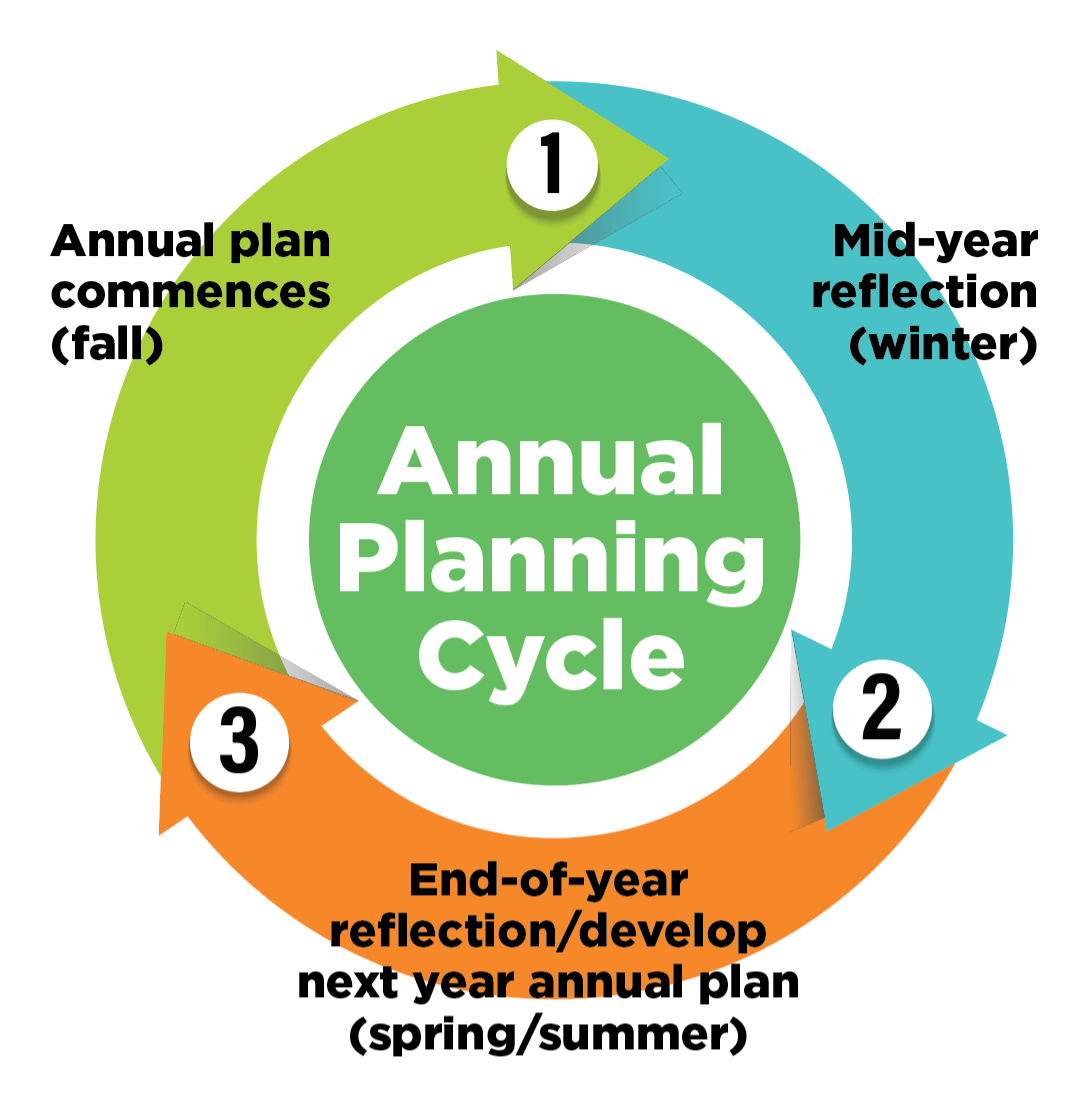
While the specific process will evolve over time to strengthen engagement and effectiveness, annual plan implementation is envisioned as a cyclical process.
Each annual planning cycle will focus on three areas:
- Activities (i.e., did we do what we set out to do?)
- Key performance indicators (i.e., did we achieve our desired results compared to the initial baseline, and if not, what are the implications?)
- Resources (i.e., what time, space, people, finances are required?)