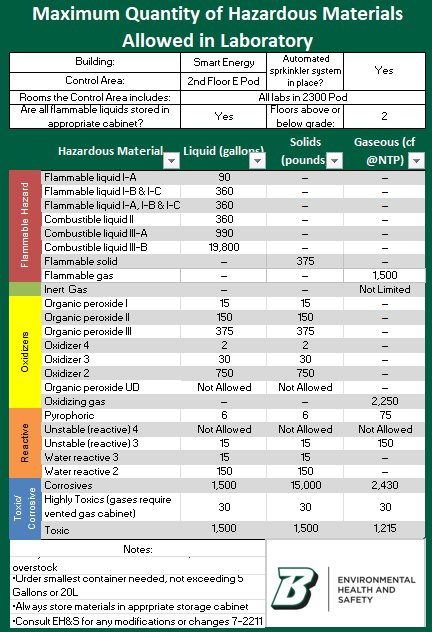
Maximum Allowable Quantities (MAQs) are limits on the storage and use of hazardous materials within a specific area of a building as defined by the International Building Code. The limits are in place to protect occupants and first responders in the event of an emergency, and to not overwhelm the building fire suppression system or first responders.
Hazardous Materials as Defined by the National Fire Protection Association
-
Ignitible (Flammable and Combustible) Liquids
Material Definition Examples Class IA Flammable Liquid Flash Point: Below 73°F (22.8°C)
Boiling Point: Below 100°F (37.8°C)
Ethyl Ether
Pentane
Class IB Flammable Liquid Flash Point: Below 73°F (22.8°C)
Boiling Point: At or above 100°F (37.8°C)Gasoline
Acetone
Benzene
Ethanol
Isopropanol
HexanesClass IC Flammable Liquid Flash Point: At or above 73°F (22.8°C), below 100°F (37.8°C) Butyl Alcohol
Styrene
XyleneClass II Flash Point: At or above 100°F (37.8°C), below 140°F (60°C) Diesel Fuel
Kerosene
Mineral SpiritsClass IIIA Flash Point: At or above 140°F (60°C), below 200°F (93°C) Aniline
FormaldehydeClass IIIB Flash Point: At or above 200°F (93°C) Heavy oils
Ethylene Glycol
Glycerin -
Oxidizers
Materials that readily liberate oxygen or oxidizing gases, or increase combustibility. If heated or contaminated these materials may result in a vigorous self-sustained decomposition.
Class 4 can undergo explosive reaction due to contamination or exposure to thermal or physical shock. - Ammonium Perchlorate
- Ammonium Permanganate
- Hydrogen Peroxide solutions greater than 91% by weight
Class 3 will cause a severe increase in the burning rate of combustible materials - Ammonium Dichromate
- Potassium Chlorate
- Hydrogen Peroxide (55-‐91%)
- Perchloric Acid (60-‐72%)
Class 2 will cause a moderate increase in the burning rate of combustible materials - calcium permanganate
- calcium chlorite
Class 1 do not moderately increase the burning rate of combustible materials - inorganic nitrates
- ammonium persulfate
- hydrogen peroxide solutions between (8- 27.5%)
-
Organic Peroxides
Organic peroxides are highly reactive compounds that may decompose into various unstable compounds and often contain the bivalent -O-O- structure. They range in class from I-V, with Class I being the most capable of detonation/deflagration and Class V being able to burn with less intensity than combustibles or unable to sustain combustion.
-
Toxics and Highly Toxics
Toxics
A material which produces a lethal dose or concentration which may:
- Have a median lethal dose between 50mg and 500mg per kg bodyweight when administered orally
- Have a median lethal dose between 200mg and 10000mg per bodyweight when administered by continuous contact for 24 hrs
- Have a medial lethal concentration in air between 200ppm and 2000 ppm
Highly Toxics
A material which produces a lethal dose or concentration which may:
- Have a median lethal dose 50mg or less per kg bodyweight when administered orally
- Have a median lethal dose 200mg or less per kg bodyweight when administered by continuous contact for 24 hrs
- Have a medial lethal concentration in air of 200ppm
Note that these definitions from NFPA have been truncated for accuracy. Mixtures may warrant a different classification.
-
Corrosives
Chemicals that cause visible destruction or irreversible alterations in living tissue by chemical action at the point of contact. Typically these materials have a pH less than 2 (acid), or greater than 12.5 (base)
Factors that Affect Storage Limits
There are a few factors that allow an increase in allowable quantity. First is storage in an appropriate cabinet. Generally this is a flammable cabinet for liquids or a vented gas cabinet for gases. Next is a building automatic sprinkler system. Finally, limits change based on the room being above or below "grade of plane" or ground level.
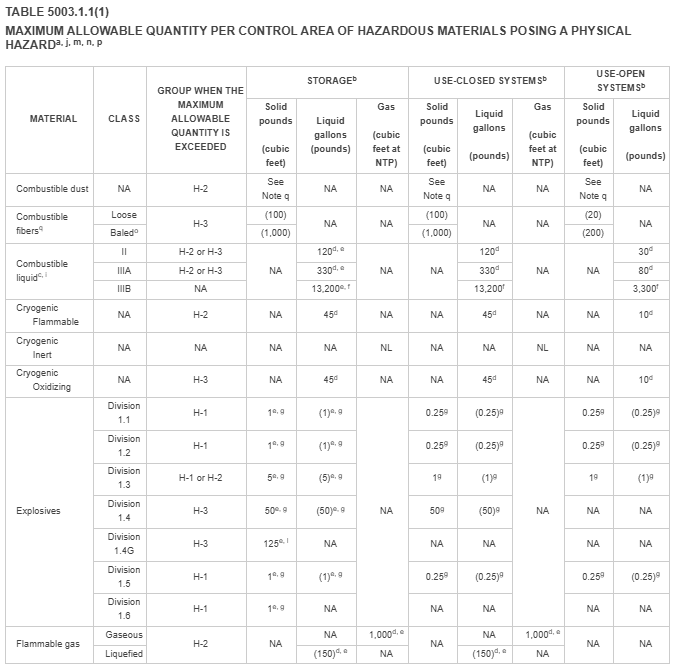
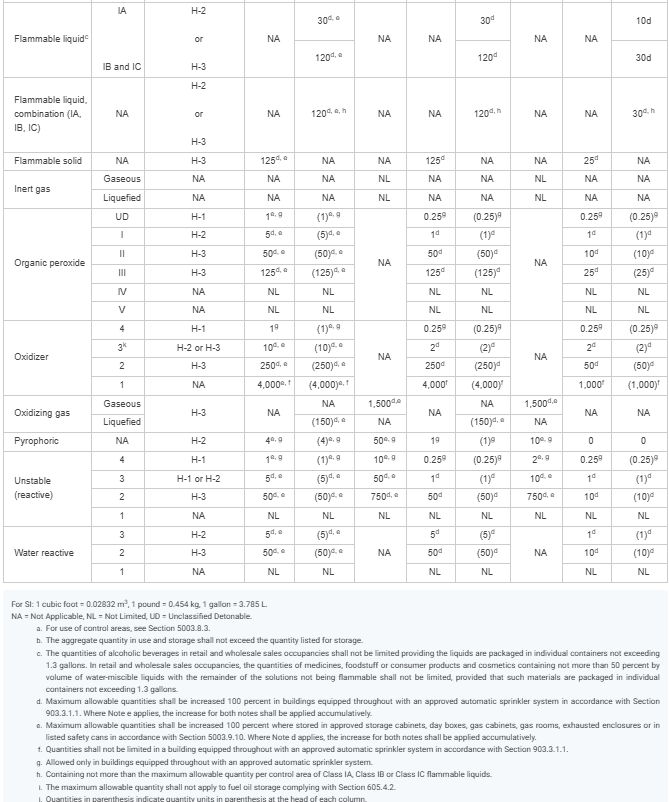
Table 5003
The table below is from Chapter 50 of the International Fire Code, which appears also in Chapter 3 of the International Building Code.
Exceeding MAQs
If the amount of storage exceeds the limit, lab occupants must immediately reduce storage to the limit. The best way to prevent exceeding the limit is reducing purchasing, storing materials in the appropriate cabinets, and ensuring you are discussing these limits with EH&S or Facilities Management.
Sign Posting
To support this effort we are posting MAQ Signs in labs that identify the limits. The signs will identify the control area it applies to and will assume all storage is in the appropriate cabinets.