Batteries pose a unique set of regulatory challenges that require additional understanding to ensure compliance with state and federal hazardous materials regulations. Three main types of batteries commonly found on campus are:
- Alkaline batteries (single use, non-rechargeable, including AA, AAA, C, D, 9-volt)
- Lithium Metal batteries (single use, non-rechargeable, including AA, AAA, C, D, 9-volt)
- Lithium Ion batteries (rechargeable)
Disposal of all batteries is regulated under EPA’s RCRA (Resource Conservation and Recovery Act). Under RCRA, batteries are regulated as either Universal Waste or Hazardous Waste upon disposal. Additional transportation requirements are regulated by DOT (Department of Transportation).
Alkaline Batteries
Alkaline batteries that do not contain lithium are considered universal waste, regardless of condition, and therefore should be disposed of through Facilities Management E-waste Program. Batteries that contain lithium will explicitly state the word “lithium”, “Li” or “Li-ion” on the battery itself.
Lithium Batteries
Lithium batteries that are not handled or disposed of correctly pose a serious fire and safety risk. Lithium Metal batteries (non-rechargeable) and Lithium Ion (rechargeable) batteries must be inspected in accordance with DOT regulations to determine if they are “Damaged, Defective, or Recalled” (DDR). If a battery is determined to be DDR, it may be collected and disposed of as hazardous waste.
Under no circumstances should any battery be disposed of in a dumpster or regular trash.
If a fire caused by a DDR lithium battery occurs, contact University Police (UPD) immediately (607) 777-2222.
Battery Disposal Flowchart
Use this flow chart to determine the proper route of disposal of any battery in your possession.
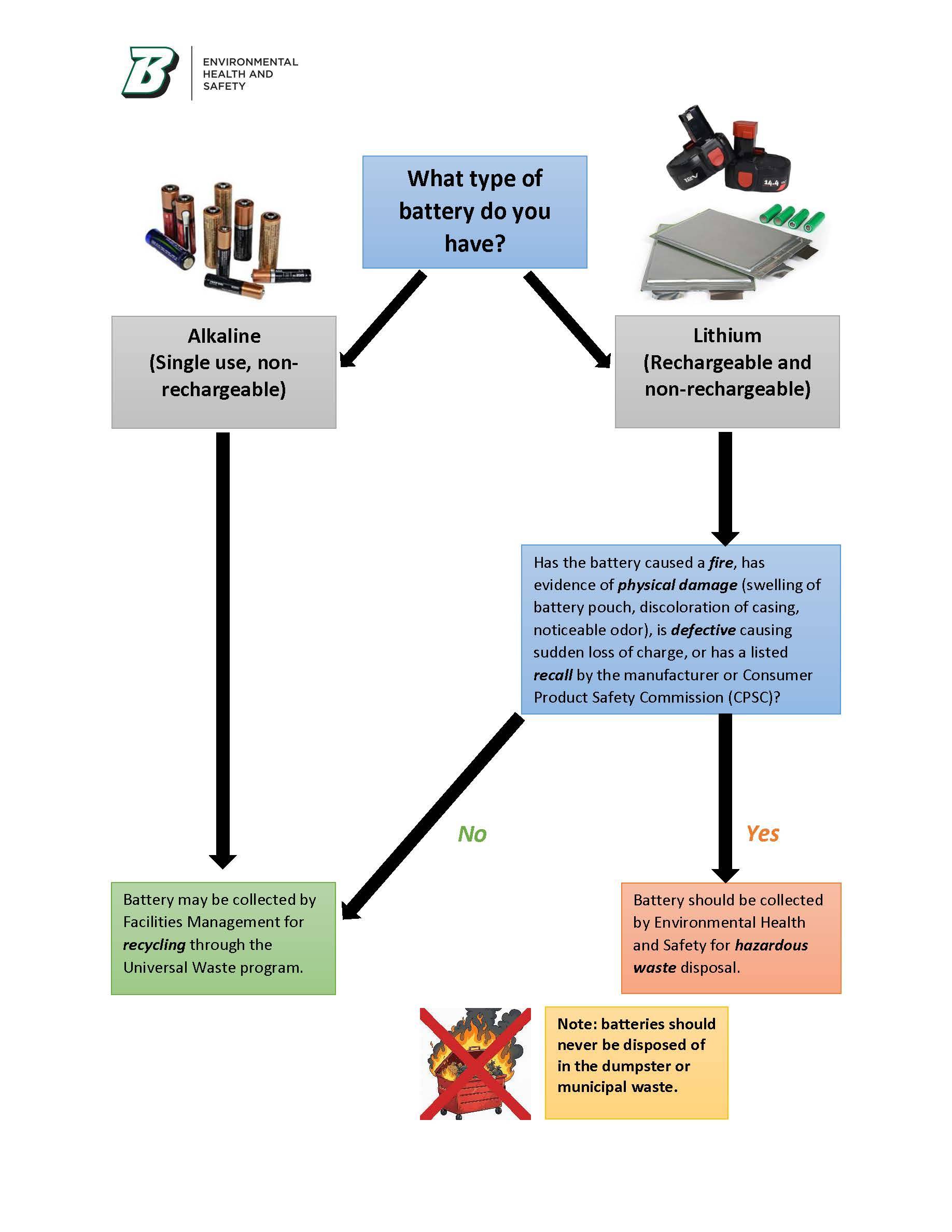
The following checklist also may be useful to determine whether or not the battery in your possession is DDR:
- Is there a visible acute hazard, such as gas, fire, or electrolyte leaking from the battery?
- Are there signs of physical or mechanical damage, such as:
- Swelling of the battery/battery pouch?
- Discoloration of the battery casing?
- Noticeable odor or signs of corrosion on the lithium battery casing?
- Loose or damaged wires in the battery casing?
- Are there known conditions of misuse of the product containing the battery, including neglect in an outdoor environment or misuse causing consistent damage to the product?
- Is the battery subject to a recall by the manufacturer or Consumer Product Safety Commission (CPSC)?
If any of the answers are “yes”, the battery may be collected by EH&S as hazardous waste. Follow the instructions here for submitting a hazardous waste pickup request.
In most cases, the answers to the checklist above are “no”, and the battery should be collected by Facilities Management for recycling through the Universal Waste program. Find the nearest battery collection receptacle to your location for easy drop off, or follow this link for more information from Facilities Management.
For more information on battery collection and disposal: