Lean Six Sigma Green Belt Healthcare - online and self-paced
The principles of Lean Six Sigma are vital to the continuous improvement of hospital operations and healthcare delivery systems. This course will utilize healthcare case studies to teach the many applications of Lean Six Sigma concepts.
"The goal is to make healthcare more efficient, more effective, with higher quality and fewer errors — and, in the process, save lives." - Professor Mohammad Khasawneh.
- Upcoming offerings:
- January 26, 2027 to March 28, 2027 (Register using the link below)
- Delivery format: Self-paced online
- Instructor: Mohammad Khasawneh (see below)
- Course content: 33 hours of video lecture materials and slides. Open-book, open-note exam due on the last day of the session to be eligible for certification. We recommend a minimum of 30-40 hours to completing the exam.
- Credentials: A Green Belt Healthcare badge will be issued after successful course completion. in addition to a certificate of continuing education credits for a total of 3.3 CEUs from the Thomas J. Watson College of Engineering and Applied Science at Binghamton University.
At successful completion, you will earn the Green Belt Certification and the Lean Six Sigma Yellow Belt badge. A Binghamton University-issued course completion certificate is also available for successful participants. A grade of 70% or higher is required to pass the course and earn the certification and badge.
32 CPE Credits for Pharmacists (and alsoPsy CE credits) are available for an additional
$156
Who Should Attend: Healthcare executives, directors, physicians, nurses, pharmaceutical staff, hospital
and office administrative staff, industrial management engineers, performance improvement
specialists, laboratory and specialized healthcare services staff, clinical staff,
insurance company staff, and others seeking Lean Six Sigma Green Belt certification.
If you have any questions, please reach out to wtsnindy@binghamton.edu
Course Fees
- $1,500: Industry
- $1,000: Binghamton University Alumni, Faculty, Staff
- $750: Non-Binghamton University Students
- $600: Binghamton University Students
- $100: Retake Fee
Pricing shown on this webpage does not include payment processing fees.
If you are affiliated with Upstate Medical, please email us at wtsnindy@binghamton.edu before completing your registration.
COURSE DESCRIPTION

This course will cover continuous process improvement in healthcare, an introduction to Lean, Six Sigma, Lean Six Sigma in healthcare, and the DMAIC improvement cycle (Define, Measure, Analyze, Improve, and Control), which is a core tool to drive Lean Six Sigma projects. Participants will also be exposed to spreadsheet-based statistics for Six Sigma, simulation for Lean Six Sigma, and case studies/projects.
TOPICS COVERED
- Continuous process improvement (CPI) in healthcare with an emphasis on both Lean and Six Sigma concepts and methodologies
- Lean concepts and their applications in healthcare, such as 5S, waste reduction, value stream mapping, and error proofing
- DMAIC (Define, Measure, Analyze, Improve, and Control) to solve healthcare issues and transition CPI projects from one phase to another
- Basic statistical analysis methods and tools to determine key relationships between health system inputs and outputs
- The integration of both Lean and Six Sigma for achieving data-driven process improvement results in healthcare systems
- Team dynamics and leadership in the healthcare domain to provide effective and successful healthcare projects
LEARNING OBJECTIVES
- Recognize the need and key attributes of a successful Lean Six Sigma program in an organization.
- Describe the roles and responsibilities of a certified Lean Six Sigma Green Belt in a healthcare organization.
- List the fundamentals of the DMAIC problem-solving methodology.
- Use basic Lean Six Sigma tools for project definition and process baseline, improvement analysis, implementation, and sustainability.
- Define the need for advanced problem-solving and improvement methodologies used by project teams.
- Integrate Lean Six Sigma knowledge and tools to successfully implement, deploy, and sustain process improvements.
REQUIREMENTS
- A computer with a high-speed internet connection and audio
- Microsoft Excel
- Trial version (free for 30 days) of the Minitab software (for statistical analysis) on the day before the start of the training program. Minitab is available for free for all Binghamton students.
- Updated version of JAVA
- A headset with a microphone may be useful, but it is not necessary.
INSTRUCTOR
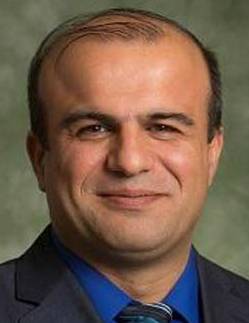
Mohammad T. Khasawneh
SUNY Distinguished Prof; School Director; Healthcare Systems Engineering / Health Systems / Manhattan Graduate Program Director; SUNY Distinguished Professor; Director
School of Systems Science and Industrial Engineering; Watson Institute for Systems Excellence (WISE)
Background
Mohammad Khasawneh is a SUNY distinguished professor and chair of Systems Science and Industrial Engineering at Binghamton University. He received his PhD in industrial engineering from Clemson University in August 2003 and his BS and MS in mechanical engineering from Jordan University of Science and Technology, in 1998 and 2000, respectively.
Khasawneh’s research is focused on healthcare systems engineering, operations management, and data science. He serves as the director for the Watson Institute for Systems Excellence (WISE), an institute for advanced studies that generates $2.5-3 million in research funds annually. In addition, he is the founding director of the Healthcare Systems Engineering Center, an organized research center (ORC) at Binghamton University.
Since 2003, Khasawneh has been leading a wide spectrum of projects with U.S. hospital systems that focus on applied research in the area of healthcare systems engineering. More specifically, his research is focused on the novel application of systems engineering to transform healthcare systems into high-performance environments that produce better patient outcomes at lower costs. His work is applied in ways that lead to optimal healthcare, including more efficient use of hospital resources; better outpatient scheduling; streamlined patient flow; improved patient satisfaction; reduced hospital-acquired conditions (such as infections and patient falls) through predictive analytics; and improved clinical, operational and financial performance using advanced data science methods.His health systems engineering center generates over $1 million annually in sponsored research from various healthcare and hospital systems.
Building on a successful research program and partnerships with health systems around the country and an academic concentration/minor, at the graduate/undergraduate levels, Khasawneh developed a 12-month Executive Master of Science with a Health Systems Concentration, which has been offered in Manhattan since 2013. He has also been instrumental in developing a new MS degree program in Healthcare Systems Engineering.
Over the years, Khasawneh presented his research at various national and international conferences, including China, India, Mexico, Jordan, Korea, Thailand, Japan, Turkey, Indonesia, and Canada. His research activities thus far have led to 60-plus refereed journal articles, 120-plus conference articles, one patent and three new invention disclosures. In addition, his sponsored research efforts thus far have resulted in over $15 million in external funding and over $39 million in software/equipment grants.
In 2006, Khasawneh received a U.S. Air Force Summer Faculty Fellowship to evaluate
the use of multi-sensory cues to improve the landing of unmanned aerial vehicles.
In 2009, he received another fellowship from the U.S. Air Force Office of Scientific
Research to design ergonomic computer workstations for very large displays. He received
the State University of New York (SUNY) Chancellor’s Award for Excellence in Teaching
in 2011, the University Award for Outstanding Graduate Director in 2015, the University
Award for Excellence in International Education in 2016, and the SUNY Chancellor’s
Award for Excellence in Scholarship and Creative Activities in 2021. He is a member
of the
Alpha Pi Mu and Alpha Epsilon Lambda honor societies.
Khasawneh also holds Diplomate status with the Society for Health Systems (SHS), a professional society within the Institute of Industrial and Systems Engineers (IISE) that supports the industrial engineering profession and individuals involved with improving quality and productivity within healthcare. More recently, Khasawneh was also recognized as an IISE Fellow, the highest classification of the IISE membership. He also holds an honorary visiting professor position with the Industrial Engineering Department at Hebei University of Technology in Tianjin, China, and Vellore Institute of Technology in Vellore, India.
In 2022, Khasawneh was named a SUNY distinguished professor, the highest faculty rank that SUNY awards. It is reserved for those who have achieved national or international prominence and an exemplary reputation within their discipline.
Education
- BS, MS, Jordan University of Science and Technology
- PhD, Clemson University
Research Interests
- Healthcare systems engineering
- Operations management
- Advanced analytics
Awards
- University Award for Excellence in International Education, State University of New York (2015-2016)
- University Award for Outstanding Graduate Director, State University of New York (2014-2015)
- Chancellor’s Award for Excellence in Teaching, State University of New York (2010-2011)
|
Teaching Assistant - Rahaf Matahen
|
 |
CANCELLATIONS AND REFUNDS
- All cancellation requests must be received within two (2) weeks of the course start date. Submit your cancellation request to the Office of Industrial Outreach Email: wtsnindy@binghamton.edu. There will be a processing fee for all refunds.
- Substitutions may be made anytime before the beginning of the course by informing the Office of Industrial Outreach.
- If the course is canceled, enrollees will be advised and receive a full refund.