


IMPROVING CAMPUS INFRASTRUCTURE
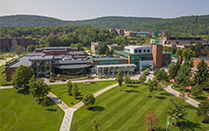
Some of the major improvements to infrastructure completed over the summer are very visible; others are not. Read in this issue about the many major projects completed by Physical Facilities and Information Technology Services, as well as the new programs offered by the University Center for Training and Development.

SCHOOL OF PHARMACY AND PHARMACEUTICAL SCIENCES OPENS NEW BUILDING
The opening of the new, $60-million School of Pharmacy and Pharmaceutical Sciences at the University's Health Sciences Campus in Johnson City, N.Y., headlines this quarterly report, but there's also good news about collaborations, external funding and student successes. Read more in this issue.
SUCCESSFUL INITIATIVES SUPPORT STUDENTS
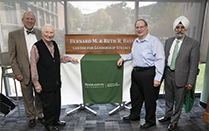
It takes donors at many levels to make Binghamton University successful, and in this issue of the quarterly report, you can read about a number of them. Whether it's AVANGRID offering full-tuition scholarships and capstone project support, or playing golf to benefit the Alumni Legacy Scholarship, the Division of Advancement works with Binghamton supporters.

BINGHAMTON RESEARCH FUNDING SETS RECORD
Binghamton University reported research expenditures totaling $47.5 million in 2017-18, an increase of about 19 percent from the previous fiscal year. The figure tops 2011-12, the campus’ all-time best year for research funding, when just over $40 million was reported. The new record, which follows several years of steady growth, is an important sign of the campus’ creativity and innovation. Healthcare research accounted for nearly a third of expenditures, with electronics packaging and systems engineering following at about 22 percent.
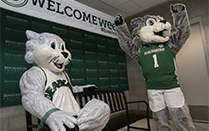
BAXTER THE BEARCAT BOOSTS SCHOOL SPIRIT
The Division of Student Affairs spent the summer hosting students and families for orientation and preparing for the opening of the fall semester. With some new people on board and some others with new duties, it has been a busy time. Not too busy, though, to show Binghamton University pride, as you'll read about the new Baxter the Bearcat Bench in the University Union in this issue.
STUDENT-ATHLETES CONTINUE TO SUCCEED ACADEMICALLY
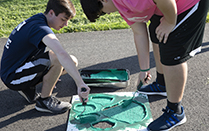
Student-athletes continue to shine on and off the courts and fields. The Athletics Department sets high academic standards, and student-athletes surpass them across the board. Read about the accomplishments made by student-athletes in their sports and in the classroom – and check out the videos showcasing fall sports and the new women's head basketball coach, Bethann Shapiro Ord, in this issue.

HELPING TO MAKE THE CAMPUS MORE INCLUSIVE
The Division of Diversity, Equity and Inclusion works to educate and empower everyone on campus in ways that create a welcoming community. From the Udiversity Educational Institute, that holds trainings for students, faculty and staff, to the Multicultural Resource Center and Q Center, the division's offices that work to build bridges and support students though education and events such as Sundaze, part of its Welcome Week programming. Read about the division's recent initiatives in this report.
DONOR SUPPORT ADVANCES BINGHAMTON UNIVERSITY
The Binghamton University Foundation had a successful 2017-18 year, bringing in the second highest amount of cash ever in support of the University. Read the numbers in this issue of the quarterly report, and learn one way the Foundation celebrates its donors.
Industry gets the ‘BEST’ deal
Binghamton University now can offer companies that collaborate on R&D projects a simplified way to use inventions arising from sponsored research.
The Binghamton Express Square Terms (BEST) Deal License is a non-exclusive, royalty-free, paid-up license.
“This is an innovative new way for us to engage industry partners,” said Bahgat Sammakia, interim vice president for research. “We are eager to remain a leader in developing research collaborations with companies around the world, and the BEST Deal can help us do just that.”
About 17 percent of Binghamton’s research awards come from business and industry. Industry support accounts for just 6 percent of academic R&D funding nationwide, according to the National Science Foundation.
The time-saving and cost-effective licensing process is a natural result of Binghamton’s ongoing work with the private sector, said Eugene Krentsel, assistant vice president for entrepreneurship and innovation partnerships. “We listen to industry and are interested in understanding their needs,” he said. “Companies say simplicity and predictability are their biggest concerns about licensing.”
Participating firms pay a one-time license fee of $1,000 for each U.S. or foreign patent application filed and made part of the license. They also compensate the University for expenses related to acquiring patent rights they request. Krentsel said the low-cost deal fits companies large and small. “Our nominal fee is a trivial expense when it comes to protecting potentially important discoveries,” he said. “Firms could easily spend more than that just on legal fees related to negotiations.”