FRI Biogeochemistry Research Stream
Addressing Environmental Challenges with a Multi-Disciplinary Toolbox
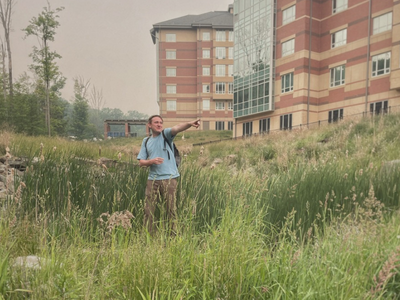
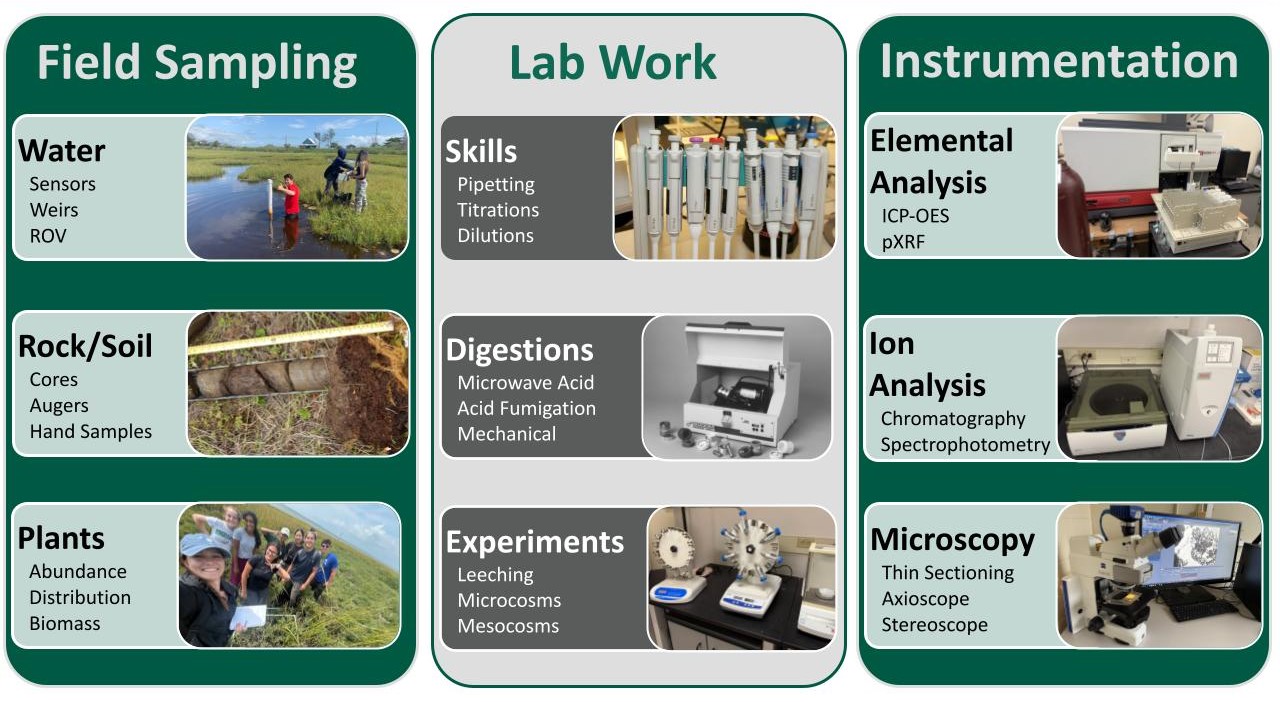
Many of Earth’s biogeochemical cycles (such as the exchange of carbon stored in the atmosphere, oceans, biota, and bedrock) are affected by worldwide increases in human populations which drive significant land-use change. To better understand these challenges, this research stream trains student researchers in state-of-the-art techniques in both field and lab work. The research carried out by first-year students in the Biogeochemistry research stream at Binghamton University often focuses on individual watersheds as models of larger phenomena.
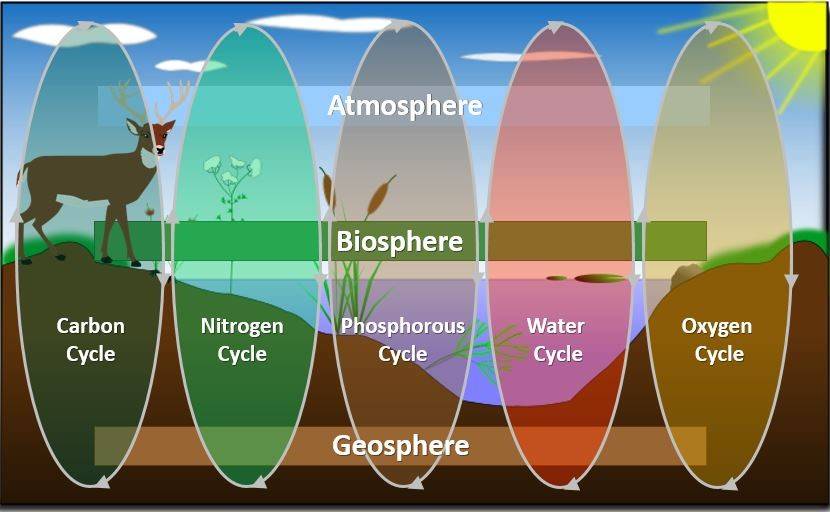
Biogeochemistry research intersects the traditional disciplines of Microbiology, Botany, Zoology, Ecology, Geology, Chemistry, and Environmental Studies. The research questions our FRI students investigate are in the context of understanding the complexity of Earth’s biogeochemical cycles relative to addressing today’s environmental problems.
Research Themes
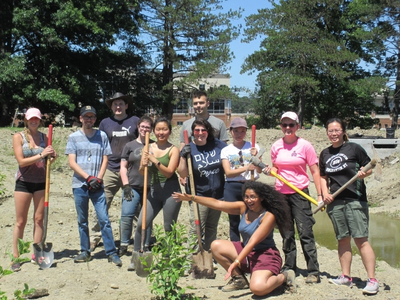 Pollutant Remediation
|
 Nutrient Cycling
|
 Global Climate Change
|
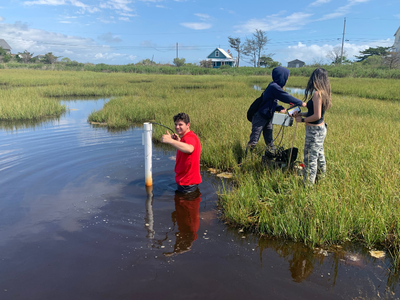
 Wetlands
|
Research Educator
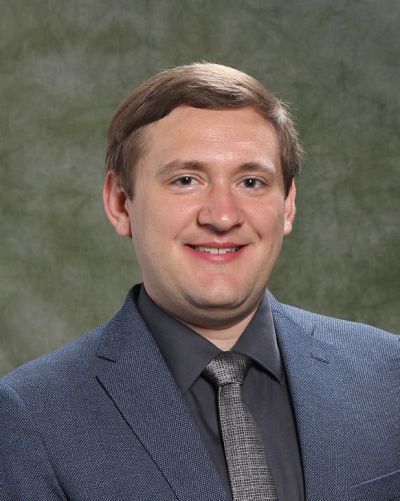
Jonathan Schmitkons
Biogeochemistry, Research Associate Professor
First-year Research Immersion Program; Department of Earth Sciences
Research Interests
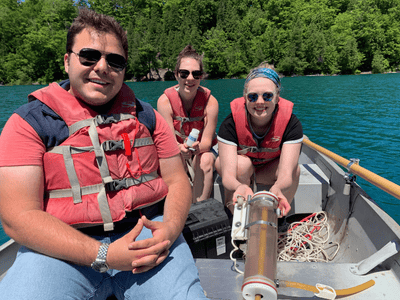
Dr. Jonathan Schmitkons is the Research Educator for the Biogoechemistry research stream. His research primarily focuses on surface-water and sediment biogeochemistry. Some of the questions that interest him involve the sources, transport, and fate of traffic-related pollutants and lately he and his students have been studying Green Lake in Fayetteville, NY. This lake is a perfect case study for biogeochemical cycling because its waters are naturally separated by density and never mix, it is home to unique microbial life that “breathe” sulfur instead of oxygen, and unique carbonate “reefs” (not formed by corals) rim its shores. Dr. Schmitkons especially enjoys this type of work because it combines sophisticated laboratory techniques with exciting field research experiences.
Research Techniques
Research Projects
-
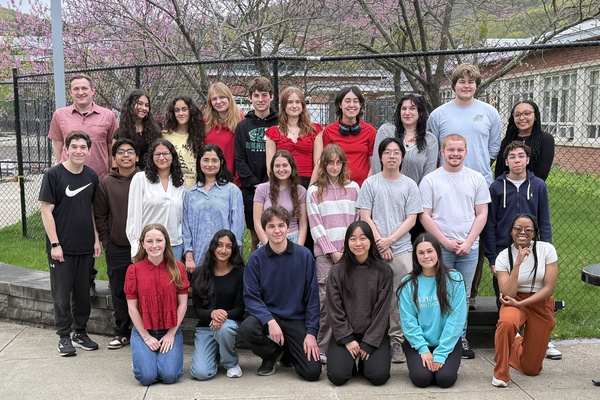
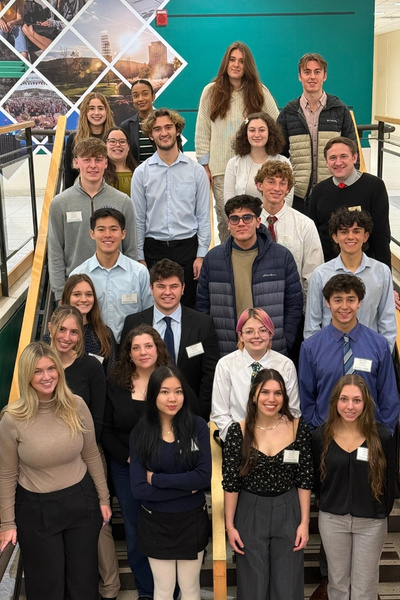
Cohort 11 (2024-2025)
- Developing a novel method to produce fused beads for XRF analysis
- Exploring the hydrologic budget of Nuthatch Pond
- Fungal presence in Green Lake Bioherms
- Investigating correlations between plant types and soil characteristics in coastal salt marshes
- Quantifying nitrogen load into Cayuga Lake, impacting harmful algal blooms
-
Cohort 10 (2023-2024)
- Analyzing chemocline fluctuations in Green Lake
- Bacterial composition's impact on bioherm formation in Green and Round Lakes
- Building weirs to assess stream remediation in Nuthatch Hollow
- Investigating impacts of confined disposal facility (CDF) leachate in a Virginian coastal salt marsh
- Revealing the past to predict the future: Acid digestion in Mid Miocene climate modeling
-
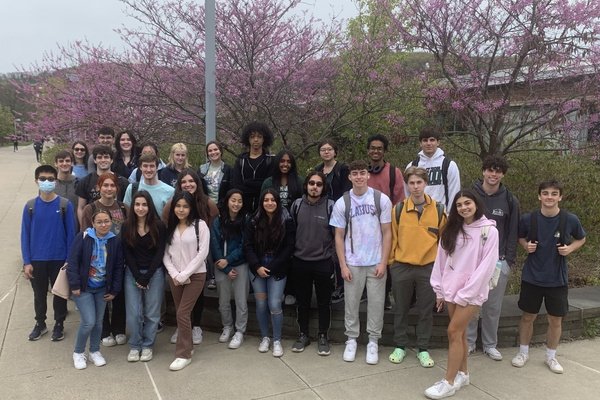
Cohort 9 (2022-2023)
- Analysis of bacteria in Green Lake versus Round Lake
- Bridging past and future: The Miocene as a climate analog for future temperature projections
- Examining effects of road salt runoff on microbial diversity
- Examining remediation capabilities of Pleurotus ostreatus
- Quantifying what the naked eye cannot see: composition of Green Lake bioherms
- Using CT-scans to study paleoclimate of the Pleistocene
-
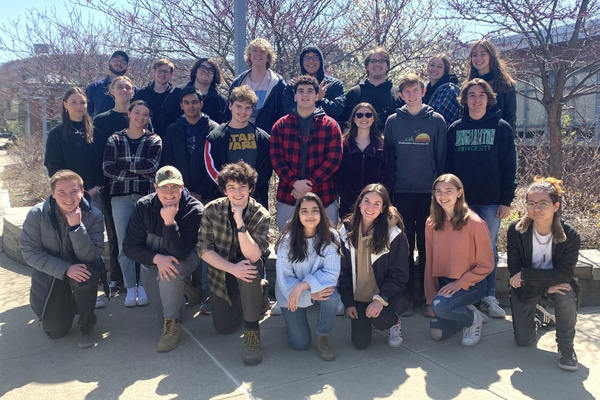
Cohort 8 (2021-2022)
- Ocean productivity tied to warming events
- Plant diversity in constructed wetlands on campus
- Temperature data from Fayetteville Green Lake (FGL) shows potential mixing of permanently stratified layers
- Using Lemna minor to remediate Pb pollution
- Reconstructing paleoclimate from CT scans of sediment cores
-
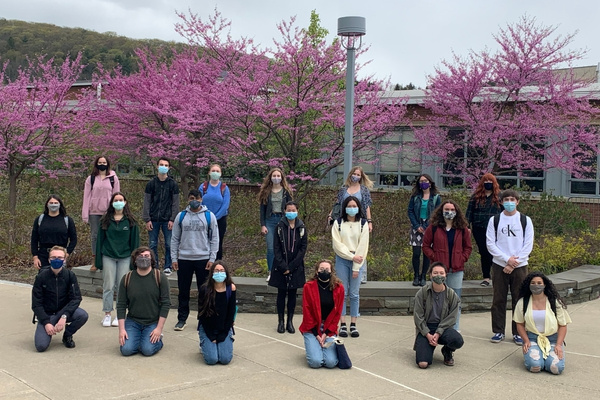
Cohort 7 (2020-2021)
- Ba/Al ratios indicate increased productivity near the Tasman Front during the Mid-Miocene
- Calculating K and Fe concentrations in ocean cores from prexisting XRF data for future climate analysis
- Correlating structure and porosity of thrombolitc bioherms at Fayetteville Green Lake
- First high resolution data from understudied Round Lake shows minor differences in ion concentrations at varying depths when compared to Green Lake
- Monitoring metal cycling through constructed wetlands at Binghamton University
-
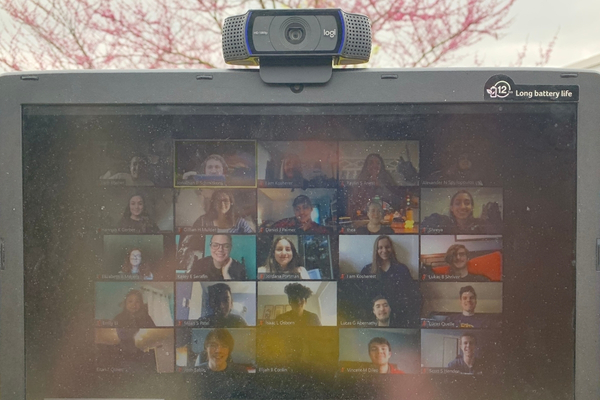
Cohort 6 (2019-2020)
- Assessing the difference between total concentration and bioavailable levels of zinc in natural soils and greenhouse plant experiments
- Identifying structural and chemical trends within Green Lake microbialites
- Monitoring the water chemistry and algal growth in Binghamton University’s wetlands
- The effects of road salt on soil denitrifying bacteria
- Understanding the paleoenvironment of earth’s oldest forest in Cairo, NY
-
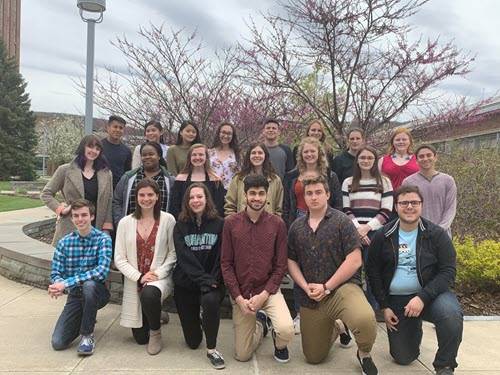
Cohort 5 (2018-2019)
- Calcium Carbonate Whiting Events: Biological or Geological Origin?
- Determining the Environmental Conditions of the Cairo Forest, the Oldest in the Fossil Record
- Phytoremediation Capabilities of Salix integra in a Constructed Wetland
- The Challenges of Growing Anaerobic Sulfur Bacteria From Green Lake
-
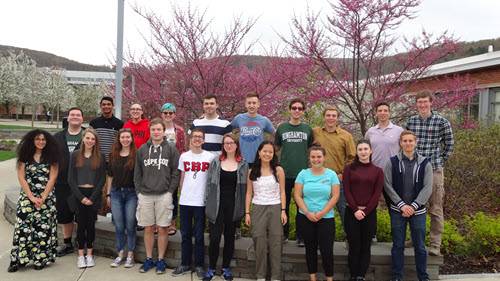
Cohort 4 (2017-2018)
- Compositional analysis of Green Lake bioherms
- Determining the Effectiveness of Lichens as Environmental Monitors
- Hydrogeochemical Analysis and Closed System Modeling of Glacier Lake for the Verification of Meromixis
- Oxidation of Sulfur, Arsenic, and Antimony by Purple Sulfur Bacteria
- The Effects of Deicers on Denitrification Rates
-
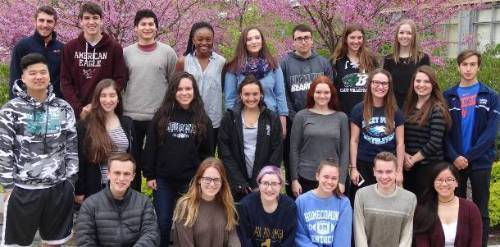
Cohort 3 (2016-2017)
- Common Antibiotic Sulfamethoxazole Disrupts Denitrification in Stream Sediment Microcosms
- Determining the Organic and Inorganic Nature of Layers in Petrified Sea Gardens Stromatolites
- Role of Particle Size on Metal Distribution in Lake Lieberman
- A Geochemical Analysis and Calcite Saturation Modeling of Meromictic Green Lake in Fayetteville, NY
- Microbial Cycling of Arsenic and Antimony in Contaminated and Pristine Environments
Research Stream Collaborators

Research Interests

Research Interests

Molly Patterson
Associate Professor
Department of Earth Sciences
Research Interests