FRI Neuroscience Research Stream
From Minds to Molecules: Cracking the Neural Code
The Neuroscience Stream addresses the neurophysiology of anxiety and depressive disorders through use of rodent models. Animal models of psychiatric disorders are an invaluable resource with which to explore how dysfunction within neuronal circuits lead to the condition and how pharmacological manipulation can alleviate symptoms.
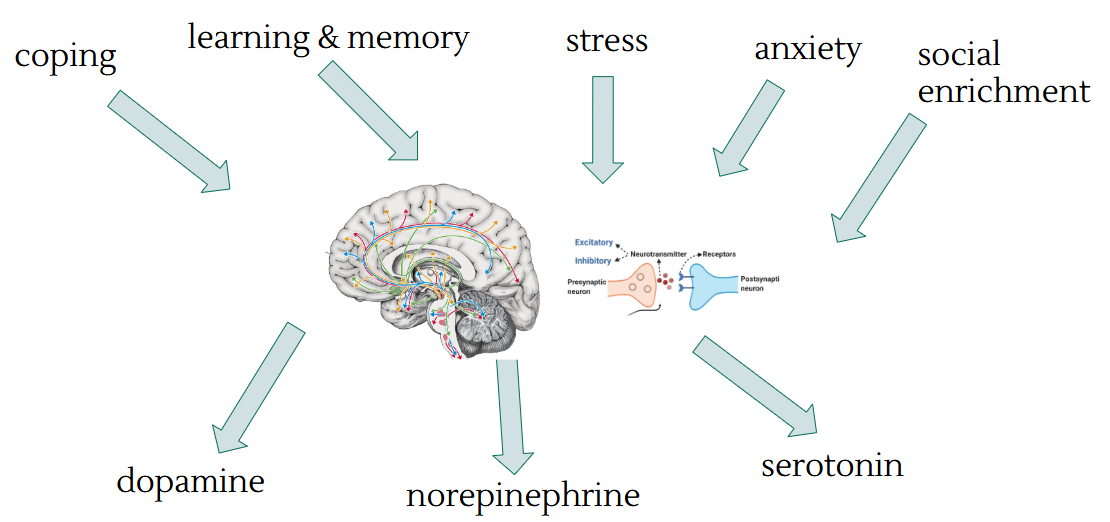
Our current focus concerns Obsessive Compulsive Disorder (OCD). OCD is a chronic neuropsychiatric condition that affects 2-3% of the United States population (6-9 million people) and is characterized by persistent anxiety-producing thoughts accompanied by overwhelming urges to perform repetitive behaviors. Modern treatments for OCD are only effective in 40-60% of patients, do not fully alleviate symptoms, have an 8-10 week delayed onset, and are associated with problematic side effects.
Although a number of OCD animal models have been proposed, no single model has been
universally accepted. A new model showing exciting promise was introduced in 2010
in which rats are made to be “OCD-like” by exposing them to the serotonin-norepinephrine
uptake inhibitor clomipramine during the post-natal critical period when the hypothalamus-pituitary-adrenal
axis is developing.
The goals of the Neuroscience Stream are twofold: (1) to evaluate whether neonatal clomipramine exposure offers a valid model of OCD and, if so, (2) to use the model to explore new therapeutic strategies that are more effective and quicker acting. Student research teams use state-of-the-art instrumentation and a combination of modern behavioral and neurochemical techniques to address our experimental questions. Over the 3-semester sequence, students not only learn an array of advanced technical expertise, but also interpersonal, critical thinking, and communication skills.
Our Stream’s approach to addressing neuroscience research questions integrates multiple levels of investigation and the traditional disciplines of Psychology, Cell Biology, Physiology, Behavior, Genetics, Chemistry, and Medicine.
Research Themes
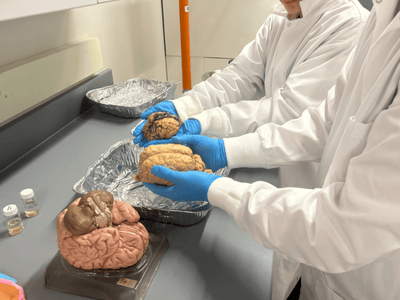
Brain and Behavior
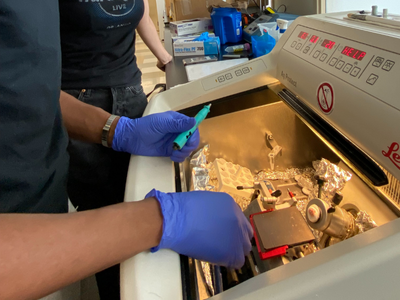
Social Enrichment
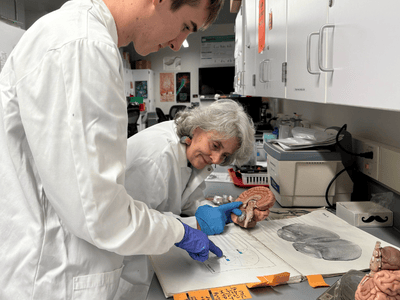
Psychiatric Disorders
Neurophysiology
Research Educator

Deborah Kreiss
Neuroscience, Research Assistant Professor
First-year Research Immersion Program
Research Interests
Dr. Deb Kreiss is the Research Educator for the Neuroscience research stream. The Stream’s current research focus is the identification of an animal model of Obsessive Compulsive Disorder (OCD) that can be used to further understanding and explore new therapeutic avenues for this debilitating disorder that affects 2-3% of the population. Using a combination of behavioral and neurochemical assessment, students explore treatment and sex differences in “OCD-like” rats by first assessing the rats’ cognitive/motor activities and then by analyzing neurochemical levels in post mortem brain tissue using HPLC. Dr. Kreiss completed a B.A. at Cornell Univ, a Ph.D. at Univ of PA, and a postdoctoral fellowship at NIH. She has been a neuroscience professor and research mentor for over two decades.
Research Techniques
Behavioral Analysis
Animal model
- Reduction of Enrichment
- Innovation of therapeutic approaches
Behavioral assessment
- Emotional and cognitive states
- Behavioral testing
- Statistical Analysis
Neurobiological Analysis
Neuroanatomy
- Tissue Collection
- Tissue Preparation
Neurochemistry
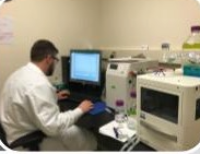
- High Performance liquid
- Chromatography (HPLC)
- Statistical analysis
Research Projects
-
Cohort 11 (2024-2025)
- Marble-Burying: Optimal behavioral paradigm for assessing repetitive behavior in socially isolated rodents
- Open Field Test is the most sensitive method to evaluate the ability to cope with stress in socially isolated rats
- The Open Field Test is the better method for measuring anxiety-like behaviors in socially isolated rats
- The superiority of the Social Interaction Test for studying isolation’s effects on curiosity
- The Y Maze is a more effective method than a Water Maze for evaluation of isolated rats’ memory & learning
-
Cohort 10 (2023-2024)
- A novel animal model that replicates social reduction similar to COVID-19 has strong behavioral validity but ambiguous neurochemical validity
- A novel rat model examining decreased social enrichment has mixed validity on males versus female
- Assessment of the validity of a novel rat model of removal of enrichment for anxiety-like behaviors (time in center, interactions with novel object) and neurochemicals (norepinephrine, serotonin, and dopamine) in the amygdala and perirhinal cortex
- The effects of the removal of social enrichment on post-traumatic stress disorder (PTSD)-like behaviors in rats and on monoamine neurotransmitter levels in the anterior cingulate cortex and hippocampus
- Validation of a novel model that assesses obsessive compulsive disorder-related neurochemical and behavioral effects of reduced social enrichment
-
Cohort 9 (2022-2023)
- Behavioral & monoamine neurochemical analysis of childhood stress in adolescent rats due to reduction of social enrichment
- Effects of reduced social enrichment on behavioral addiction in rats evaluated with behavioral and neurochemical strategies
- Examining the behavioral and neurochemical anxiety-like effects in rats caused by a reduction in social enrichment
- Post Traumatic Stress Disorder-like behavioral and monoamine neurochemical analysis of a novel rat model of sudden reduction of social enrichment
- The influence of the reduction of environmental enrichment on behaviors and neurochemistry in a rat model of Obsessive Compulsive Disorder
-
Cohort 8 (2021-2022)
- Addictive-like behavioral effects and monoamine neurochemical effects of reduced enrichment on male and female adolescent rats
- Analyzing OCD-like behavioral and monoamine neurochemical effects of a sudden reduction in enrichment utilizing rat animal models
- Anxiety-like behavioral and monoamine neurochemical analysis of the sudden reduction of social enrichment in rats
- Behavioral and monoamine neurochemical effects of the sudden reduction of social enrichment in a novel rat model of Tourette Syndrome
- PTSD-like behavioral and monoamine neurochemical effects of a sudden reduction in social enrichment in a novel rat animal mode
-
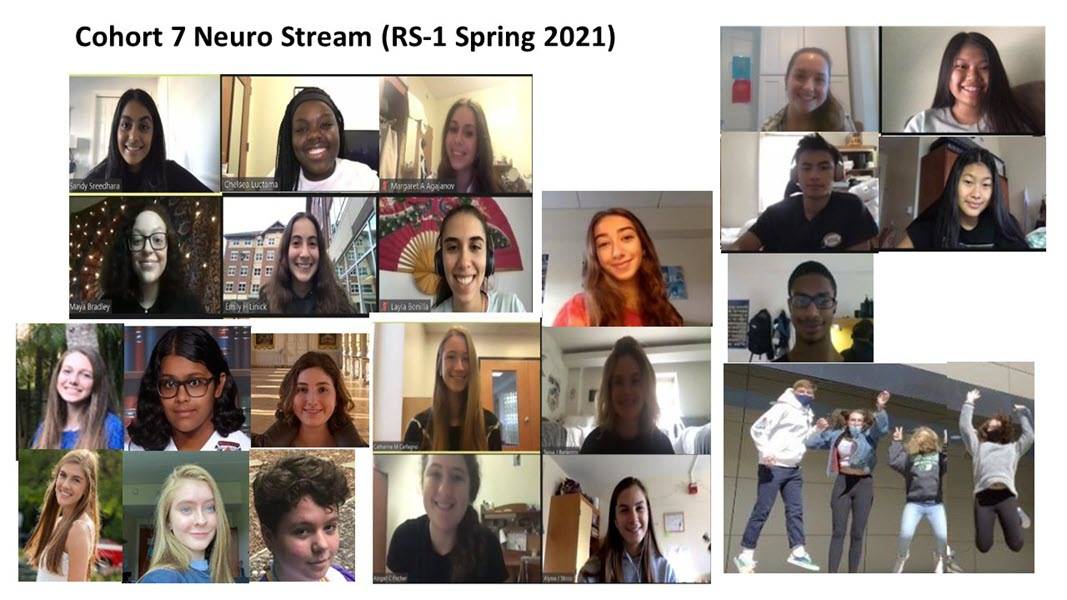
Cohort 7 (2020-2021)
- Evaluation of a novel reduced enrichment rat model of depression using elevated plus maze and cortical monoamine analysis
- Evaluation of stress-like behaviors and neurotransmitters in rats for novel animal model of childhood stress
- Evaluation of the novel reduced-enrichment model of post traumatic stress disorder through analysis of seconds before open arms, rears, and monoamine neurotransmitter levels in the amygdala and anterior cingulate cortex
- Reduced enrichment altered pokes and neurochemicals in the prefrontal cortex and hypothalamus
- Validity of novel reduced environmental enrichment rat model of anxiety evaluated by open arm and hole poking behaviors and analysis of thalamic neurotransmitters
-
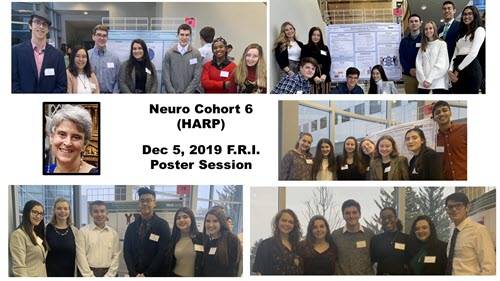
Cohort 6 (2019-2020)
- Behavioral evaluation of hole pokes and rears in NeoClOM Model of Obsessive Compulsive Disorder is influenced by sex
- Evaluation of repeat poke and total line crosses of male and female rats in the NeoCLOM Animal Model of Obsessive-Compulsive Disorder
- Neonatal Clomipramine Model of Obsessive Compulsive Disorder (OCD) demonstrates behavioral sex differences within rats in the elevated plus maze and hole board
- Sex influences behavioral evaluation of hole pokes and rears in NeoClOM Model of Obsessive Compulsive Disorder
- Sex-linked behavioral disparities in rearing and hole poking behaviors affect evaluation of the Neo-Clomipramine Animal Model of Obsessive-Compulsive Disorder
-
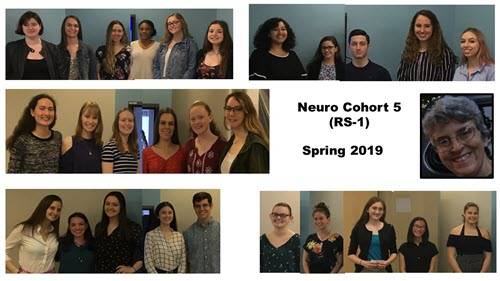
Cohort 5 (2018-2019)
- Analysis of Post-mortem Striatal Neurotransmitters and Anxiety-Like Behaviors in a Novel Animal Model of OCD
- Evaluation of EPM and HB Behaviors in Neonatal Clomipramine Model of OCD Shows Significant Sex Differences and Poor Female Face Validity
- Evaluation of the neonatal clomipramine model of OCD demonstrates significant sex differences and poor validity for female subjects
- Hole Board Behaviors in Neonatal Clomipramine Rat Model Show Face Validity in Male but not Female Rats
- Neonatal Treatment with Clomipramine Generates an Animal Model of OCD with Face Validity in Male but not Female Rats
-
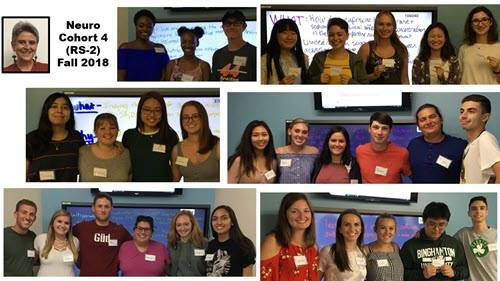
Cohort 4 (2017-2018)
- Analysis of Anti-Choline Acetyltransferase Saporin as a Viable Model for Alzheimer's Disease and its Effects on Movement
- Analysis of Neurotransmitter Preservation through Heat Inactivation of Enzymes
- Effects of Anti ChAT Saporin Lesions on Spatial Memory and ACh Levels in the Hippocampus
- Effects of Isoflurane on Monoamines in the Corpus Striatum of Male and Female Rats
- Effects of Varying Isoflurane Anesthesia Levels on Serotonin and Dopamine Levels in the Rat Motor Circuit
- The effect of sodium pentobarbital and isoflurane on acetylcholine concentration in the pedunculopontine tegmental nucleus, striatum, and substantia nigra
-
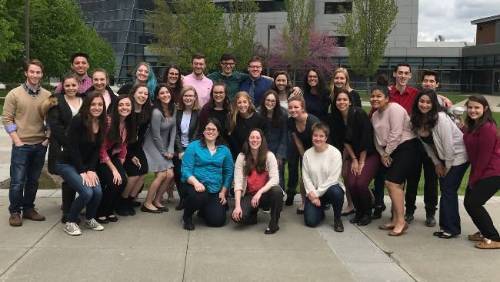
Cohort 3 (2016-2017)
- Monoamines of the Parkinsonionan Brain in Males and Females Rats
- L-DOPA's Anxiogenic Effects On Parkinsonian Rats
- The Effect of L-DOPA on Sex Differences in Neuroinflammation in the Striatum in Parkinsonian Rats
- Hippocampal Neurochemistry following L-Dopa Treatment in 6-OHDA-Lesioned Rats
- Sex Differences in Expression of Dopamine Pathway Gene Markers in L-Dopa-Induced Dyskinesia
-
Cohort 2 (2015-2016)
- Effect of 6-OHDA Unilateral Lesioning on Handedness in rat models of Parkinson's disease
- Dopamine and Acetylcholine Lesion Model Reflects Parkinson's Disease Symptoms and L-DOPA-Induced Dyskinesia
- The Role of D2 receptors on motor and cognitive function in healthy Sprague-dawley rats
- Effects of Clonidine and Atipamezole on L-DOPA induced dyskinesia
- Immunohistological analysis of acetylcholine loss on the etiology of Parkinson's disease

-
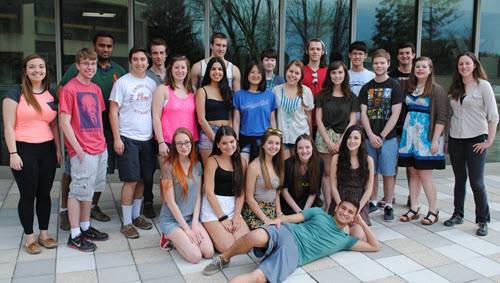
Cohort 1 (2014-2015)
- Music therapy for Parkinsonian-like memory deficits
- Target actions of a2-adrenergic receptor agonist and antagonist in modulating L-DOPA-induced dyskinesis in Parkinsonian model
- Sex differences in Sprague-Dawley rats
- Effect of L-DOPA and DA agonism on dyskinesia and motor function in DA and dual (DA+ACH) lesioned rats
- Effects of dopamine receptor specific drugs on treatment of cognitive deficits in Parkinson’s disease
Research Stream Collaborators

Christopher R. Bishop
Professor/Director of Undergraduate Integrative Neuroscience Program
Psychology
Research Interests

Terrence Deak
Vice Provost and Dean of The Graduate School; Professor
Academic Affairs, Office of the Executive VP and Provost; Graduate School; Psychology
Research Interests

Research Interests

Research Interests