FRI Ecological Genetics Research Stream
Making It Up as They Go Along—Using Genetics to Investigate How Plants and Animals Cope With Our Changing World
This research stream focuses on understanding how surrounding ecological environments have evolutionary consequences for organisms. Thus, students ask questions aimed to better understand the reciprocal interactions between ecology and evolutionary processes over time and space. For example, they study how plants and animals from different locations differ in their life cycle timing, thermal tolerance, and genetics.
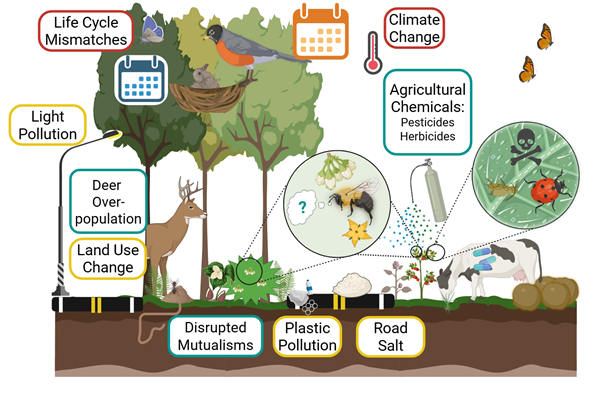
Besides investigating the links between genotype, phenotype and environment, students explore how humans change the environment and the consequences that these anthropogenic pressures have for the evolution of populations and species. In many cases, the results obtained from this topic have practical implications as management for threatened species or developing control strategies for invasive species.
Ecological genetics is a multidisciplinary stream which intersects the disciplines of genetics, physiology, ecology and evolution using state-of-the-art techniques in genomics, transcriptomics, ecophysiology, field ecology and bioinformatics.
Research Themes
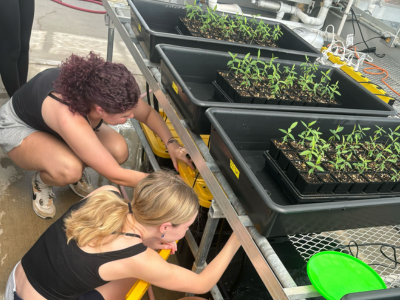
Global Change
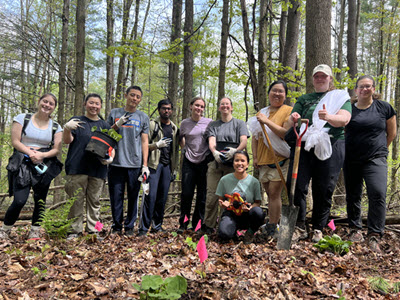
Conservation and Restoration
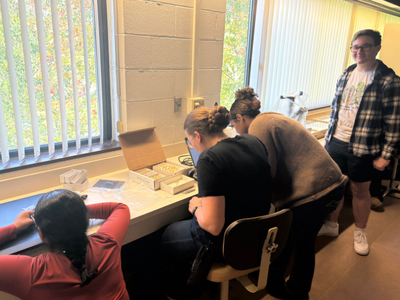
Evolution and Speciation
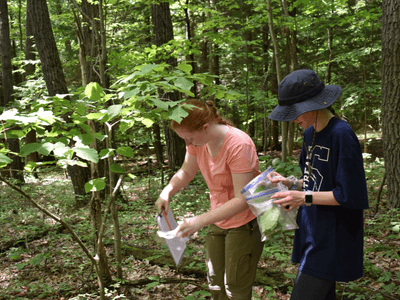
Community and Ecology
Research Educator

Christina Baer
Ecological Genetics, Research Assistant Professor
First-year Research Immersion Program
View Full Profile Research Interests
Dr. Christina Baer is the Research Educator for Ecological Genetics. She researches how organisms’ behaviors and traits influence their interactions with each other and the environment. She studies how effective different traits are as defenses against predators and how other traits can predict organisms’ responses to human-caused environmental changes such as climate change. Her research focuses on insects and other invertebrates because they are both easy to manipulate and are some of the most diverse animals on the planet. She uses a combination of molecular taxonomy, phylogenetics, physiology, field experiments, and behavioral observations to answer these questions.
Research Techniques
Field Work
Community Ecology
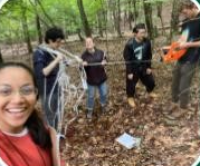
- eDNA sampling
- Biodiversity surveys
- Restoration
Natural History
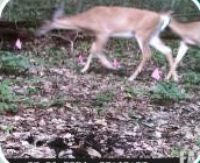
- Field Sketching
- Videography
- Documenting life cycles
Lab Work
DNA and RNA
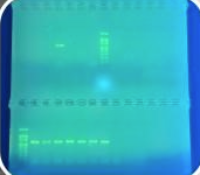
- Extractions
- PCR and qPCR
- DNA sequencing
- Gene expression
Experiments
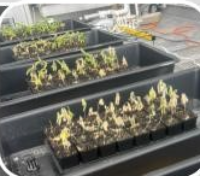
- Drought
- Warning
- Pollution
Data Skills
RStudio
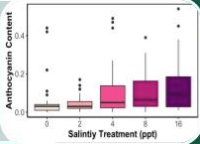
- Statistical analysis
- Data Visualization
Databases

- Genbank
- iNaturalist
- BOLD
Research Projects
-
Cohort 11 (2024-2025)
- Algal responses to heavy metal pollution
- Convergent evolution in pigmentation across multiple species through the MC1R gene
- Differences in the haplotype diversity of Plethodon salamanders by location
- Influences of fungal hyphae on soil bacteria migration
- Using eDNA to monitor invasive terrestrial insect species
-
Cohort 10 (2023-2024)
- Comparing pesticide ingredients and honey bee population decline
- Do deer exclosures aid spring ephemeral restoration in the Binghamton University Nature Preserve?
- Fall webworm host plant use in extreme heat
- Genetic variation in a potential diapause gene in Rhagoletis pomonella
- The effect of soil salinity on milkweed and monarch caterpillars
-
Cohort 9 (2022-2023)
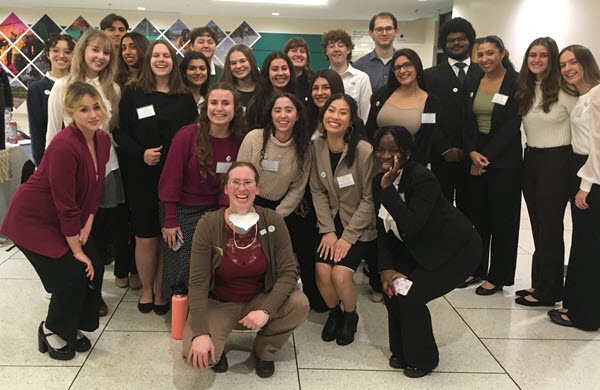
- Designing primers to differentiate Mimulus ringens
- Impacts of salinity on ranavirus and eDNA degradation
- Parasitoid-host relationships regarding travel to an expanded range
- Selective logging and secondary invasions of multiflora rose (MFR) in the Binghamton University Nature Preserve
- Ranavirus and Bd in groundwater: A study in the Binghamton University Nature Preserve
- The latitudinal effect of drought on Arabidopsis thaliana plant growth
-
Cohort 8 (2021-2022)
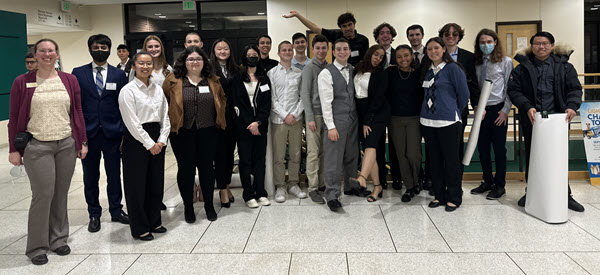
- Hsp70 regulation in Aedes albopictus under different temperature treatments
- Impact of invasive plants (Phragmites australis) on native wetlands
- Light pollution’s effects on opsin gene expression in dragonflies
- The relationship between water quality and pathogen infection in amphibians
-
Cohort 7 (2020-2021)
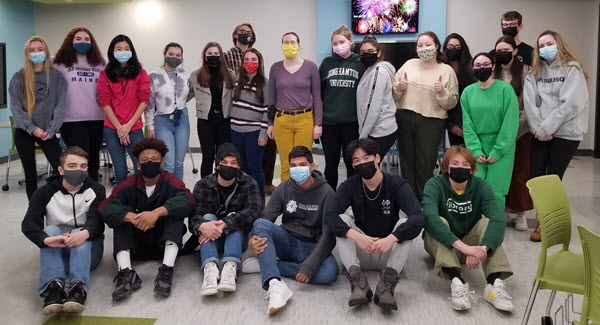
- Effect of diapause on PERIOD expression in Rhagoletis pomonella
- Investigating geographic variation in caterpillar silk genes
- The effect of long wavelength (LW) light on opsin gene expression in dragonflies
- The effects of polyethylene microplastics on arugula
- Thermal tolerance of Aphaenogaster picea and A. rudis ants: a genetic and physiological lens
-
Cohort 6 (2019-2020)
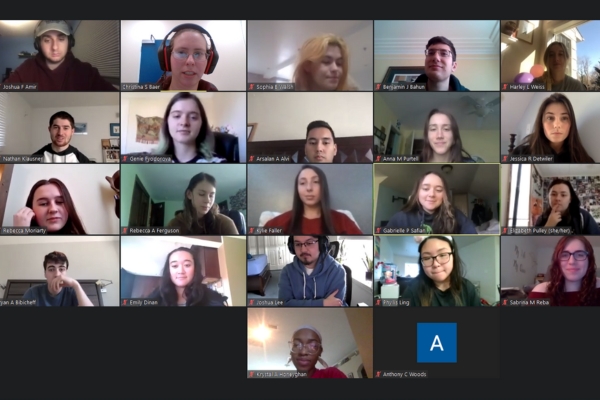
- Analyzing native and introduced lines of Arabidopsis thaliana through the CSR profile as a predictor of invasiveness
- Effects of heavy metal pollution on genetically diverse plant populations
- Genetic differences in the PERIOD gene of Rhagoletis pomonella
- Is the SVP gene differentially expressed in populations of Mimulus ringens?
-
Cohort 5 (2018-2019)
- Blinded by the light: how light pollution affects the development of Xenopus laevis
- Climate change impact on seed establishment of a critically endangered species
- Population structure of Mimulus ringens across a latitudinal gradient
- Variation in drought response in locally adapted populations of Arabidopsis thaliana
Research Stream Collaborators

Research Interests

Research Interests

Research Interests

Research Interests

James M. Sobel
Chair; Associate Professor
Biological Sciences
Research Interests